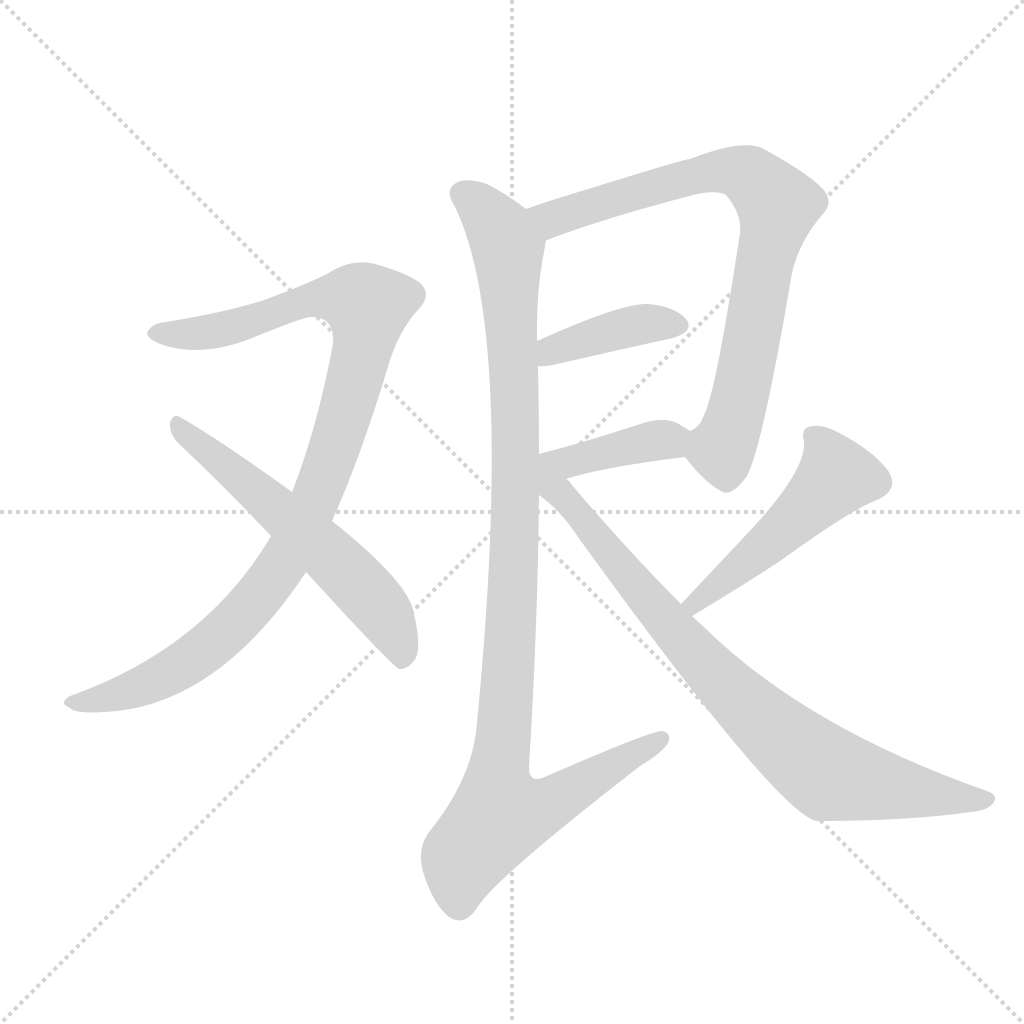
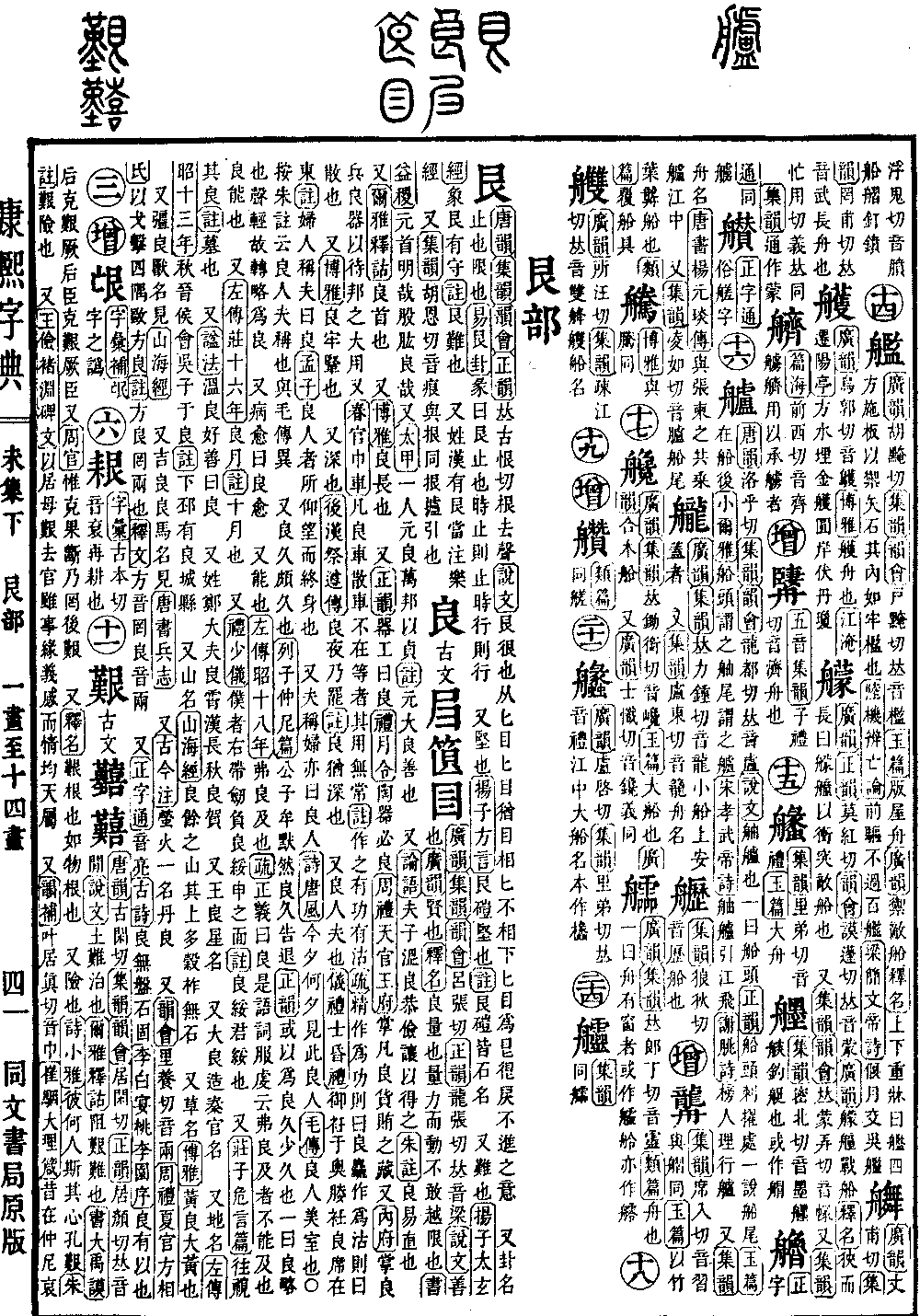
Wei Collection, Lower Volume
Radical: Geng (gěn)
Kangxi Strokes: 17
Page 1013, Entry 26
The ancient character form is written as jian.
According to Tang Rhyme (Tangyun), pronounced jian. According to Collected Rhymes (Jiyun) and Rhyme Collection (Yunhui), pronounced jian. According to Correct Rhymes (Zhengyun), pronounced jian. The pronunciation is the same as jian (leisure/interval).
Explanatory Dictionary of Characters (Shuowen Jiezi) explains this as land that is difficult to govern.
Approaching Elegance: Explanation of Terms (Erya Shigu) explains this as obstruction or hardship, meaning difficulty.
Book of Documents (Shujing): Great Plan of Yu (Dayumo) records: If a sovereign can overcome the difficulties of being a sovereign, and a minister can overcome the difficulties of being a minister.
Also, Rites of Zhou (Zhouguan) records: Only by being able to make decisive judgments will there be no subsequent difficulties.
Also, Explanation of Names (Shiming) explains: Jian is like the roots of a tree, referring to the origin of things.
It also carries the meaning of being dangerous or wicked. Book of Odes (Shijing): Lesser Odes (Xiaoya) states: What kind of person is he, whose heart is extremely wicked. Zhu Xi's Commentary (Zhuzhu) notes: Jian means wicked.
Also, Wang Jian and Chu Yuan's Writings (Wang Jian Chu Yuan Wen) records: Because of the passing of a mother, one resigns from office to observe mourning; although the act is triggered by moral principles, the emotion is akin to that of natural kin.
Also, Supplement to Rhymes (Yunbu) notes the rhyming pronunciation as jin. Cui Yin: Admonition for the Grand Justice (Dalizhen) states: In the past, Confucius took pity on us, the common people. Zi Han governed the state with propriety, and the people of Wei were relieved of their difficulties.
Also, the rhyming pronunciation is jian. Ban Biao: Northern Expedition Rhapsody (Beizheng Fu) states: Sighing for King Wen of Zhou who was imprisoned at Youli; grieving that a man of virtue encountered such difficulties. He deduced the changes of the six and nine lines in the Book of Changes (Yijing), passing long years in the darkness of adversity.