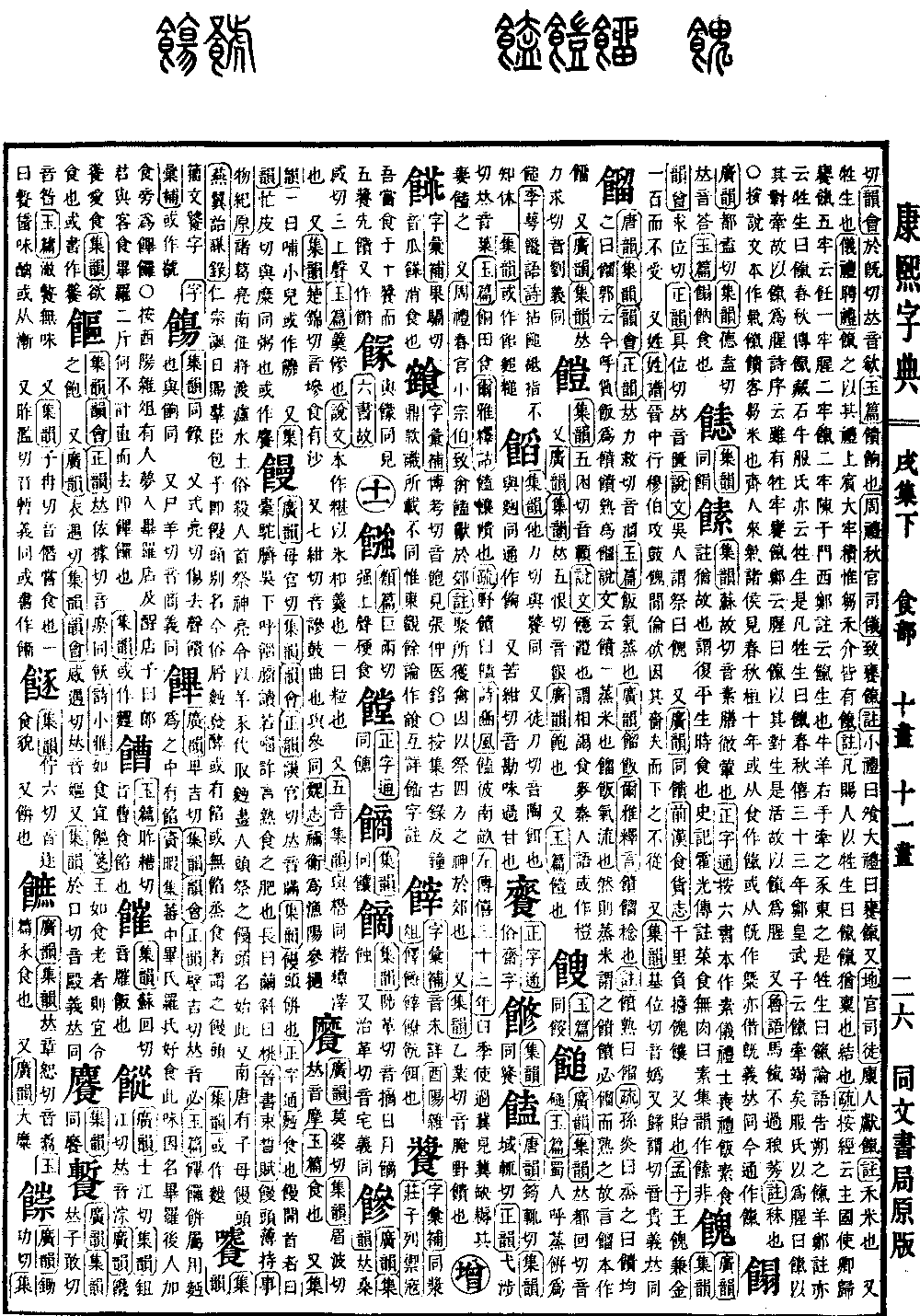
Xu Collection, Lower Volume
Radical: Food (shí)
Kangxi Strokes: 20
Page 1424, Entry 01
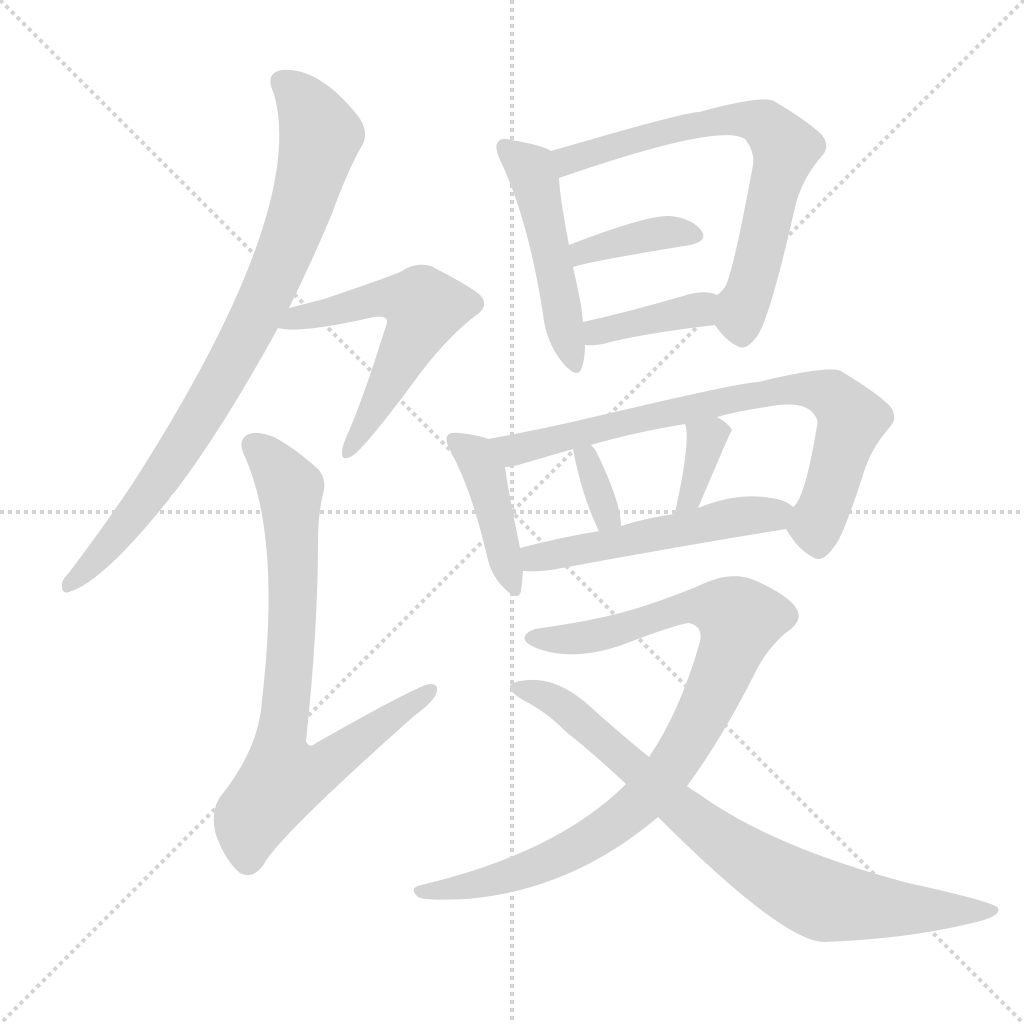
Pronounced man.
According to the Collected Rhymes (Guangyun), it is a steamed bun made of flour. According to the Zhengzitong, it is a wheat-based food. Those steamed buns that open at the top are called camel navels. In the Wu region, they are referred to as guai, a sound similar to nao zha, describing a cooked food that is rich and delicious. Long-shaped ones are called cocoons, and slanted ones are called peaches.
In the Jin History (Jinshu), the Rhapsody by Shu Xi mentions thin steamed buns. According to the Record of Origins of Matters and Things (Shiwu Jiyuan), when Zhuge Liang was on his southern campaign and about to cross the Lu River, local custom dictated beheading humans as sacrifices to the spirits. Zhuge Liang ordered that pigs and sheep be used as substitutes, and that flour be shaped into the likeness of human heads for the offerings. The name for the steamed bun began here. Additionally, during the Southern Tang period, there were parent-child steamed buns. The Yanyi Yimou Lu states that on the birthday of Emperor Renzong, he bestowed baozi upon his ministers, which is another name for the steamed bun. Nowadays, it generally refers to flour dough that has been leavened, sometimes filled and sometimes unfilled, and then steamed for consumption. According to the Collected Rhymes (Jiyun), it is sometimes written in a variant form.