Chen Collection, Lower Volume
Radical: Weapon (shū)
Kangxi Strokes: 12
Page 586, Entry 06
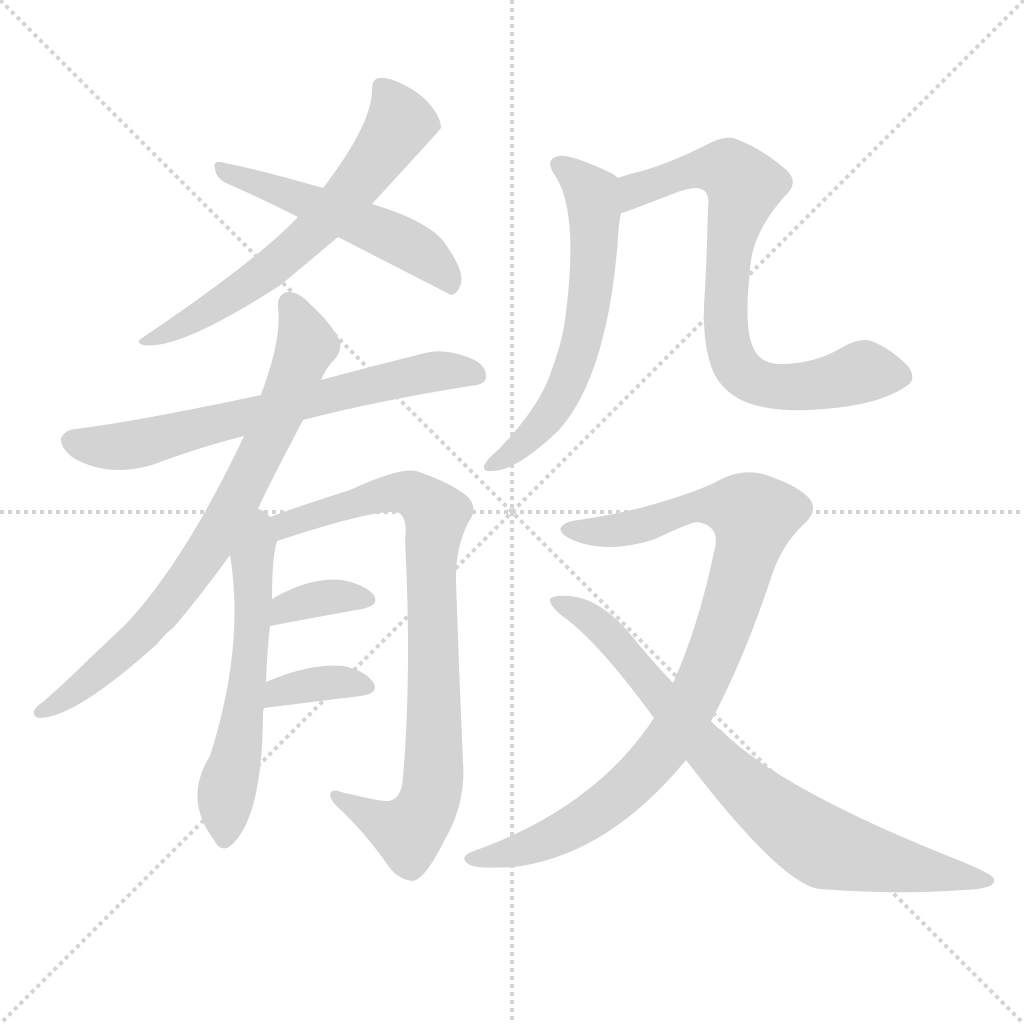
Pronounced yáo.
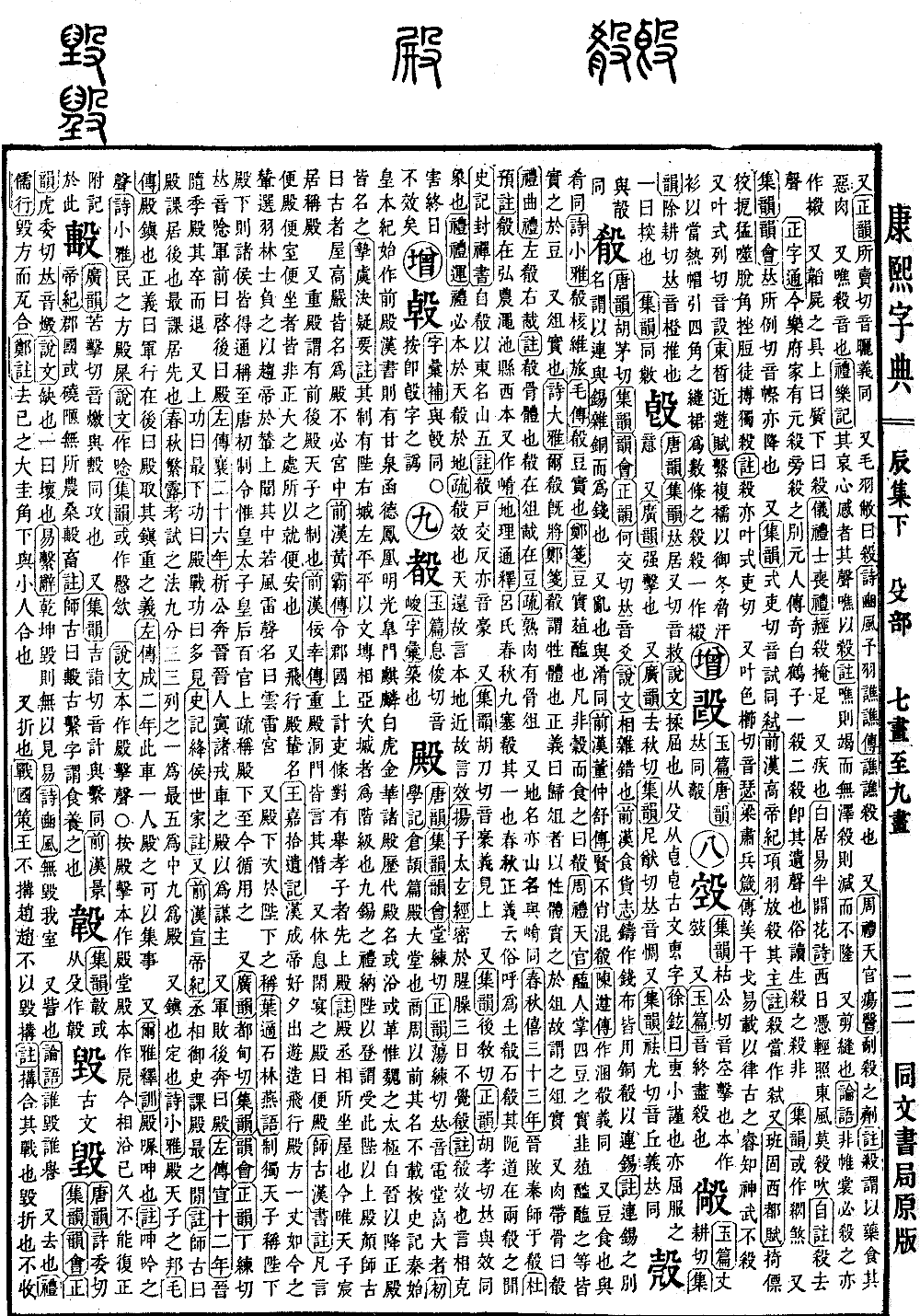
Shuowen Jiezi (Explanation of Simple and Compound Characters): To be mixed or intertwined.
History of the Former Han (Hanshu), Treatise on Food and Money: In casting coins and cloth-money, all use copper, mixed (yáo) with lead and tin. Commentary: Lian is another name for tin. This refers to mixing copper with lead and tin to make money.
Also means disorder. Same as the character meaning mixed/confused.
History of the Former Han (Hanshu), Biography of Dong Zhongshu: The worthy and the unworthy are confused and mixed (yáo).
Biography of Chen Zun: Written as mixed/confused; the meaning is the same.
Also refers to food in a dou (ritual vessel). Same as the character meaning delicacies.
Book of Odes (Shijing), Lesser Odes: The delicacies and nuts are laid out in order. Mao Commentary: Yáo means the contents of a dou vessel. Zheng Commentary: The contents of a dou vessel are pickles and minced meats. Anything that is eaten that is not grain is called yáo.
Rites of Zhou (Zhouli), Offices of Heaven: The Officer of Minced Meats is in charge of the contents of the four dou vessels, such as chives, pickles, vinegar, and minced meats, all of which are filled into the dou vessels.
Also refers to the contents of a zu (meat offering stand).
Book of Odes (Shijing), Greater Odes: Your offerings are ready. Zheng Commentary: Yáo refers to the body of the sacrificial animal. Official Commentary: Those who return the zu place the body of the animal upon it, hence it is called the contents of the zu.
Also, meat with bone is called yáo.
Book of Rites (Liji), Summary of the Rules of Propriety: Place the yáo on the left and the thick slices on the right. Commentary: Yáo refers to meat with bone. The yáo is on the zu, the thick slices are on the dou. Commentary: Cooked meat with bone is placed on the zu.
Also a place name. Also a mountain name. Same as the character for Mount Xiao.
Spring and Autumn Annals (Chunqiu), 33rd Year of Duke Xi: Jin defeated the Qin army at Xiao. Du Yu Commentary: Xiao is located west of Mianchi County in Hongnong. Originally also written as the character for Mount Xiao.
Comprehensive Explanation of Geography: The Lushi Chunqiu (Spring and Autumn Annals of Master Lu) lists nine passes, and Xiao is one of them.
Spring and Autumn Annals Official Commentary: Popularly called Earth Xiao and Stone Xiao; the narrow pass is situated between the two Xiao mountains.
Records of the Grand Historian (Shiji), Treatise on the Feng and Shan Sacrifices: From Xiao eastward, there are five famous mountains. Commentary: Xiao is pronounced háo.
Also, according to Jiyun (Collected Rhymes), pronounced háo. Meaning as above.
Also, according to Jiyun (Collected Rhymes) and Zhengyun (Orthodox Rhymes), it is the same as the character meaning to imitate. To imitate.
Book of Rites (Liji), Evolution of Rites: Rites must be rooted in Heaven and imitated (yáo) on Earth. Commentary: Yáo means to imitate. Because Heaven is distant, it is called rooted; because Earth is near, it is called imitated.
Yangzi Taijing (Master Yang's Great Mirror): Dense with the smell of raw meat, for three days one does not perceive the imitation (yáo). Commentary: Yáo means to imitate. It says that the mutual harm is not felt throughout the day.