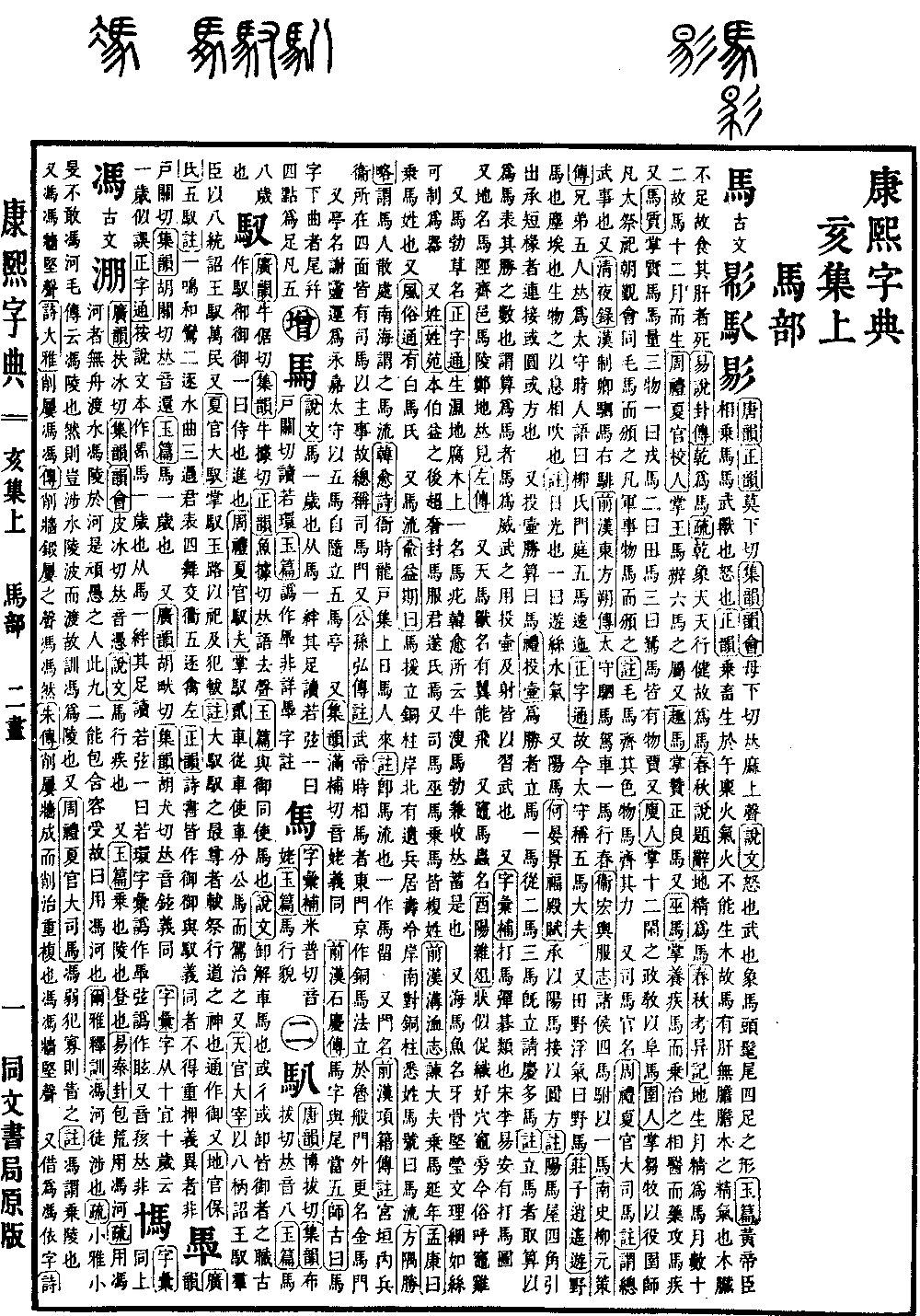
Hai Collection, Upper Volume
Radical: Horse (mǎ)
Entry: Yu
Kangxi strokes: 12
Page 1433, Entry 01
Pronounced yu (departing tone).
Jade Chapters (Yupian): The same as the character for to drive/control. It means to manage horses.
Analytical Dictionary of Characters (Shuowen): The character for to unharness means to detach horses from a carriage. Some write it with the step radical or the unharness radical; both are the duties of the coachman. In ancient times, it was written as to drive or to govern. To govern also means to wait upon or to advance.
Rites of Zhou (Zhouli), Ministry of Summer, Coachmen: Responsible for managing the secondary carriage, the following carriage, and the service carriage, dividing the public horses and harnessing them for use.
Rites of Zhou (Zhouli), Ministry of Heaven, Great Administrator: Use the eight implements to assist the king in managing the various officials; use the eight principles to assist the king in managing the masses.
Rites of Zhou (Zhouli), Ministry of Summer, Great Coachman: Responsible for managing the jade carriage for sacrifices and for crossing the roadside altar. Commentary: The Great Coachman is the most honored of the coachmen. The roadside altar is an altar for sacrificing to the god of the road. Commonly written as the character for to govern.
Rites of Zhou (Zhouli), Ministry of Earth, Guardian of the Youth: The five methods of driving. Commentary: First, keeping the bells ringing in harmony; second, driving along the bends of water; third, passing the king's markers; fourth, maneuvering at intersecting roads; fifth, chasing game to the left.
Correct Rhymes (Zhengyun): The Book of Odes (Shijing) and the Book of Documents (Shangshu) both use the character for to govern. Where the meanings of to govern and to drive are the same, they should not be repeated; where the meanings are different, they are not the same.