Si Collection, Upper Volume
Radical: Water (shuǐ)
Kangxi Strokes: 15
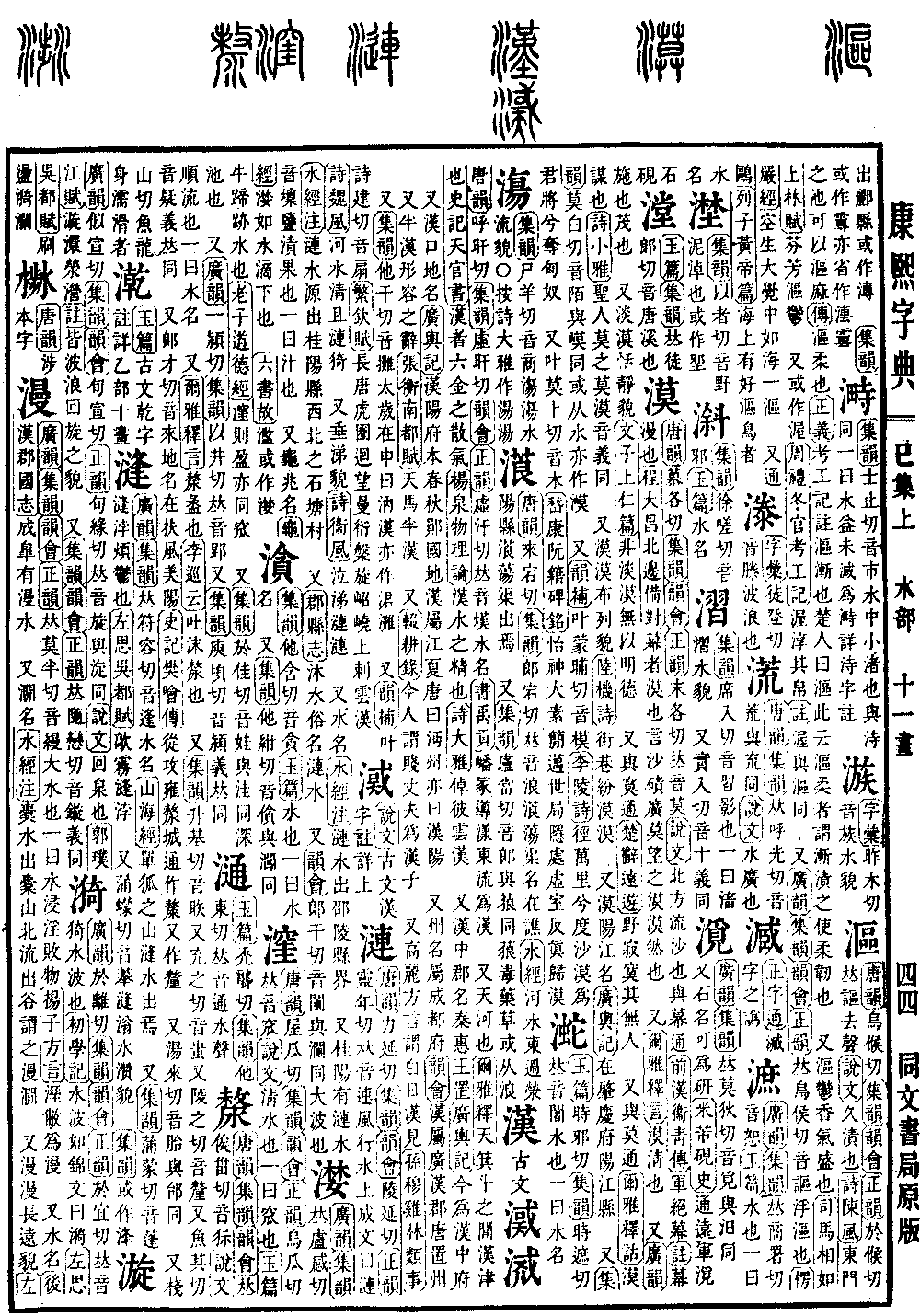
Page 646, Entry 32
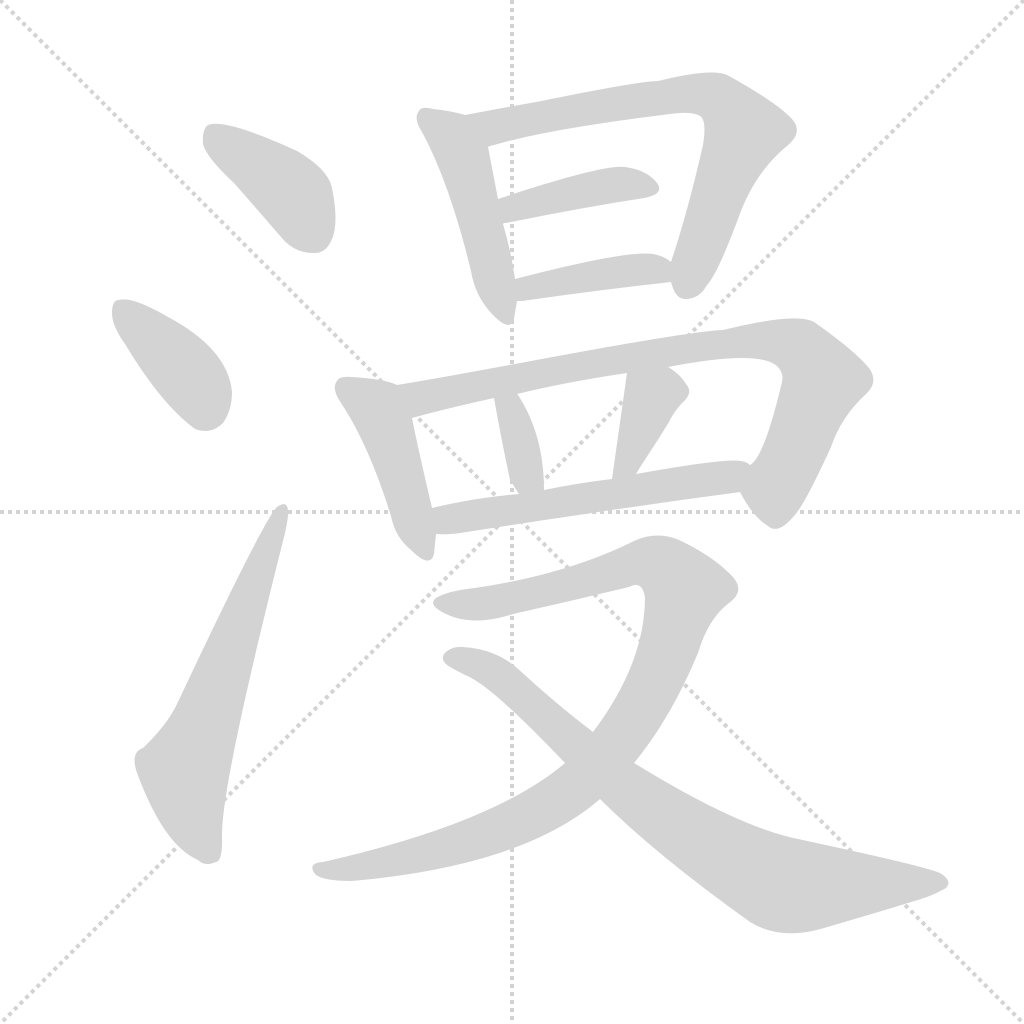
Guangyun, Jiyun, Yunhui, Zhengyun: Pronounced màn. Indicates a large body of water. One source states it refers to water soaking and ruining objects. Fangyan (Dialect Survey): To dampen and spoil is called màn. Also a name of a watercourse. Commentary on the Classic of Waterways (Shuijing Zhu): The Tuo River originates from Tuo Mountain and flows north out of the valley; it is called Màn. Also used as a name. Also, mànmàn, describing a long and distant appearance. Zuo Si, Rhapsody on the Capital of Wu (Wudu Fu): The vast and wide courtyard is mànmàn. Also refers to the color of clouds. Shangshu Dazhuan (Great Commentary on the Book of Documents): The auspicious clouds are brilliant, the rituals are mànmàn. Also means to spread everywhere. Gongyang Zhuan (Gongyang Commentary), Year 3 of Duke Xuan: If the sacrificial ox for the suburban sacrifice dies, one does not speak of what it ate, because it implies màn (to spread throughout). Annotation: Refers to eating all over the ox's body. Also means indulgence. Book of Han, Treatise on Literature: Indulgent and boundless with no focus for the heart. Also, hànmàn, describing a vague or indistinct appearance. Guan Yinzi, Nine Medicines Chapter: Do not use hànmàn to speak of the breadth of the Dao. Also, chánmàn, meaning unrestrained. Zhuangzi, Horses' Hooves Chapter: Taking pleasure in being unrestrained. Also refers to the shape of plains and rivers. Zhang Heng, Rhapsody on the Western Metropolis (Xijing Fu): Vast and winding. Also, lànman, describing a scattered appearance. Wang Yanshou, Rhapsody on the Hall of Numinous Brilliance in Lu (Lu Lingguang Dian Fu): Flowing and scattered. Also, Fangyan: hànmàn means frustrated. Between the Lie River in Korea, feeling frustrated is called hànmàn. Also written as the character meaning to plaster. Zhuangzi, Xu Wugui: A man of Ying used white clay to plaster the tip of his nose.
Jiyun, Yunhui, Zhengyun: Pronounced mán. Describes the immense power of water. Also, Boya: mànmàn means level and flat. Also, mànmàn, describing a long and winding road. Interchangeable with the character for long (màn).
Jiyun: Pronounced màn (falling tone). Same as the character for slow (màn). Means lazy. Also written as the character meaning to slight.
Yunbu: Rhymes with mián. Emperor Wen of Wei, Rhapsody on the Widow (Guafu Fu): Enduring the summer days, I suffer from their length; passing the autumn nights, they are mànmàn. Fine frost descends and gathers in the courtyard; swallows and sparrows fly before me.
Rhymes with miàn. Yang Xiong, Rhapsody on Ganquan (Ganquan Fu): Raising my head to look high, my eyes are dazzled and I see nothing. Browsing through the vast expanse to expand my thoughts, pointing to the distance that is mànmàn.
Textual research: In Shangshu Dazhuan, "The auspicious clouds are brilliant, the rituals are mànmàn." The original text has been corrected from "body" to "rituals."