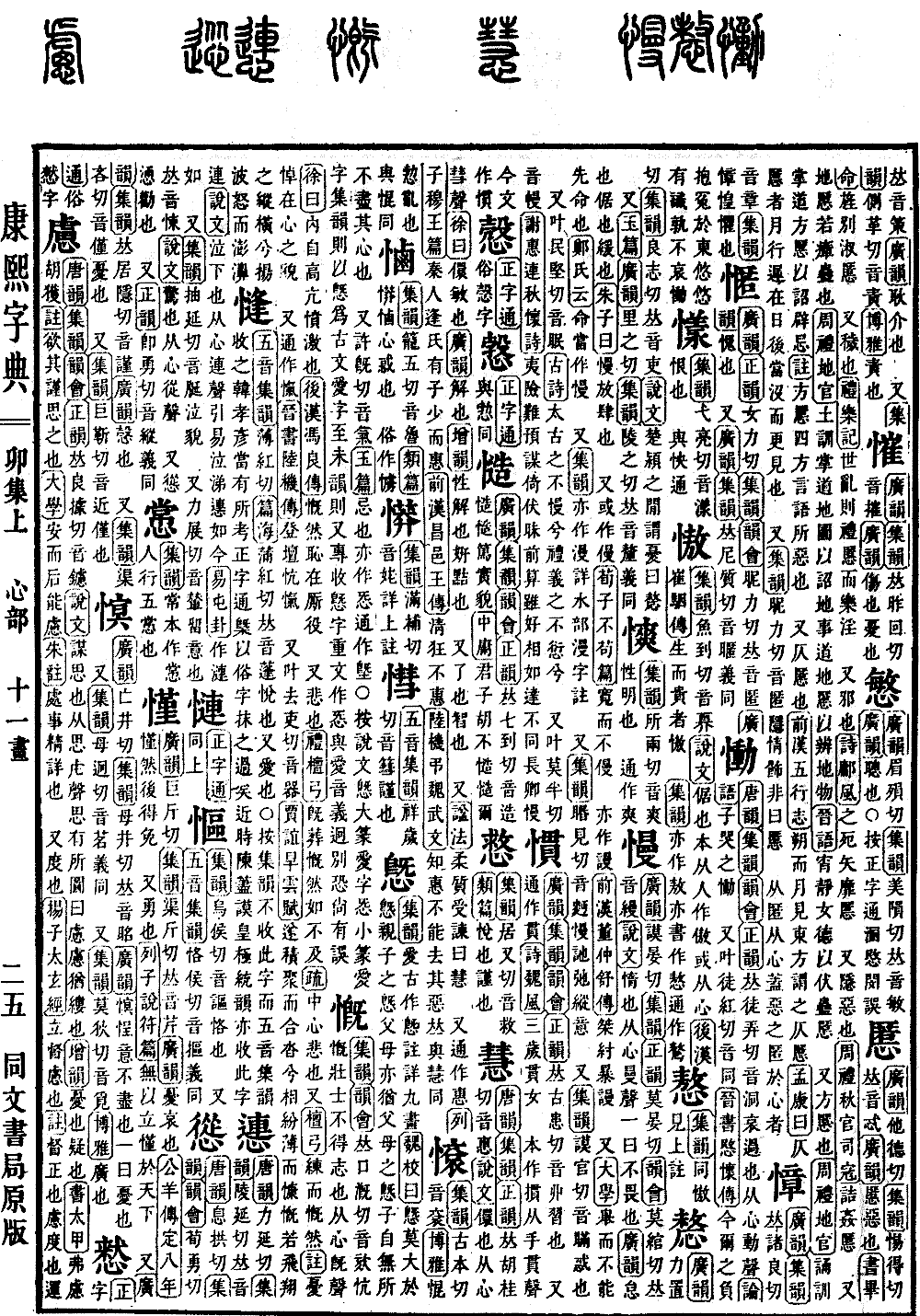
Mao Collection, Upper Volume
Radical: Heart (xīn)
Kangxi strokes: 15
Page 399, Entry 12
Pronounced man (falling tone).
Shuowen Jiezi (Dictionary of Explanations and Analysis of Characters): Lazy. Composed of the Heart radical and phonetic element man. Another definition is to be without fear.
Guangyun (Broad Rhymes): Idle, arrogant, slow.
Zhu Xi said: Man means to be unrestrained.
Sometimes written in a variant form (màn).
Xunzi, Non-Rigorous Conduct chapter: Broad without being arrogant.
Also written as man.
Book of Han (Hanshu), Biography of Dong Zhongshu: Jie and Zhou were violent and arrogant.
Also in the Great Learning (Daxue): To raise someone but be unable to provide instruction first.
Zheng Xuan said: The character ming should be read as man.
Also in Jiyun (Collected Rhymes): Also written as man. See the entry for man in the Water radical section for details.
Also in Jiyun: Pronounced mian (falling tone). Man-yi means to be lax and unrestrained.
Also in Jiyun: Pronounced man (level tone). To delude.
Also rhyming with jian: Pronounced mian (level tone). From ancient poetry: The ancients were not arrogant, ritual and duty were not transgressed.
Also rhyming with ban: Pronounced man (falling tone). From Xie Huilian, Autumn Reflections poem: Success or failure are hard to foresee, hidden and manifest causes are difficult to calculate. Although I admire Sima Xiangru for his wisdom, I do not share his indulgence (man).
Textual Research: In the Great Learning, the phrase to raise someone but be unable to provide instruction first, Zheng Xuan said: The character ming should be corrected to read as man. We have carefully followed the original text to correct this to read as.