Supplementary Note
Chou Collection
Radical: Mouth (kǒu)
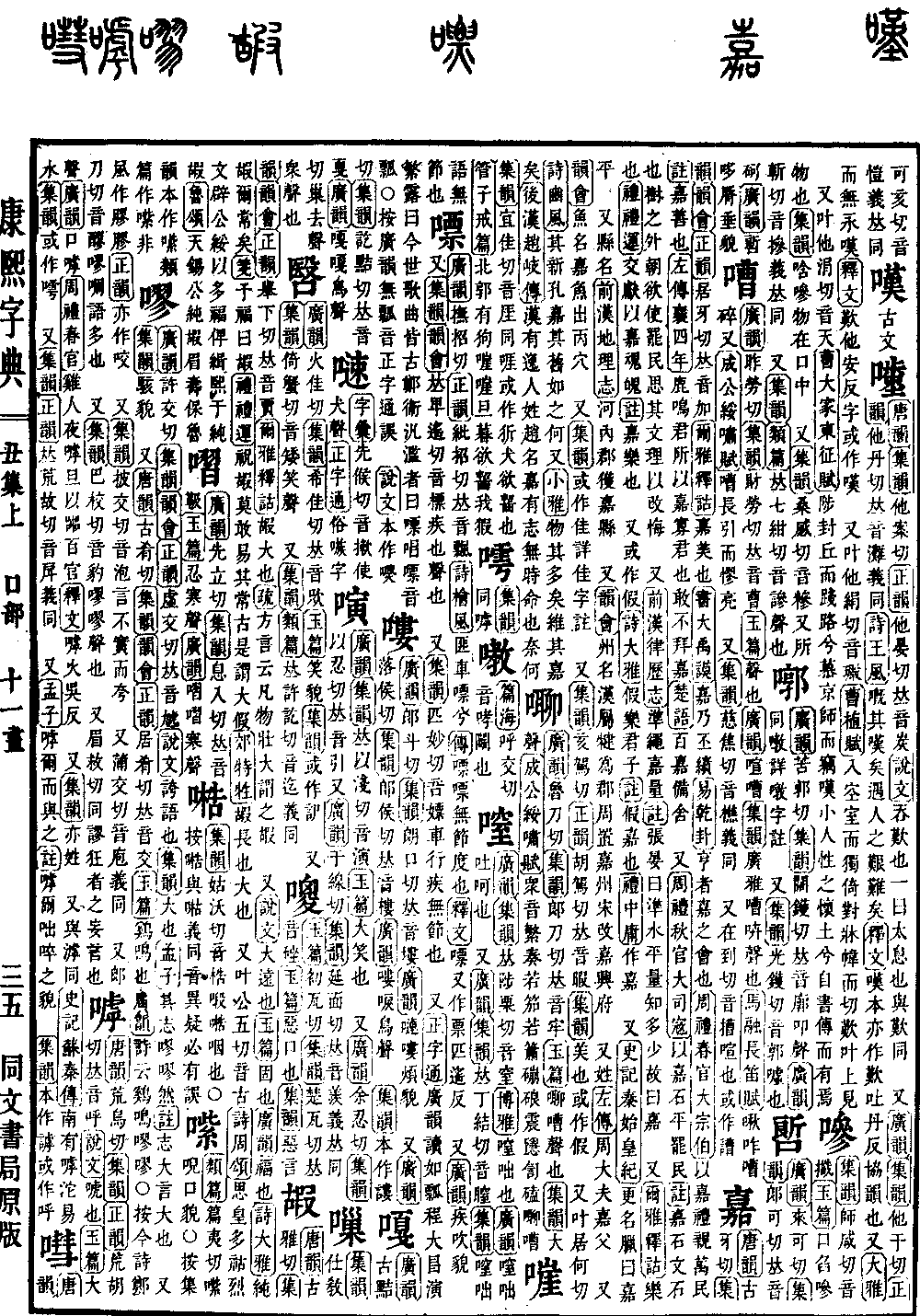
Character: Tan
Kangxi Stroke Count: 15
Page 205, Entry 12
Longkan: Pronounced yi. Also, in Chuan Yun (a rhyme book), used as the character you.
An ancient form of the character tan.
Tang Yun and Jiyun: Pronounced tan (falling tone). Zheng Yun: Pronounced tan (falling tone). The pronunciation is the same as tan (charcoal).
Shuowen: Explained as swallowing and sighing. Another interpretation is a deep sigh. Equivalent to the character tan (sigh).
Also, Guangyun and Jiyun: Pronounced tan. Zheng Yun: Pronounced tan. The meaning is the same.
Book of Odes (Shijing), Royal Songs (Wangfeng): Sighing with deep emotion, encountering the hardships of people.
Interpretation (Shiwen): For tan, some versions write it as tan (sigh), pronounced tan. This is to facilitate rhyming.
Also, Great Odes (Daya): And there is no long sigh.
Interpretation (Shiwen): For tan, pronounced tan. This character is sometimes written as tan.
Also, rhyming at the end of a verse, pronounced juan (falling tone).
Cao Zhi Rhapsody (Fu): Entering the empty room and leaning alone, sighing deeply toward the bed curtains. Here, tan rhymes with the preceding character jian.
Also, rhyming at the end of a verse, pronounced tian (level tone).
Cao Dajia, Eastern Expedition Rhapsody (Dongzheng Fu): Ascending Fengqiu and stepping onto the road, yearning for the capital and sighing to oneself. The nature of a petty man is to cherish his homeland; such accounts have existed since books were first recorded.