Si Collection, Upper Volume
Radical: Water (shuǐ)
Kangxi Strokes: 18
Page 656, Entry 21
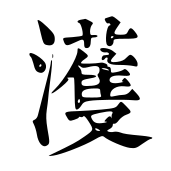
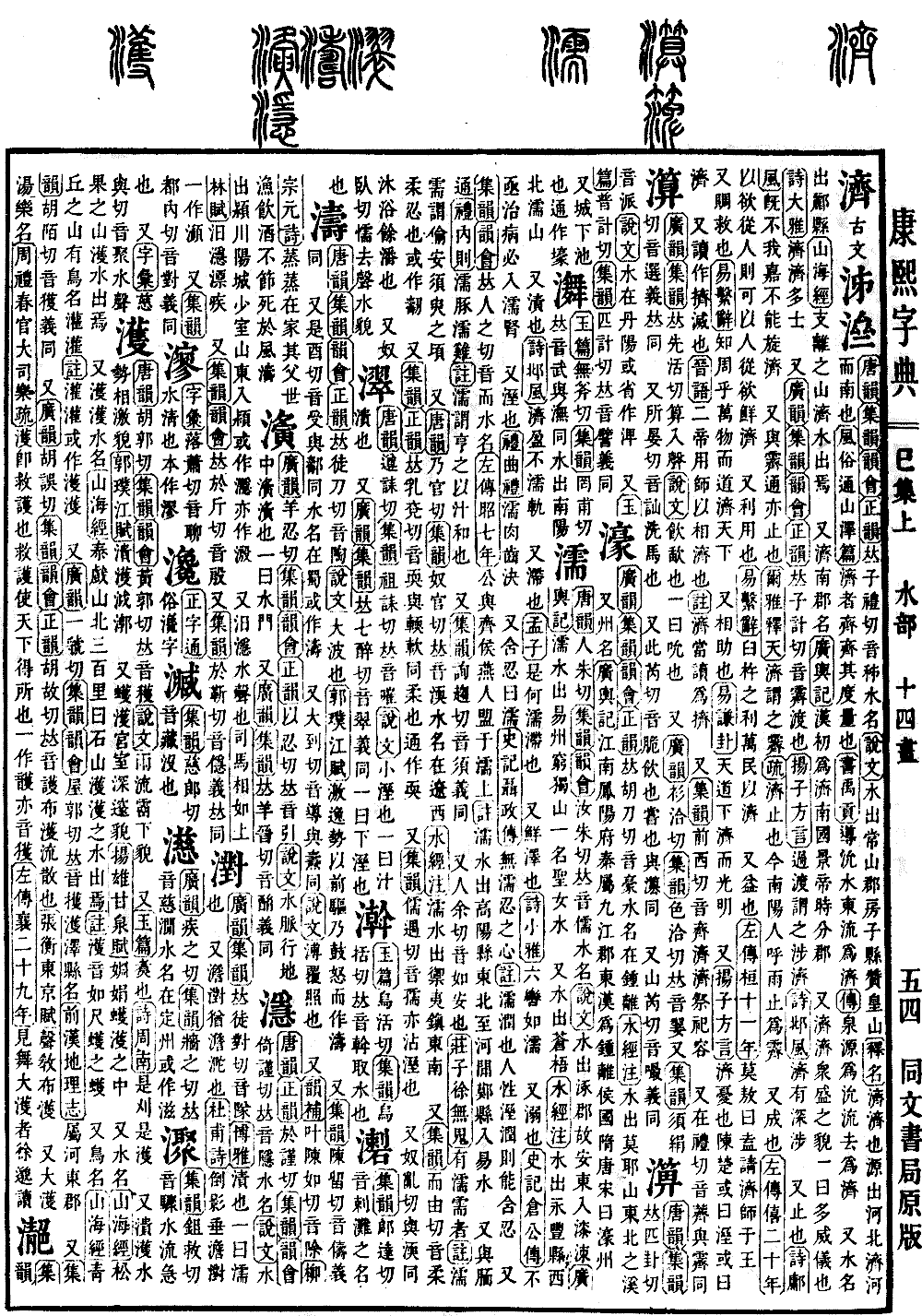
Pronounced huo. According to the Explanation of Characters (Shuowen), it describes rainwater flowing down from the eaves of a roof. It also means to boil. In the Book of Odes (Shijing): It is cut and it is boiled. It also refers to the movement of water currents colliding with one another. In the River Rhapsody (Jiangfu) by Guo Pu: The rushing waters collide. It also refers to the appearance of a palace being deep and secluded. In the Sweet Spring Rhapsody (Ganquanfu) by Yang Xiong: In the midst of the deep, winding chambers.
It is also the name of a river. According to the Classic of Mountains and Seas (Shanhaijing): From Mount Songguo, the Huo River originates here. It is also the name of a river. According to the Classic of Mountains and Seas (Shanhaijing): Three hundred li north of Mount Taixi is Mount Shi, where the Huohuo River originates. Note: Huo is pronounced like the huo in inchworm.
It is also the name of a bird. According to the Classic of Mountains and Seas (Shanhaijing): On Mount Qingqiu there is a bird called the guanguan. Note: Some write guanguan as huohuo.
Pronounced huo. Huoze is the name of a county. According to the Former Han Book of Geography (Qianhan Dili Zhi): It belonged to Hedong Commandery.
Pronounced huo. The meaning is the same.
Pronounced hu. Bu-hu means to distribute or spread. In the Eastern Capital Rhapsody (Dongjingfu) by Zhang Heng: The sounds of instruction are spread far and wide.
It is also the name of a musical composition from the time of King Tang of Shang, called Da-hu. According to the Commentary on the Rites of Zhou (Zhouli): Hu means to save or protect. It signifies saving and protecting the world so that all may find their proper place. It is also written as a variant form (hu) and is also pronounced huo. In the Zuo Tradition (Zuozhuan): One who witnessed the performance of the Da-hu music, as read by Xu Miao.
Textual Research: In the Sweet Spring Rhapsody (Ganquanfu) by Yang Xiong, the original text used a different character for the phrase describing the deep, winding chambers; it has been corrected to reflect the original text.