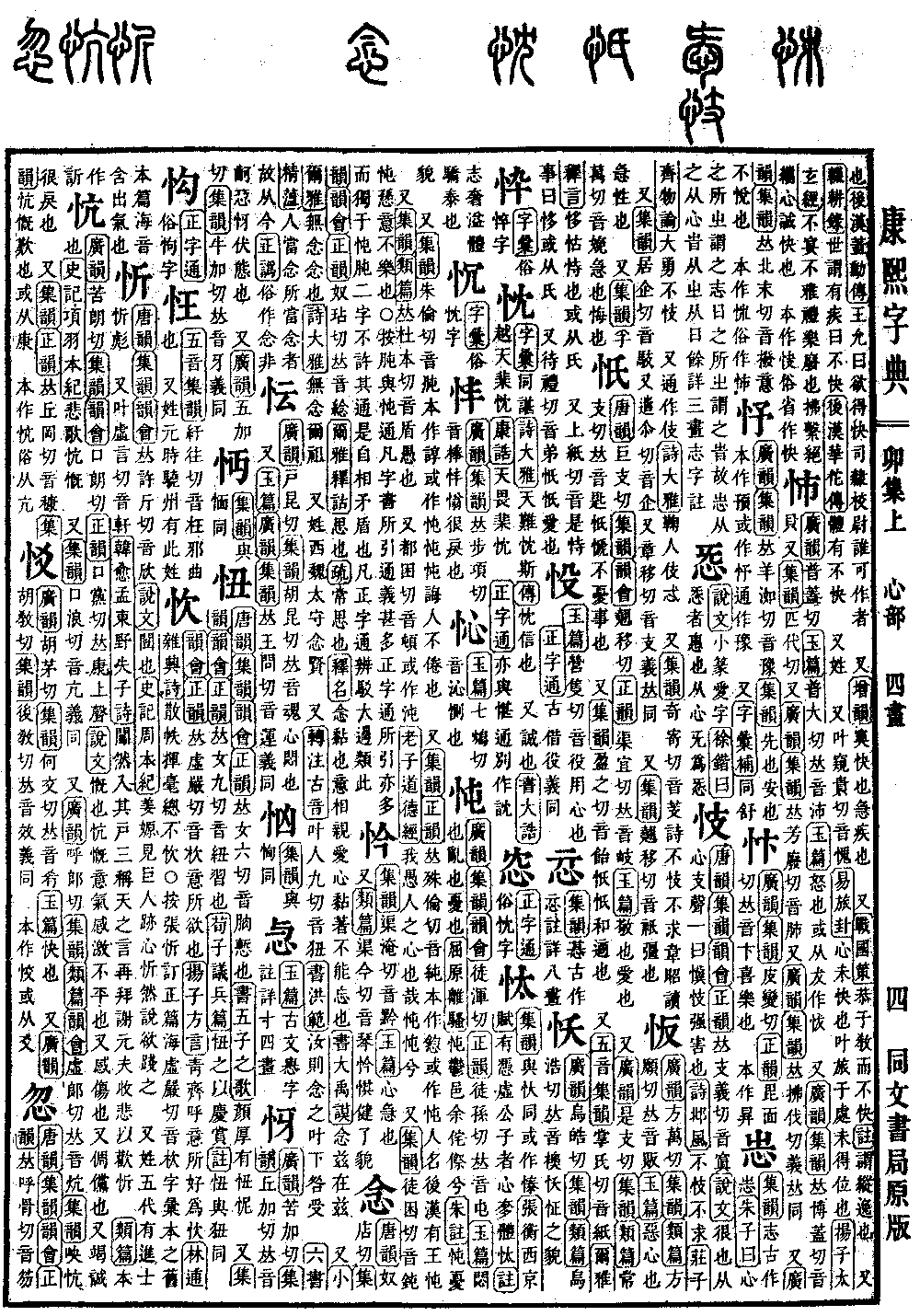
Mao Collection, Upper Volume
Radical: Heart (xīn)
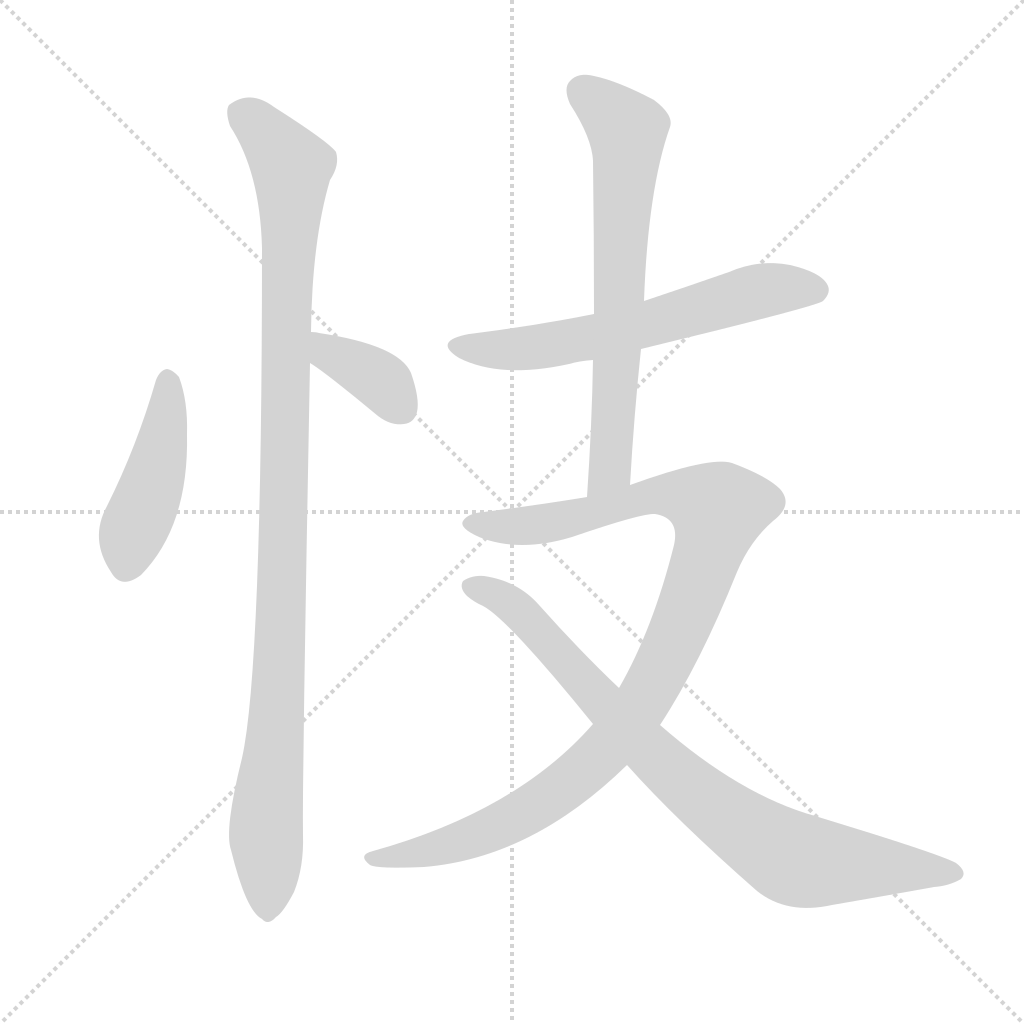
Character: Zhi
Kangxi stroke count: 8
Page 378, Entry 06
Tang Rhymes (Tangyun), Collection Rhymes (Jiyun), Rhyme Compendium (Yunhui), and Orthodox Rhymes (Zhengyun) all provide the pronunciation zhi (falling tone).
According to the Explaining Graphs and Analyzing Characters (Shuowen), it means perverse. It is formed from the Heart radical with zhi acting as a phonetic component. Another interpretation is that it signifies stubborn malice and harm.
Book of Odes (Shijing), Odes of Bei: Not perverse, not greedy.
Zhuangzi, Discourse on Making All Things Equal: Great courage does not manifest as perversity.
It is also commonly written in a variant form (ji).
Book of Odes (Shijing), Greater Odes: Exhausting people through perversity and error.
According to Collection Rhymes (Jiyun), it is also pronounced ji (falling tone), a reading attributed to Wei Zhao in the passage concerning not being perverse or greedy in the Book of Odes.
According to Collection Rhymes (Jiyun), it is also pronounced zhi (falling tone), or pronounced qi (falling tone), or pronounced zhi (level tone). The meanings are the same.
According to Collection Rhymes (Jiyun), it is also pronounced qi (rising tone), meaning stubborn.