Chen Collection, Middle Volume
Radical: Tree (mù)
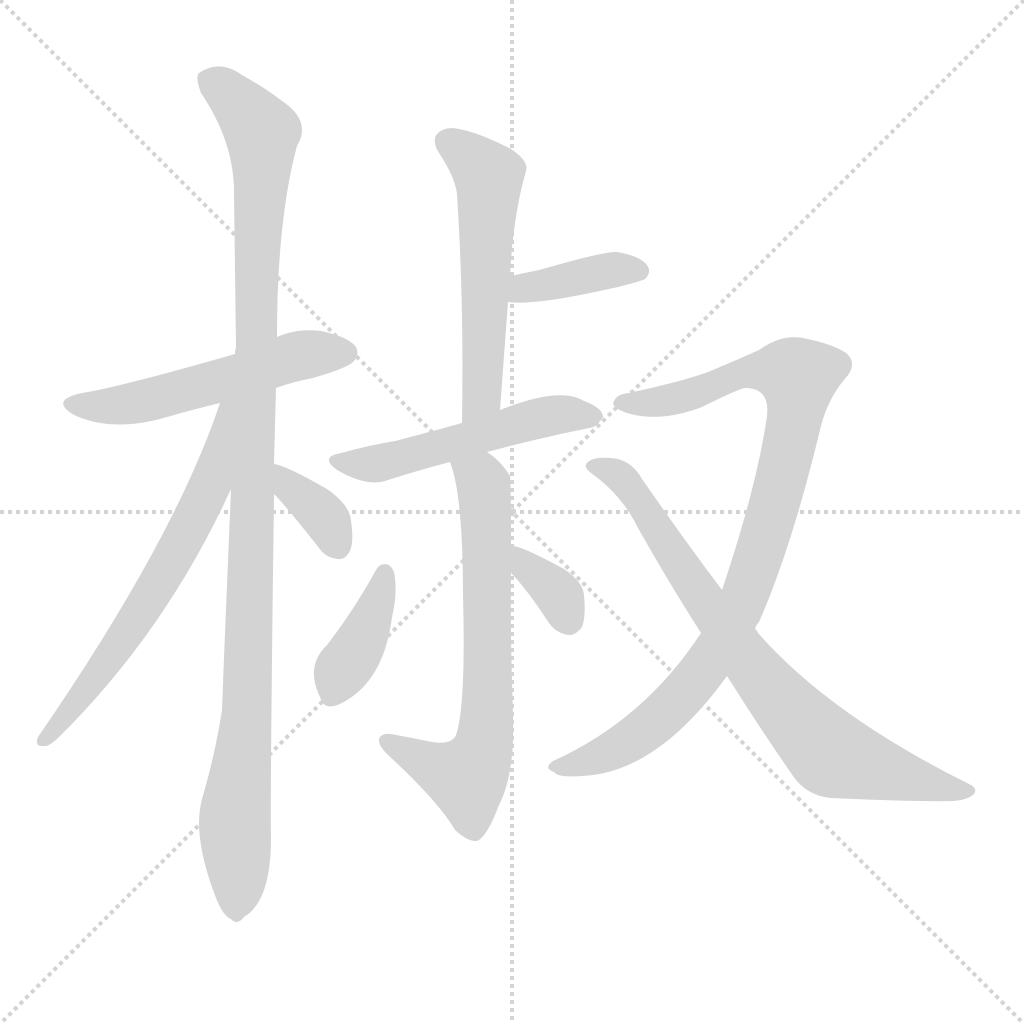
椒
Kangxi strokes: 12
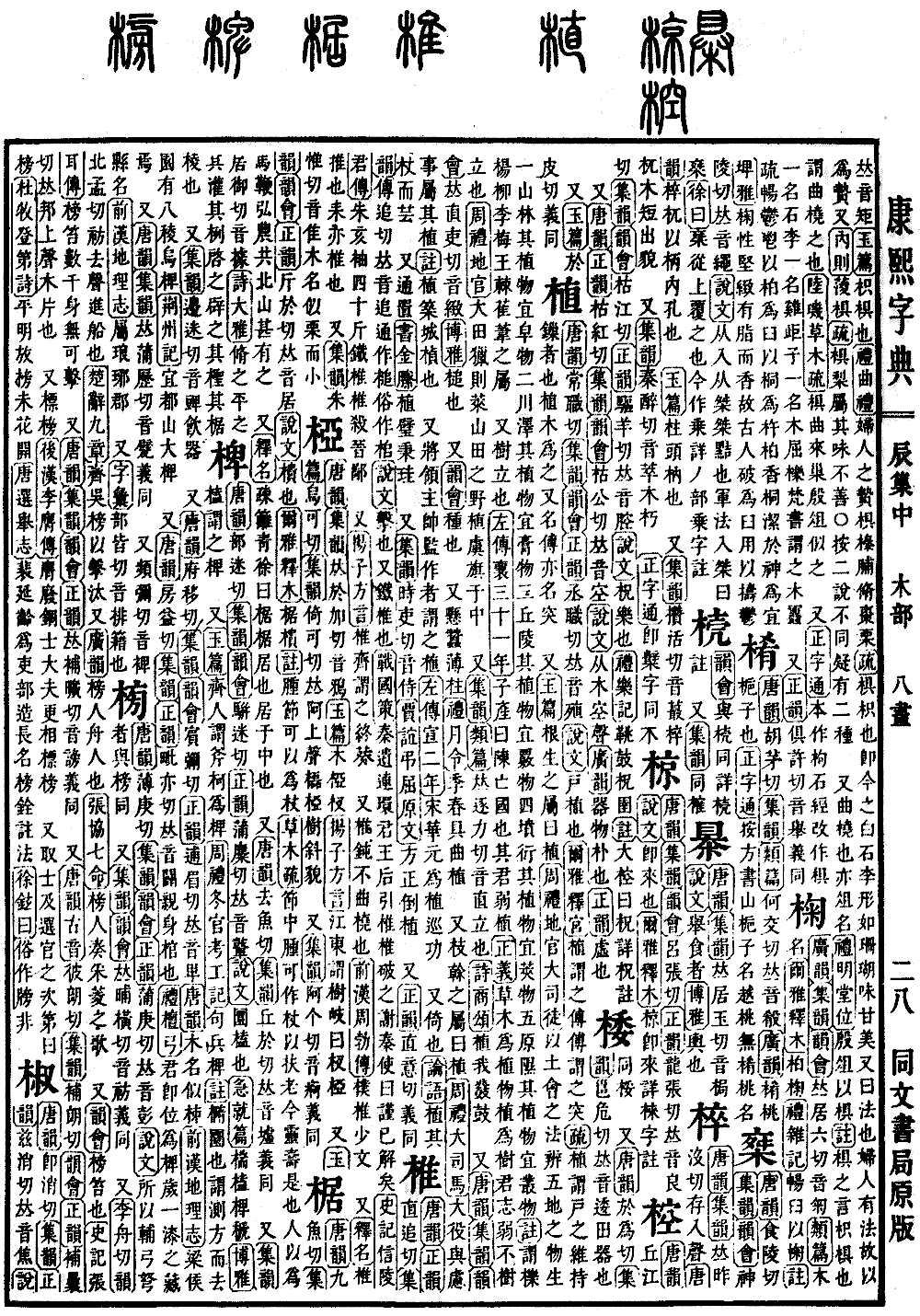
Page 536, Entry 16
Pronounced jiao.
According to the Explaining Graphs and Analyzing Characters (Shuowen Jiezi), it refers to a seed pod. Also written in variant forms.
According to the Erya (Erya), entry on trees, it refers to a cluster of seeds. The commentary states it describes the appearance of fruit clustered together in a pod. The sub-commentary explains that this type of plant bears fruit clustered in a capsule.
In the Book of Odes (Shijing), Tang wind section, it mentions the fruit of the pepper tree multiplying and filling a vessel. Lu's commentary notes that the character liao is a grammatical particle. The pepper tree resembles the dogwood, has thorns, and leaves that are firm and glossy; people in the Shu region use it to make tea, and people in the Wu region use it to make beverage infusions. Nowadays, in the mountains of Chenggao, there is a pepper known as bamboo-leaf pepper. Islands in the East Sea also have pepper trees; the fruit is long rather than round, and the flavor resembles citrus peel; deer on these islands consume it, causing their meat to take on a citrus-pepper fragrance.
According to the Records of Han Officials (Hanguan Yi), the empress would paint the walls with pepper to create a pepper chamber, intended to provide warmth. In Huanzi's New Discourse (Xinlun), it is mentioned that the younger sister of Dong Xian served as a palace lady and lived in a residence named the Pepper Pavilion.
According to the Xunzi (Xunzi), section on ritual, the scent of pepper and orchid plants is used to nourish the nose.
According to the Records of Customs in Jing-Chu (Jingchu Suishiji), on the first day of the first lunar month, the young and old congratulate each other in order and offer pepper-infused wine.
Land that is elevated in the center and slopes on all four sides is called a pepper mound. Qu Yuan writes in the Li Sao (Lisao) that he traveled to a pepper mound to take his rest. The mountain peak is also called a pepper. Xie Zhuang writes in his Rhapsody on the Moon (Yuefu) that chrysanthemums scatter fragrance upon the mountain peak.
The name of a place and also a surname. Pepper was a city in the State of Chu during the Spring and Autumn period; Jiao Ju took the name of the city as his surname.
Pronounced jiao (falling tone). Refers to a fragrant scent. In the Book of Odes (Shijing), Zhou eulogies section, it speaks of the fragrance of the pepper plant.
The Explaining Graphs and Analyzing Characters (Shuowen Jiezi) does not contain the entry for this character. It notes an alternative form, pronounced liao. Xu Kai states that this alternative form is the modern equivalent of the pepper character. The Dictionary of Standard Characters (Zhengzitong) notes that Xu was mistaken about the botanical nature of the pepper tree. According to the Comprehensive Records (Tongzhi), there is a variety of pepper in Guangdong that grows as a vine. The Record of the Customs of Cambodia (Zhenla Fengtuji) notes that black pepper grows by twining around vines; thus, both grass and wood varieties can be used.