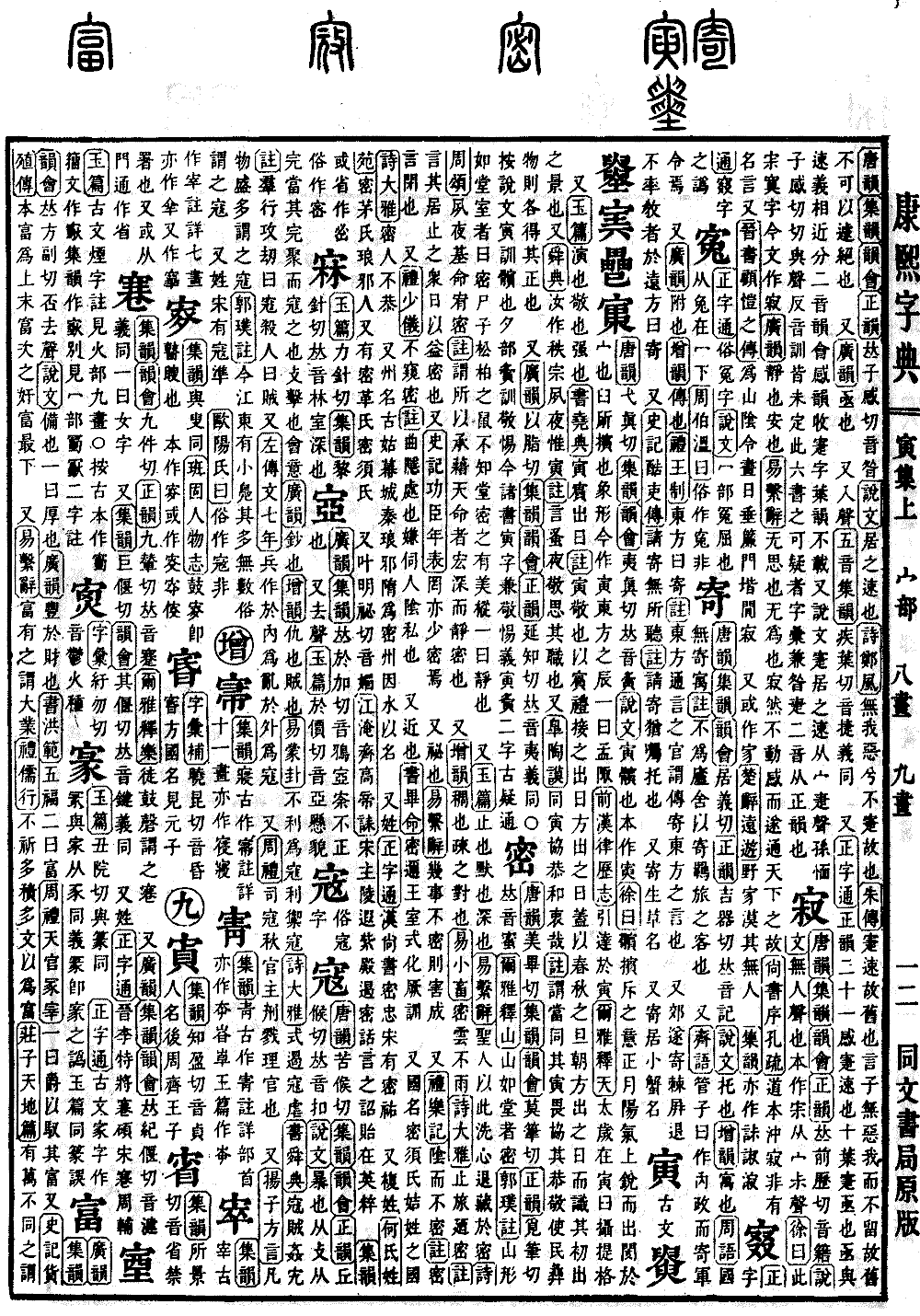
Yin Collection, Upper Volume
Radical: Roof (mián)
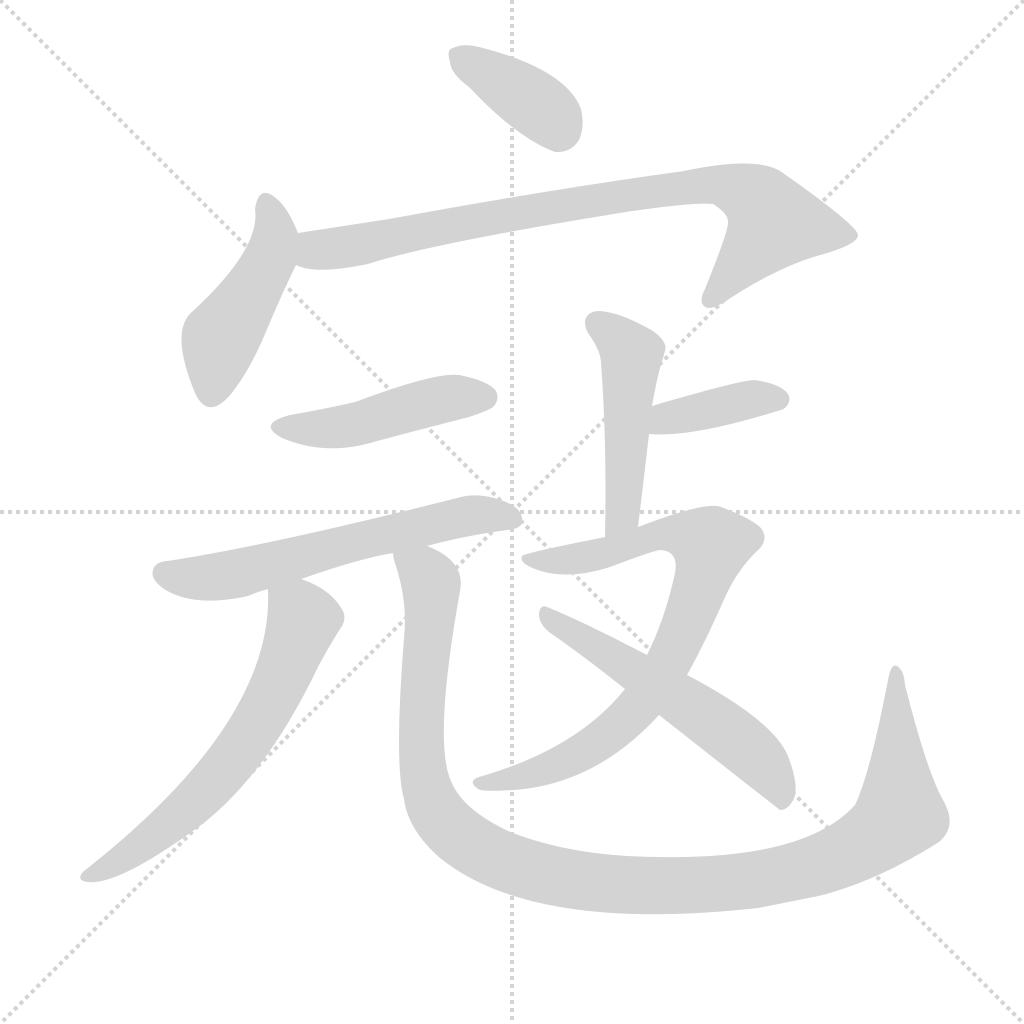
Kou
Kangxi strokes: 11
Page 288, Entry 15
Pronounced kou.
According to the Explanation of Words and Phrases (Shuowen Jiezi), it means to act with violence. It is composed of the radical for strike and the character meaning complete, signifying to strike when a group has gathered. Strike implies to hit. This is an ideographic character.
According to the Broad Rhymes (Guangyun), it means to plunder.
According to the Expanded Rhymes (Zengyun), it means enmity or a thief.
Book of Changes (Yijing), Mong Hexagram: It is not favorable to act as a brigand; it is favorable to resist the brigand.
Book of Odes (Shijing), Greater Odes (Daya): To curb violence and oppression.
Book of Documents (Shujing), Canon of Shun: Brigands, thieves, traitors, and evildoers.
Commentary: A group attacking and plundering is called a brigand; one who kills people is called a thief.
Also, Zuo Tradition (Zuo Zhuan), seventh year of Duke Wen: Military action originating from within is called rebellion; from the outside, it is called brigandage.
Also, Rites of Zhou (Zhouli): The Minister of Justice (Sikou), an official of the Autumn Office, is responsible for punishments and legal matters.
Also, Yangzi's Dialects (Fangyan): When things are abundant, many call it kou.
Commentary by Guo Pu: In the region east of the Yangtze River today, there is a small wild duck that appears in countless numbers; common folk call them kou ducks.
Also a surname. There was Kou Zhun during the Song Dynasty.
Ouyang says: The common form written with an additional component is incorrect.
Textual research: In the commentary by Guo Pu, it mentions that in the region east of the Yangtze River, there is a small wild duck appearing in countless numbers called a kou. We have corrected the text by adding the word duck after kou.