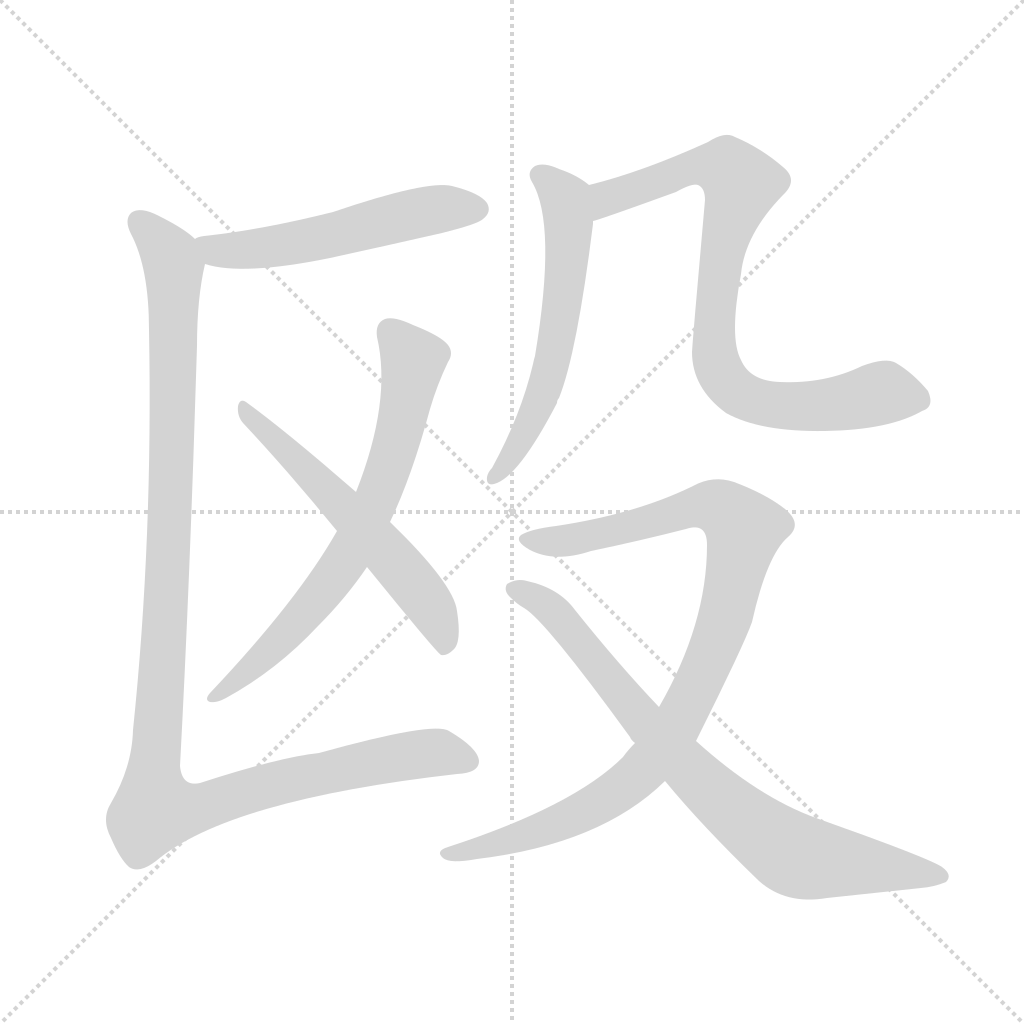
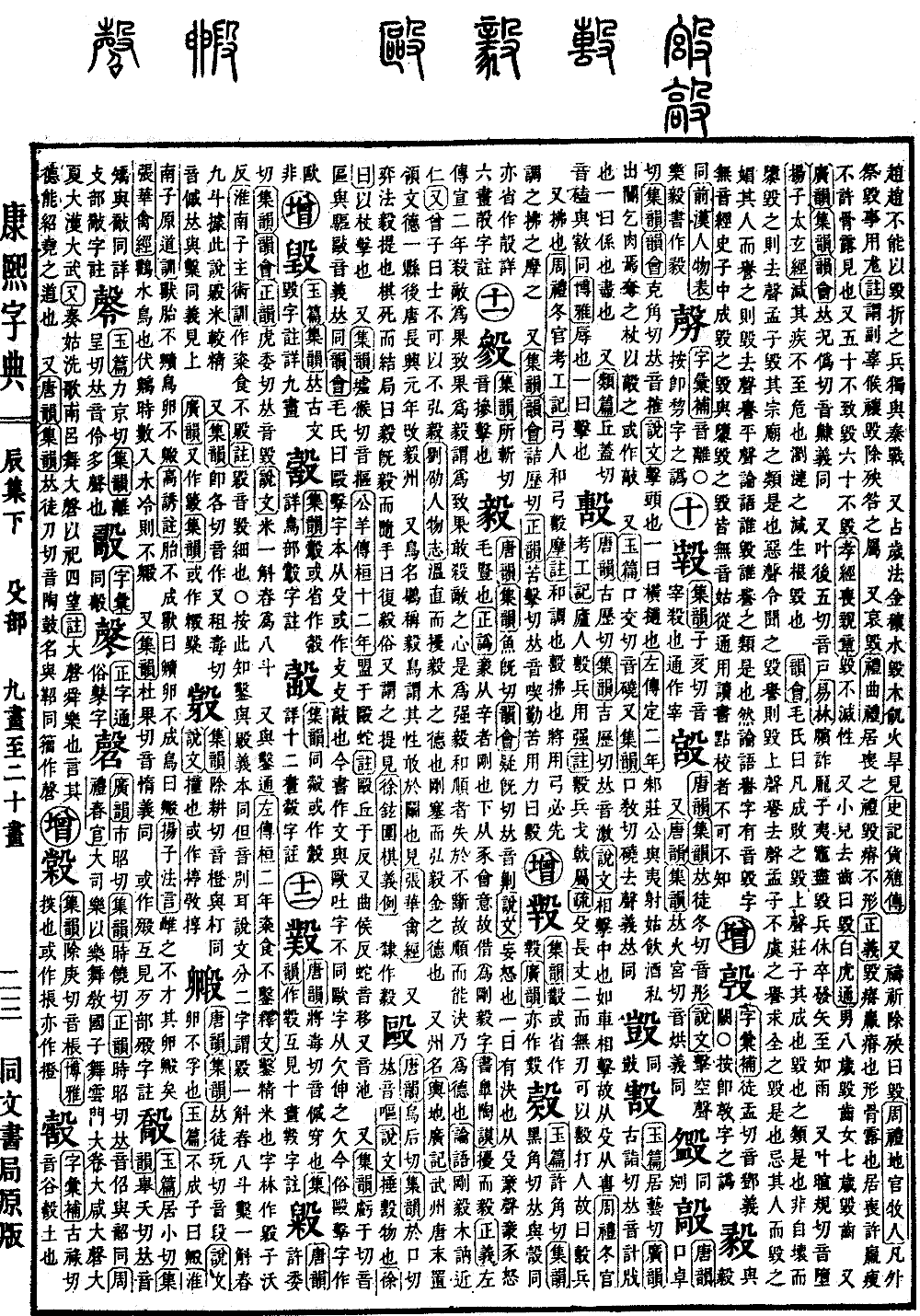
Chen Collection, Lower Volume
Radical: Weapon (shū)
Kangxi Strokes: 15
Page 587, Entry 01
Pronounced ou (rising tone)
According to the Explanation of Simple and Compound Characters (Shuowen Jiezi), it refers to beating or striking an object. Xu states it means to strike with a staff.
Also pronounced kou (level tone)
In the Commentary on the Spring and Autumn Annals (Gongyang Zhuan), for the twelfth year of Duke Huan, it is recorded: An alliance was made at Oushe. The commentary notes the pronunciation as qiu (rising tone) or qu (rising tone). The character for she is pronounced yi (rising tone) or chi (rising tone).
Also pronounced qu (level tone)
Identical in sound and meaning to the words for driving or urging forward.
The Mao family records in the Collection of Rhymes (Yunhui) state: The character for beating is originally formed with the weapon radical, though it is sometimes written with the tap radical. The tap radical refers to knocking. Modern texts write it with the character for o, which is different from the character for spitting. The character for spitting is formed with the yawn radical. The common modern practice of writing the character for beating with the yawn radical is incorrect.