Mao Collection, Middle Volume
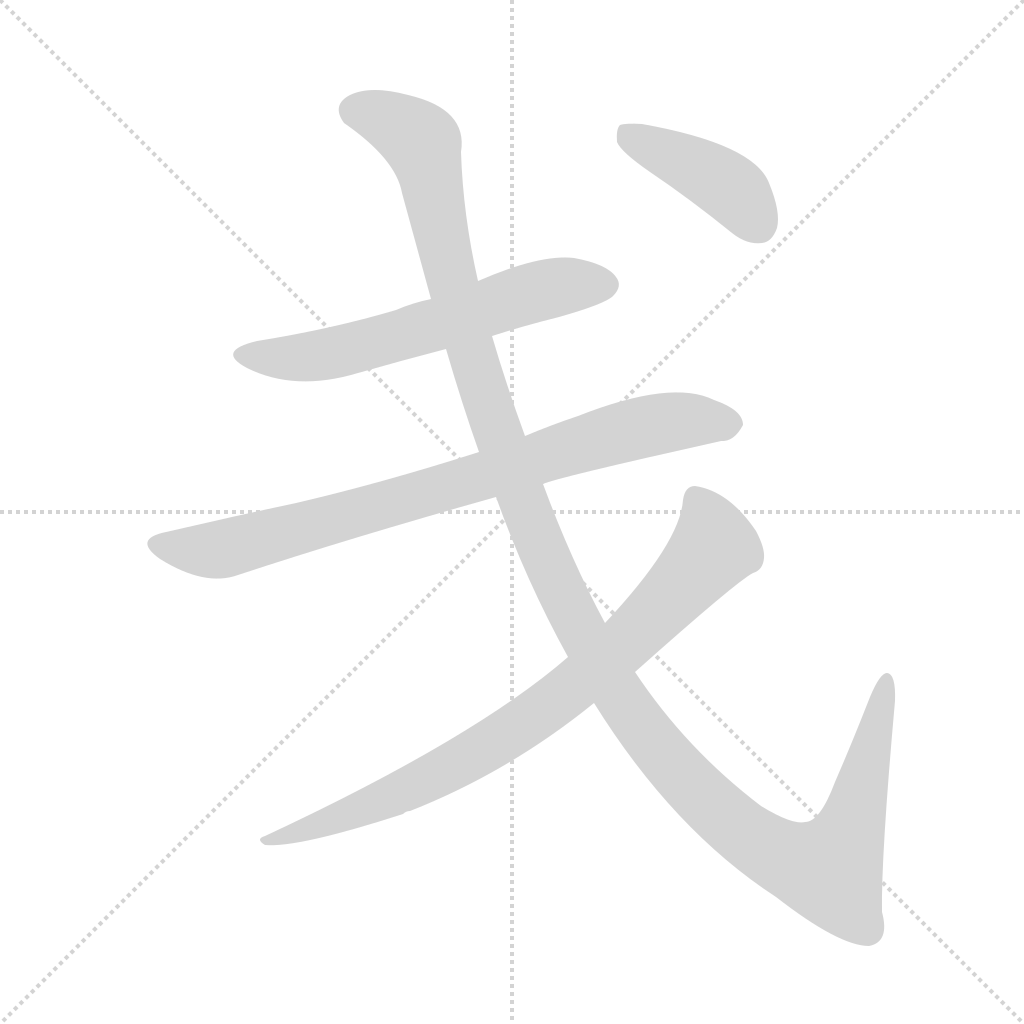
Radical: Halberd (gē)
Kangxi stroke count: 8
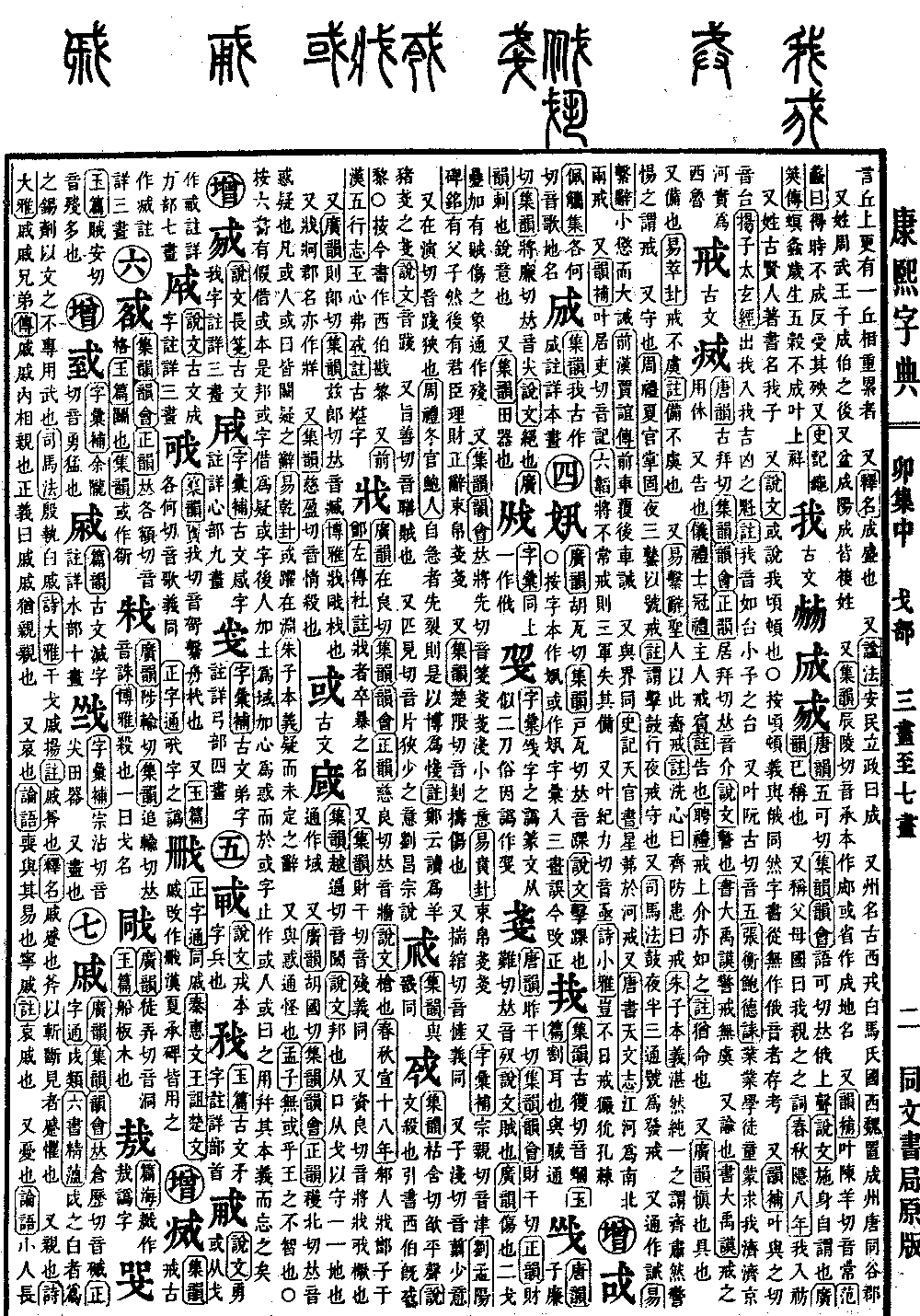
Page 412, Entry 01
Tang Rhyme (Tangyun): Pronounced jian. Collected Rhymes (Jiyun) and Rhyme Collection (Yunhui): Pronounced jian. Correct Rhymes (Zhengyun): Pronounced jian.
Explication of Written Characters (Shuowen Jiezi): To injure. Broad Rhymes (Guangyun): To harm. Two halberd characters stacked represent the image of theft and injury. Commonly used as a variant for the character meaning to ruin (can).
Also, Collected Rhymes (Jiyun) and Rhyme Collection (Yunhui): Pronounced jian. The reduplicated form jian-jian means shallow or small. Book of Changes (Yijing), Hexagram of Adornment (Bi): Bound silks, small and simple.
Also, Dictionary Supplement (Zihuibu): Pronounced jin. Liu Mengyang Inscription: There are fathers and sons, and thereafter there are rulers and ministers; manage wealth and correct language; bound silks, small and simple.
Also, Collected Rhymes (Jiyun): Pronounced chan. To pound and injure.
Also, pronounced jian. The meaning is the same.
Also, pronounced jian. Meaning small.
Also, pronounced jian. Meaning narrow. Rites of Zhou (Zhouli), Winter Offices, Tanners: Those that are tight are split first; therefore, using width to determine narrowness. Commentary: Zheng says: Read as the jian in sheepskin and pigskin. Explication of Written Characters (Shuowen Jiezi): Pronounced jian.
Also, pronounced zhan. To injure.
Also, pronounced pian. Meaning narrow and few. According to the commentary of Liu Changzong.
Original character is composed of the radical for bad (dai) and the radical for again (you).
Textual Research: Rites of Zhou (Zhouli), Winter Offices, Tanners: Those that are tight are split first; therefore, using width to determine narrowness. Corrected in accordance with the original text to read as the character meaning narrow.