Wu Collection, Lower Volume
Radical: Spirit (shì)
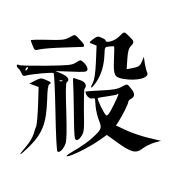
Grapheme: Dui
Kangxi strokes: 9
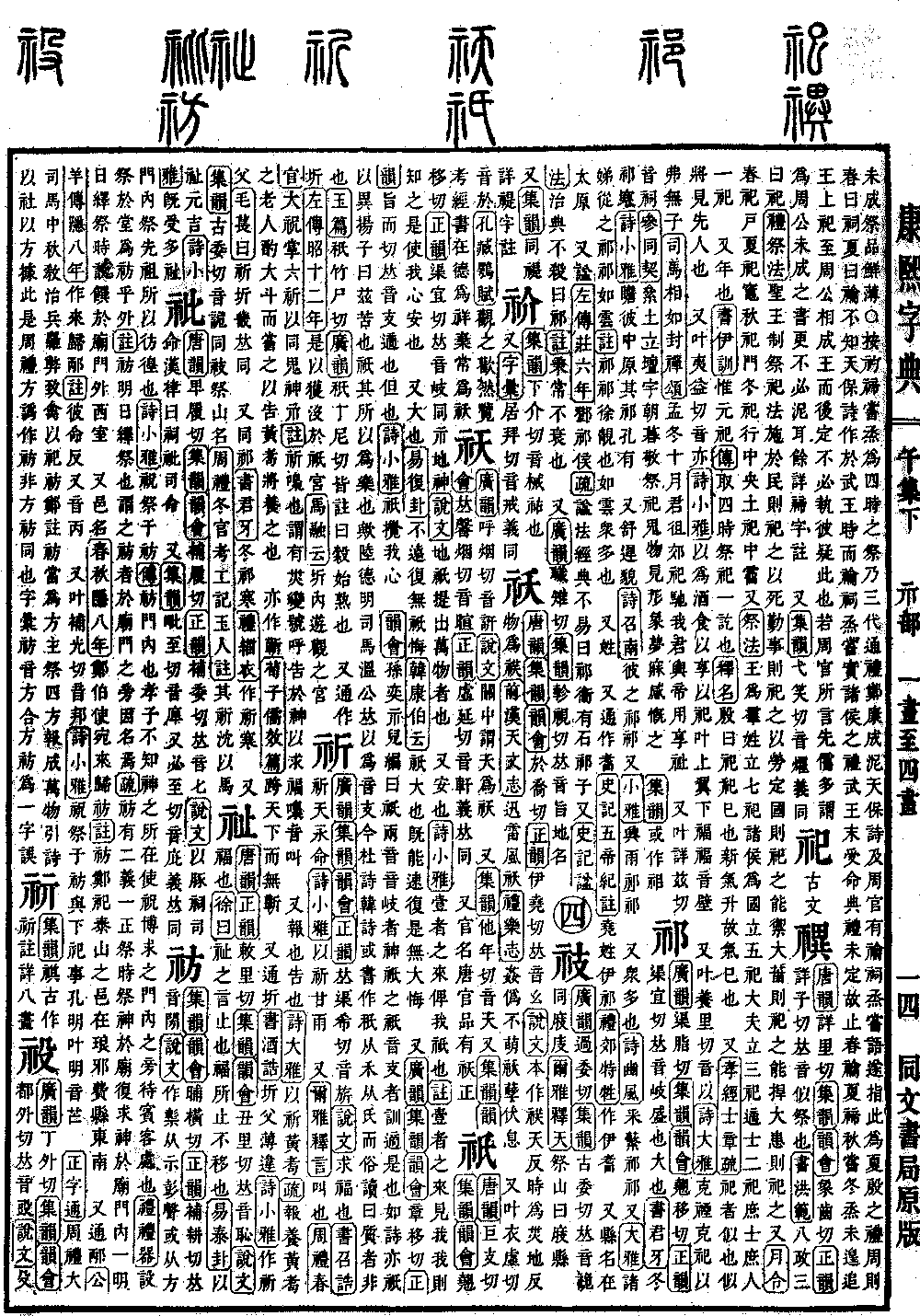
Page 840, Entry 14
According to the Extensive Rhymes (Guangyun), pronounced dai (falling tone). According to the Collection of Rhymes (Jiyun) and the Rhyme Compilation (Yunhui), pronounced dai (falling tone). According to the Explanation of Scripts (Shuowen), it is a type of weapon (shu). Another interpretation is that in the city walls and marketplaces, sheepskins were hung high; if a person sought to enter where they were not permitted, the skin was lowered to startle the oxen and horses, which is called a dui. Hence, it is composed of the radicals for spirit and weapon. The Book of Odes (Shijing) says: What use are the ge-spears and the dui-weapons. Also, Dui-Xu is the name of a county, located in Fengyi. The History of the Former Han Dynasty (Qianhan Shu), Treatise on Suburban Sacrifices (Jiaosi Zhi) mentions: The phoenix alighted at Dui-Xu. Also, according to the Extensive Rhymes (Guangyun), pronounced duo. The meaning is the same. Regarding the History of the Former Han Dynasty, Treatise on Suburban Sacrifices, Yan Shigu reads it this way. Also a surname. During the Han dynasty, there was the Guanglu Xun official Dui Feng.