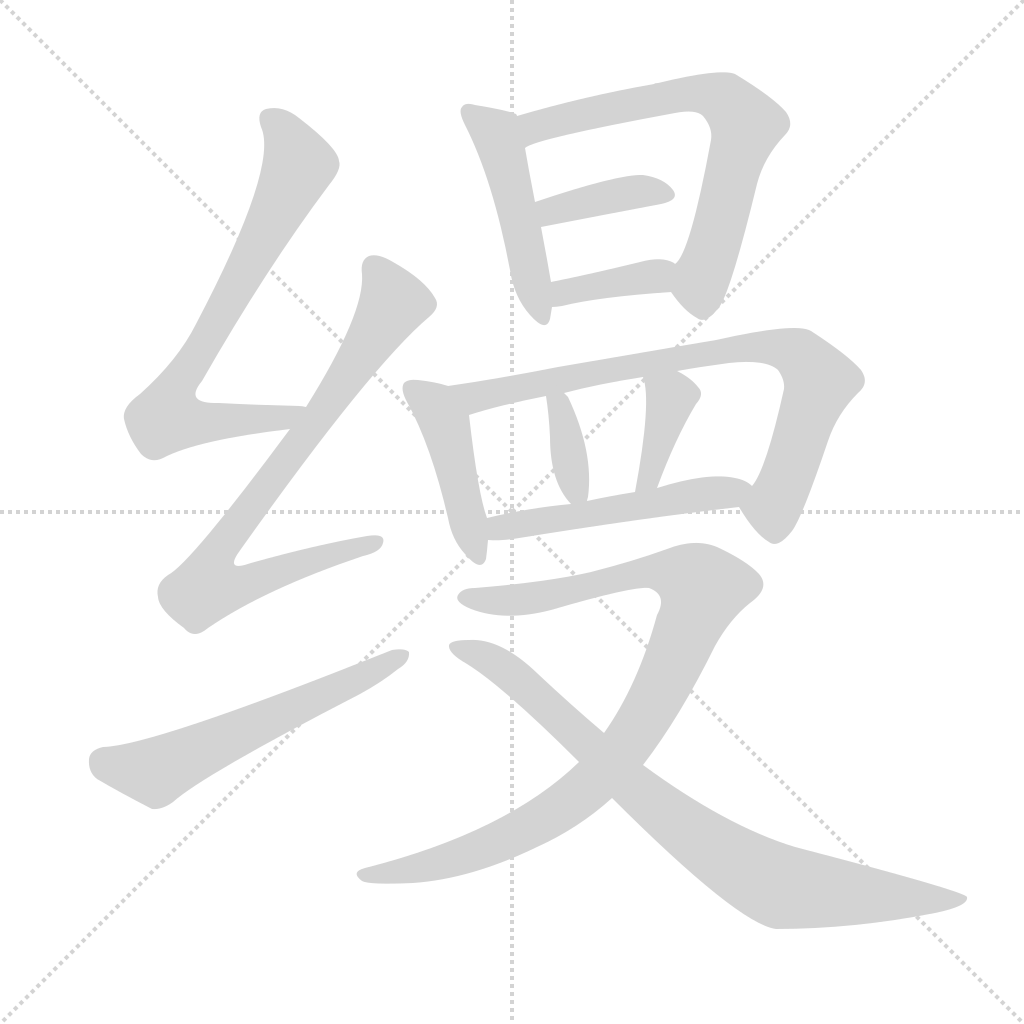
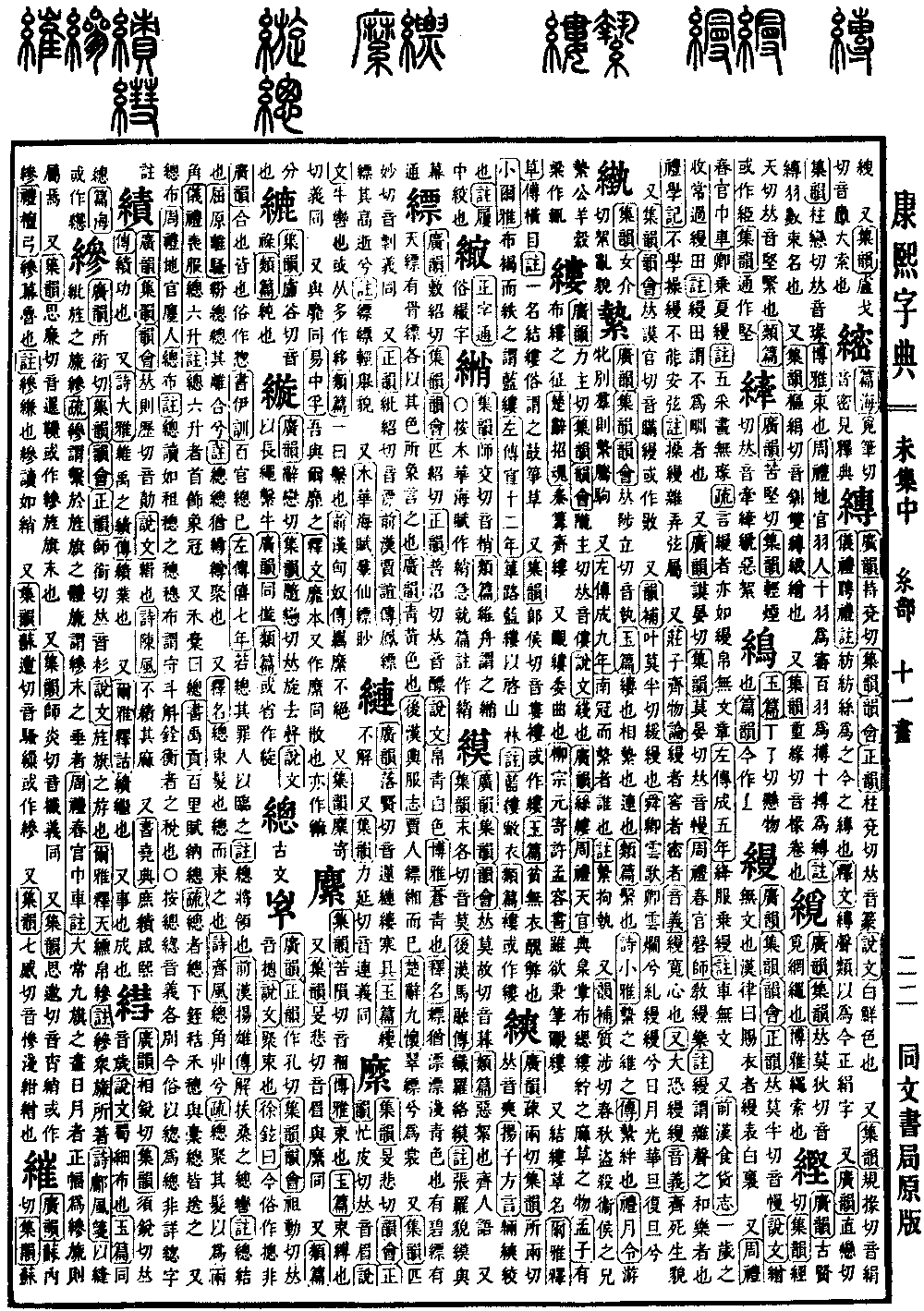
Wei Collection, Middle Volume
Radical: Silk (mì)
Page 936, Entry 17
Pronounced man.
According to the Shuo Wen Jie Zi (Explaining Graphs and Analyzing Characters), it refers to silk fabric without patterns. The Han Dynasty statutes state: For those bestowed with garments, the outer layer is plain silk and the inner layer is white.
Also in the Rites of Zhou (Zhouli), Spring Offices, Master of Carriages: High officials ride in carriages with plain silk hangings. Commentary: This refers to five-colored paintings without carving. Sub-commentary: To say it is plain means it is like plain silk without patterns.
In the Zuo Tradition (Zuozhuan), fifth year of Duke Cheng: Wearing crimson garments and riding in a carriage without ornamentation. Commentary: A carriage without patterns.
Also in the History of the Former Han (Qian Hanshu), Treatise on Food and Money: The harvest of one year often exceeds that of uncultivated fields. Commentary: Uncultivated fields refers to fields without drainage furrows.
Also pronounced man.
In the Rites of Zhou, Spring Offices, Master of Chimes: Teach the harmonious music. Commentary: Refers to the harmonious music of mixed sounds.
In the Record of Rites (Liji), Learning Record: If one does not study the varied exercises, one cannot master the strings. Commentary: Varied exercises refers to mixed string musical techniques.
Also in the Zhuangzi, Discussion on Making All Things Equal: The loose, the hidden, the secretive. Pronunciation note: Man means a relaxed heart.
Also: Great fear is pervasive. Pronunciation note: The appearance of regarding life and death as the same.
Also pronounced man. Man is sometimes written in a variant form.
Also, rhyming with the preceding, pronounced man (slow and relaxed).
In the Song of Auspicious Clouds (Qingyun Ge): The auspicious clouds are brilliant, intertwining and spreading slowly. The glory of the sun and moon, day after day.