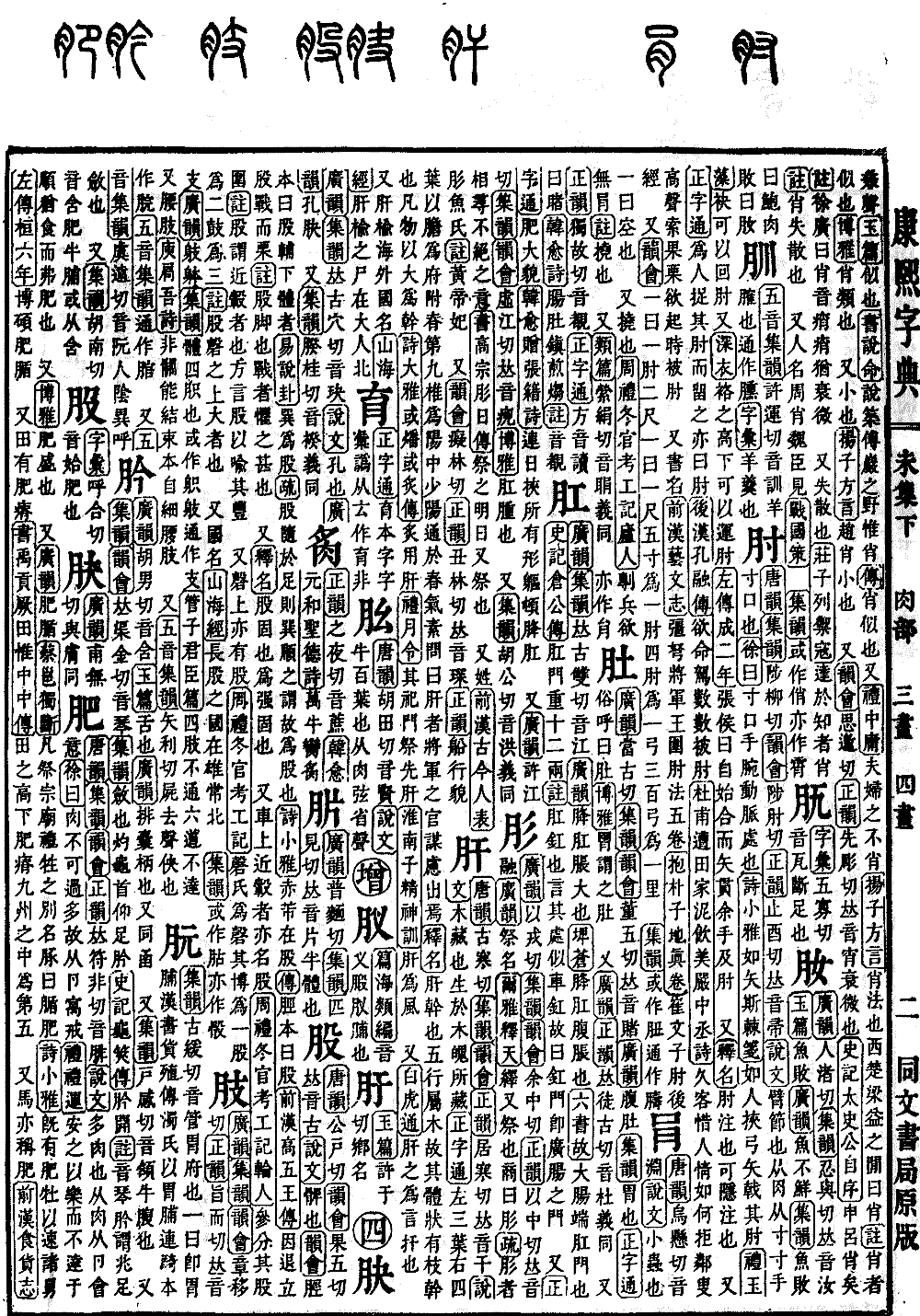
Wei Collection, Lower Volume
Radical: Meat (ròu)
Kangxi Strokes: 10
Page 974, Entry 17
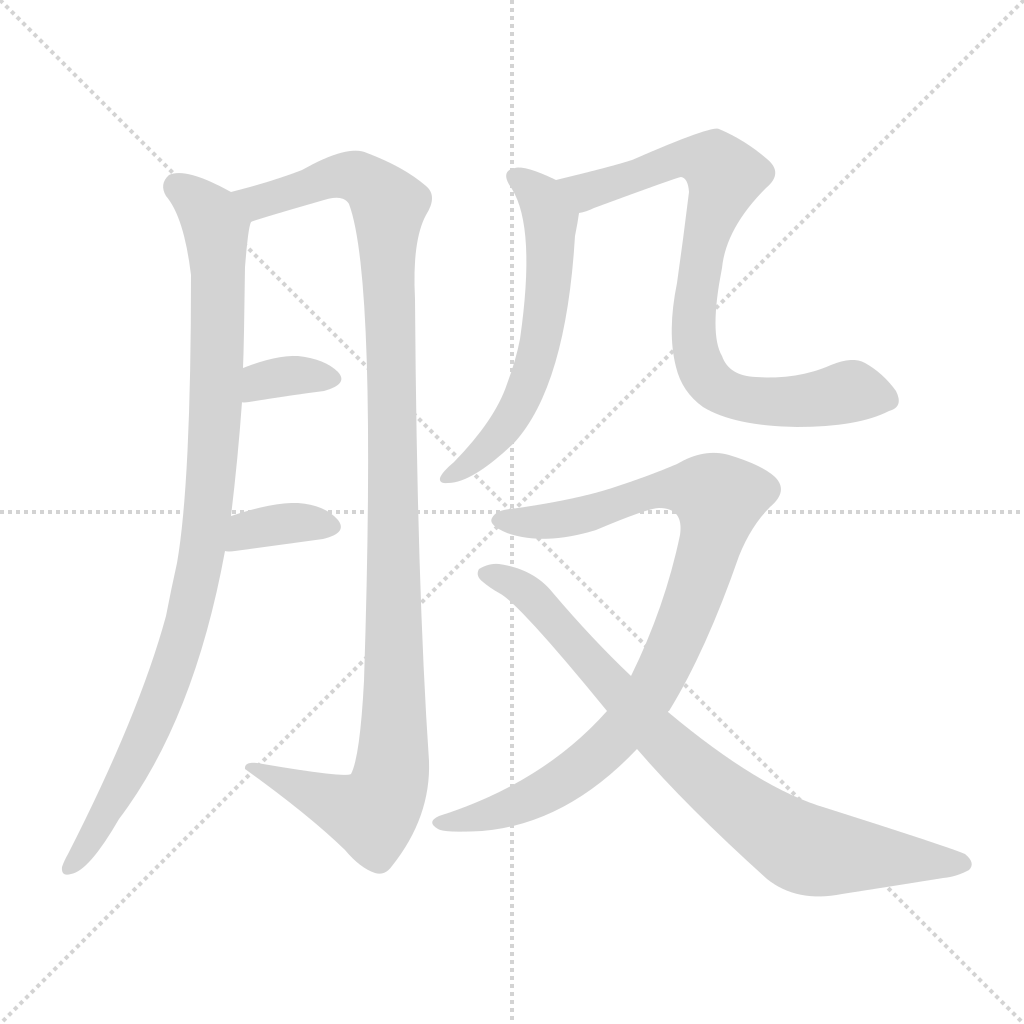
Pronounced gu (rising tone).
Shuowen Jiezi (Shuowen): The thigh.
Rhyme Anthology (Yunhui): The base of the lower leg is called the thigh (gu), which supports the lower body.
Book of Changes (Yijing), Explanation of the Trigrams: The Trigram Xun represents the thigh.
Commentary: The thigh follows the foot, implying the meaning of the Xun trigram as gentle and compliant, thus it is the thigh.
Book of Odes (Shijing), Lesser Odes of the Kingdom (Xiaoya): Red knee pads cover the thighs.
Commentary: The base of the lower leg is called the thigh.
History of the Former Han Dynasty (Qianhan), Biography of the Five Kings of the Gao Lineage: Upon retreating and standing, their thighs trembled and they shook with fear.
Annotation: Thighs, the legs. To tremble means to be extremely afraid.
Also, Explanation of Names (Shiming): Thigh (gu), meaning solid (gu), denoting strength and firmness.
Also, the part of a carriage near the hub is also called the thigh.
Rites of Zhou (Zhouli), Winter Official, Artificer's Record (Kaogongji), Wheel-wright: Divide the circumference of the thigh into three parts.
Annotation: The thigh refers to the part near the hub. Dialects (Fangyan) use the thigh to represent abundance.
Also, a musical stone (qing) also has a part called the thigh.
Rites of Zhou, Winter Official, Artificer's Record: The musical stone maker fashions the stone, making the width one part, the thigh two parts, and the drum three parts.
Annotation: The thigh is the upper, larger portion of the musical stone.
Also, the name of a country.
Classic of Mountains and Seas (Shanhaijing): The Country of Long Thighs is located north of Mount Xiongchang.
Collected Rhymes (Jiyun): Sometimes written as a variant. Also written as the character for die (dice).