Shen Collection, Upper Volume
Radical: Grass (cǎo)
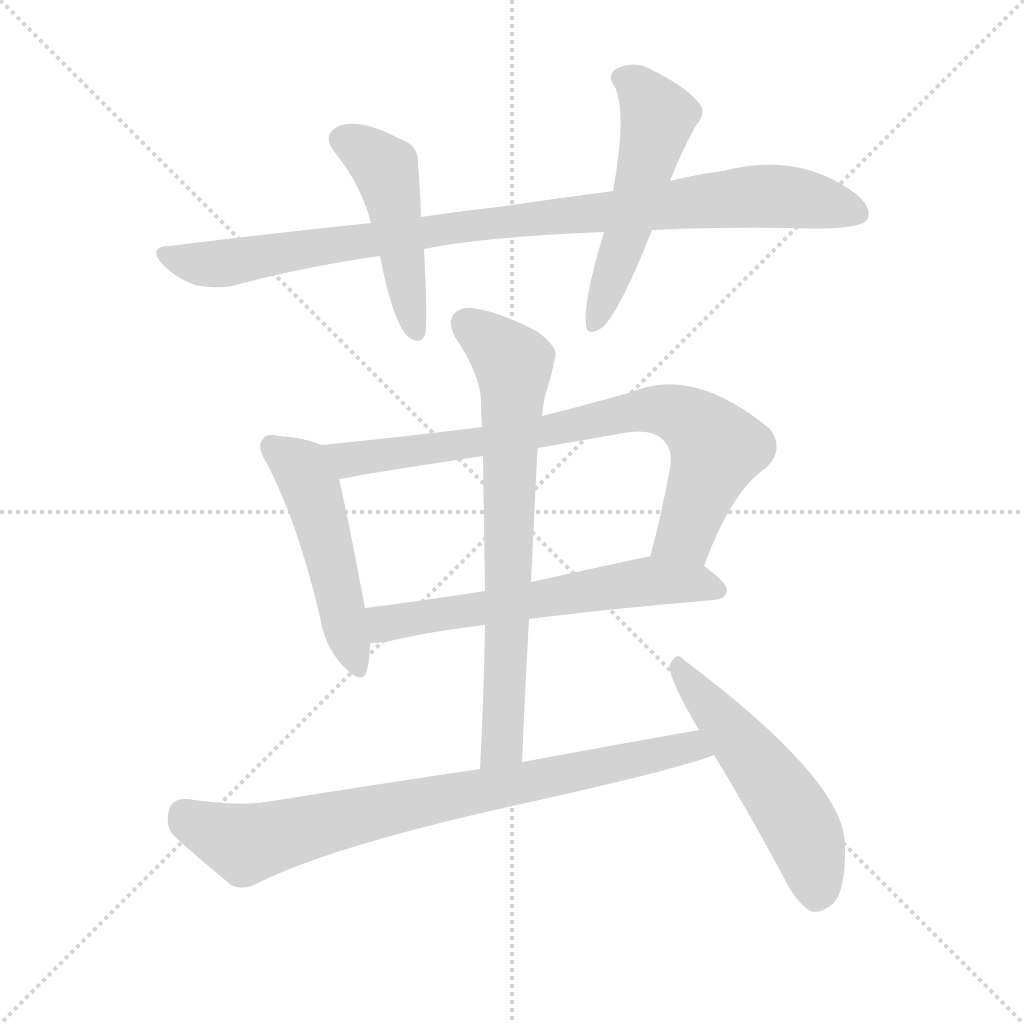
茧; Kangxi stroke count: 19; Page 940, Entry 06
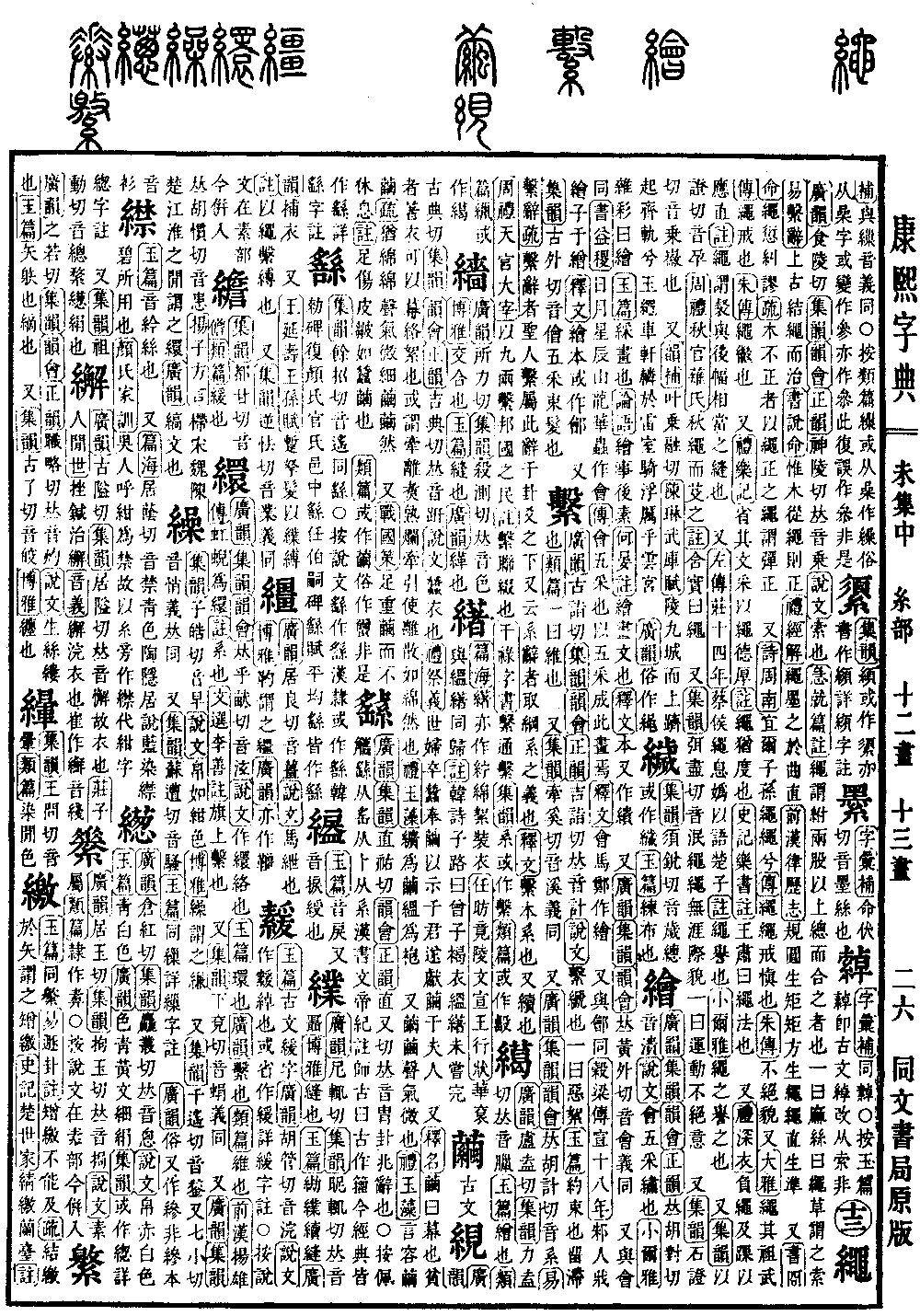
Collection of Rhymes (Jiyun): Identical. Jade Chapters (Yupian): Jian, the withering of grass. Jian is the ancient form of jian. Pronounced jian (falling rising tone). Explaining Graphs and Analyzing Characters (Shuowen): The covering of a silkworm. Book of Rites (Liji): When the ladies of the court finished their silk work, they presented the cocoons to the ruler, and subsequently offered the cocoons to the consort. Furthermore, Explaining Names (Shiming): To boil cocoons is called mu. Poor people wear clothing that can be covered or lined with silk floss. Some call this qianli, which means boiling until soft and pulling apart so it disperses like raw silk. Book of Rites (Liji): Silk floss is used for cocoons, and quilted hemp is used for robes. Furthermore, jianjian refers to a weak voice or breath. Book of Rites (Liji): One's manner of speech should be jianjian. Commentary: It is like mianmian, referring to a voice or breath that is faint and subtle. Furthermore, Strategies of the Warring States (Zhan Guo Ce): Walking with heavy callouses on the feet without rest. Note: The skin of the feet is injured and wrinkled, like a silkworm cocoon. Classified Chapters (Leipian): Sometimes written as a variant form. The common form used is jian, which is incorrect. Textual Investigation: In Explaining Names, it says "Jian is called mu." According to the text in the Imperial Readings of the Taiping Era (Taiping Yulan), the original text of Explaining Names has been corrected to "Boiling cocoons is called mu, or it is called qianli." According to the original text of Explaining Names, the character has been added after the term "is called."