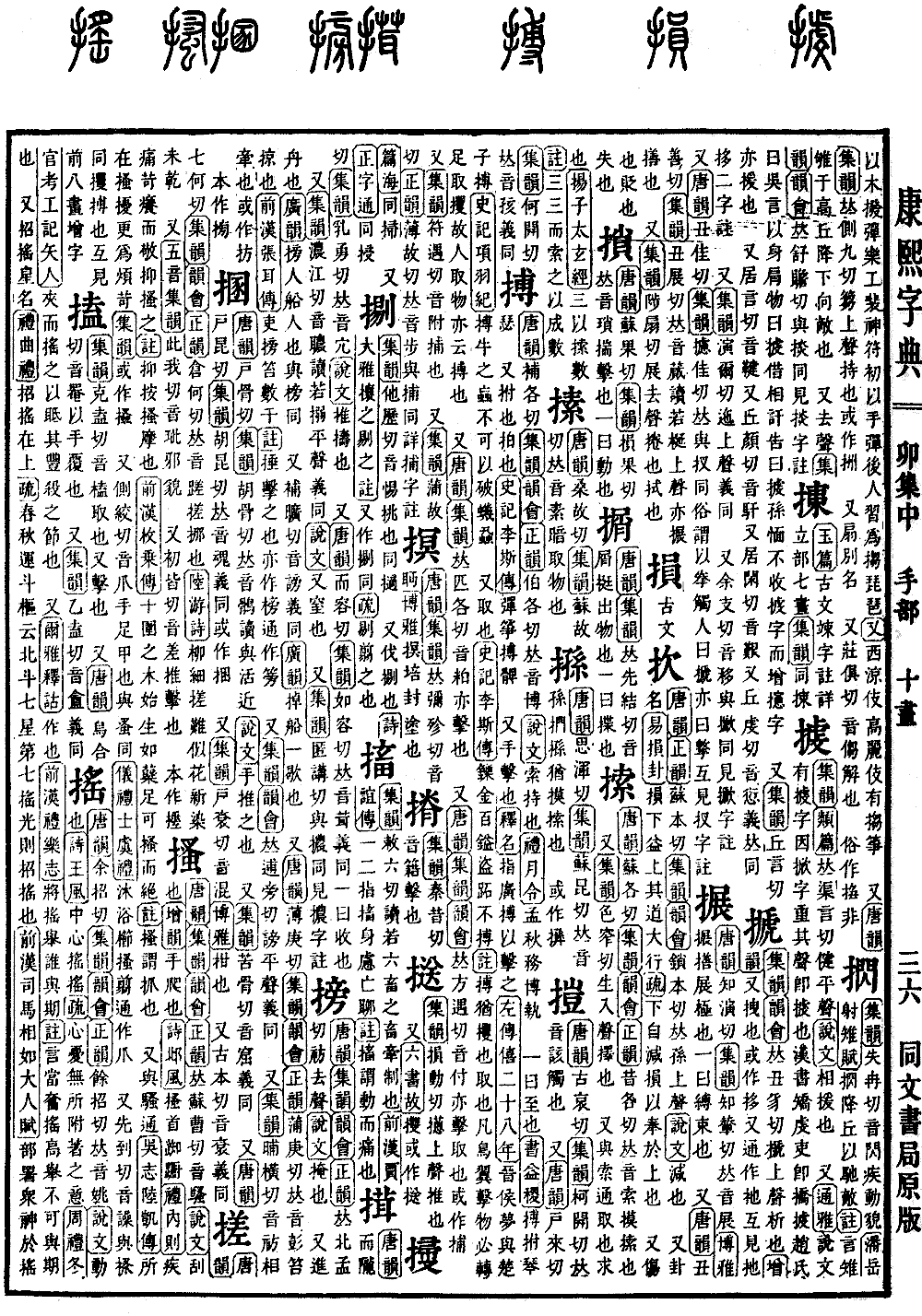
Mao Collection, Middle Volume
Radical: Hand (shǒu)
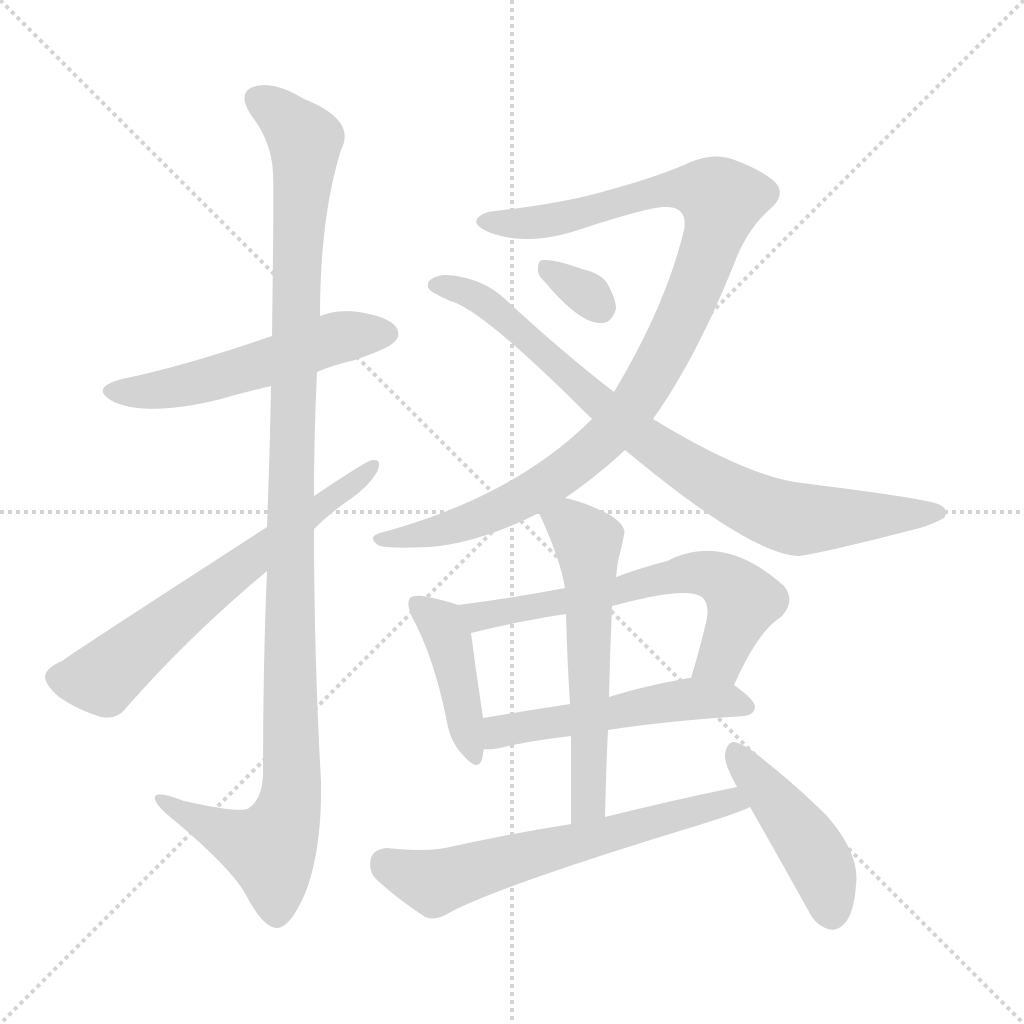
搔
Kangxi Strokes: 14
Page 446, Entry 25
Tang Rhymes (Tangyun), Collected Rhymes (Jiyun), Dictionary of Rhymes (Yunhui), and Correct Rhymes (Zhengyun) state the pronunciation is sao. According to the Explaining Graphs and Analyzing Characters (Shuowen), it means to scrape. According to the Augmented Rhymes (Zengyun), it means to scratch with the hand.
In the Book of Odes (Shijing), Beifeng section: One scratches the head and paces back and forth.
In the Record of Rites (Liji), Inner Principles section: If there is pain, illness, or itching, one should respectfully press and scratch it. The commentary states: To press, massage, and scratch.
In the History of the Former Han (Qianhan), Biography of Mei Cheng: A tree ten spans in circumference begins as a small sprout that can be scratched and snapped off. The commentary states: Sao means to scratch.
It is also used interchangeably with the character for disturbed (sao). In the Records of Wu (Wuzhi), Biography of Lu Kai: Wherever they are, they cause disturbance and harassment, becoming even more cumbersome. The Collected Rhymes (Jiyun) notes it is also written as a variant form.
Also pronounced zhao. It refers to the nails of hands and feet. It is the same as the character for flea (zao). In the Book of Etiquette and Ceremonial (Yili), Master’s Funeral Rites section: Bathe, comb, scratch, and trim. Commonly written as the character for claw (zhua).
Also pronounced zao. It is the same as the character for grasp (sao). It means to seize or grapple. See the additional character entry under the eight-stroke section.