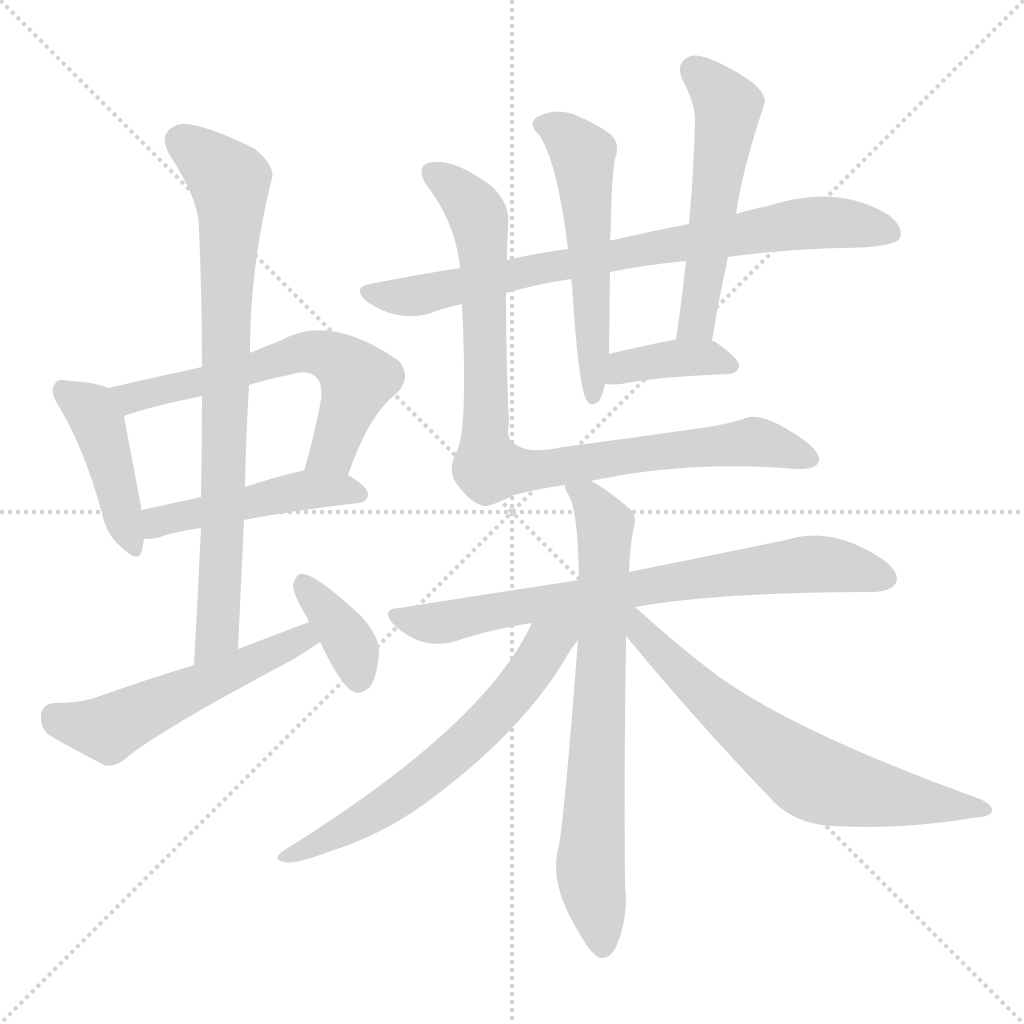
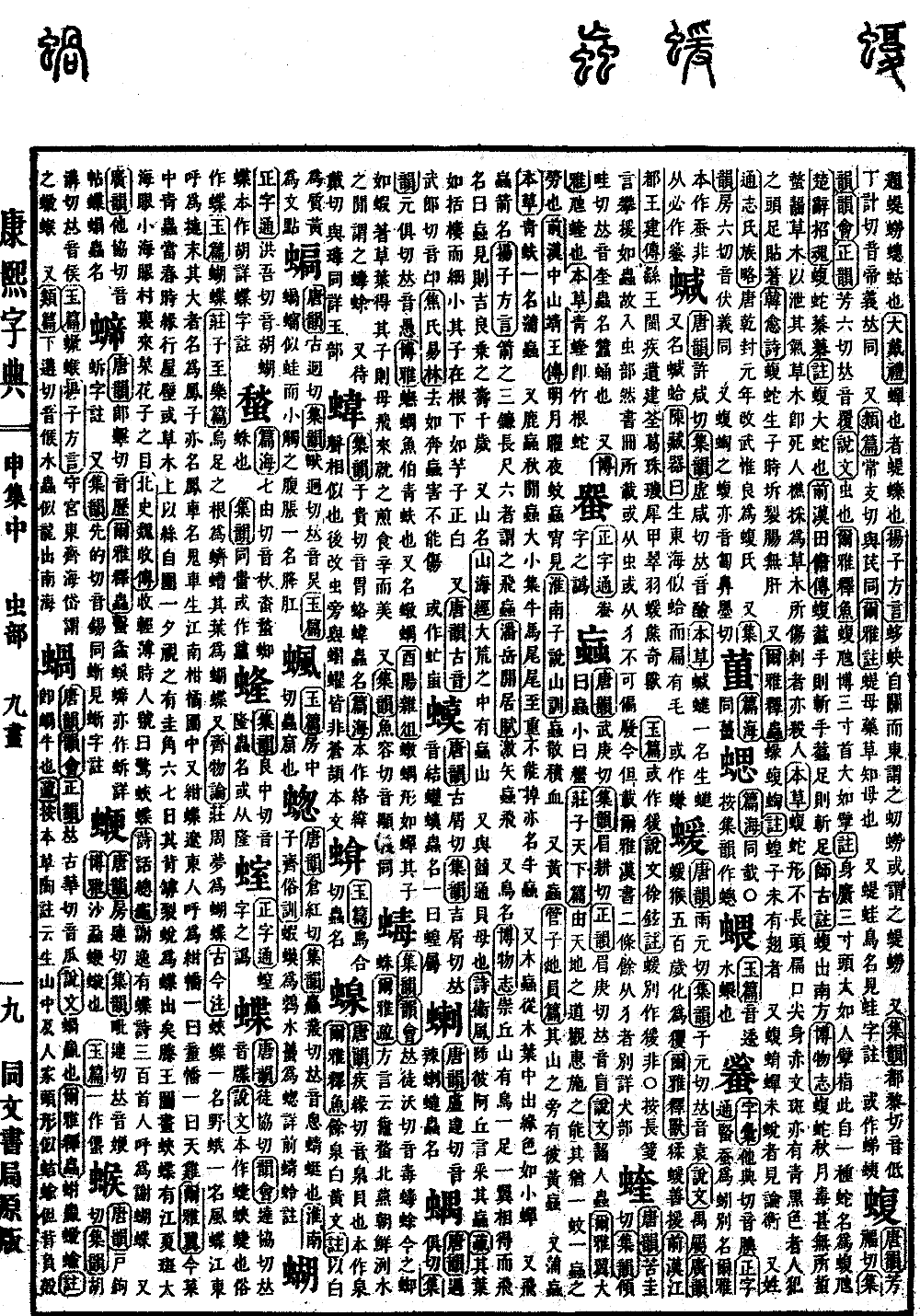
Shen Collection, Middle Volume. Radical: Insect (chóng). Character: dié. Kangxi stroke count: 15. Page 1091, Entry 25.
Tang Rhymes (Tangyun) states: pronounced dié. Rhyme Collection (Yunhui) states: pronounced dié.
Explanation of Graphs and Analysis of Characters (Shuowen Jiezi) states: originally written as the character for butterfly, meaning the butterfly species. Popularly written as dié.
Jade Chapter (Yupian) states: butterfly.
Zhuangzi, Chapter on Supreme Happiness (Zhile), states: the roots of the creeping plant turn into grubs, and its leaves turn into butterflies. Furthermore, the Chapter on the Equality of Things (Qiwulun) mentions Zhuang Zhou dreaming that he was a butterfly.
Notes Past and Present (Gujin Zhu) states: the butterfly is also called the wild moth or the wind butterfly; in the Jiangdong region, it is called jiemo. The large ones are called phoenix children or phoenix carriages; they are also called ghost carriages, and they are born in the citrus orchards of the Jiangnan region. There is also the purple butterfly, which people in Liaodong call the purple banner, or sometimes the child banner or the heavenly chicken.
Wing of the Erya (Eryayi) states: the green worm found in vegetables today crawls on house walls or plants during spring, enclosing itself in silk. After one night, angular shapes appear on the casing; after six or seven days, the back splits open, and it sheds its skin to emerge as a butterfly. Prince Teng painted butterflies with names such as Jiangxia spotted, large sea eye, small sea eye, and vegetable flower.
History of the Northern Dynasties (Beishi), Biography of Wei Shou, states: Shou was frivolous, and people of the time called him the startled butterfly.
General Collection of Poetry Tales (Shihua Zonggui) states: Xie Yi wrote three hundred poems about butterflies, and people called him Xie the Butterfly.
Broad Rhymes (Guangyun) states: pronounced tié. Dié-tà is the name of an insect.