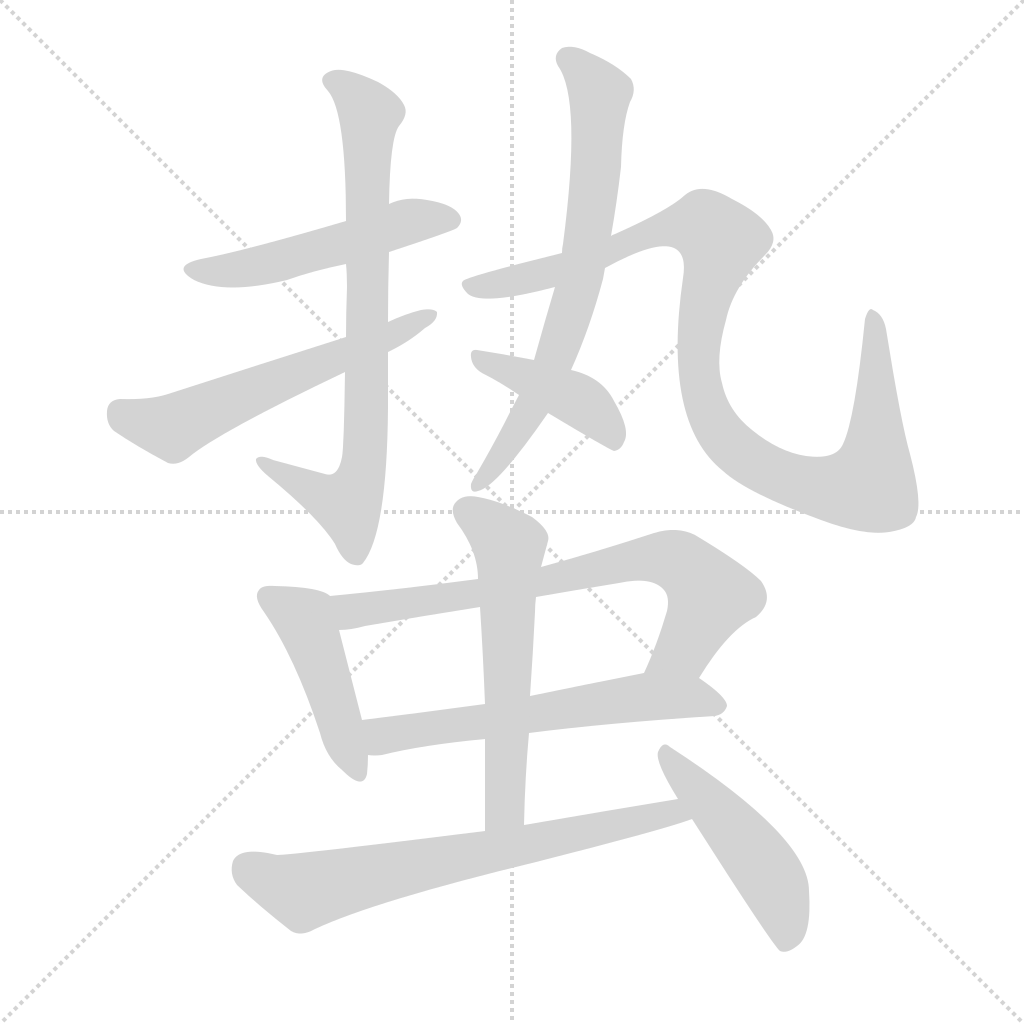
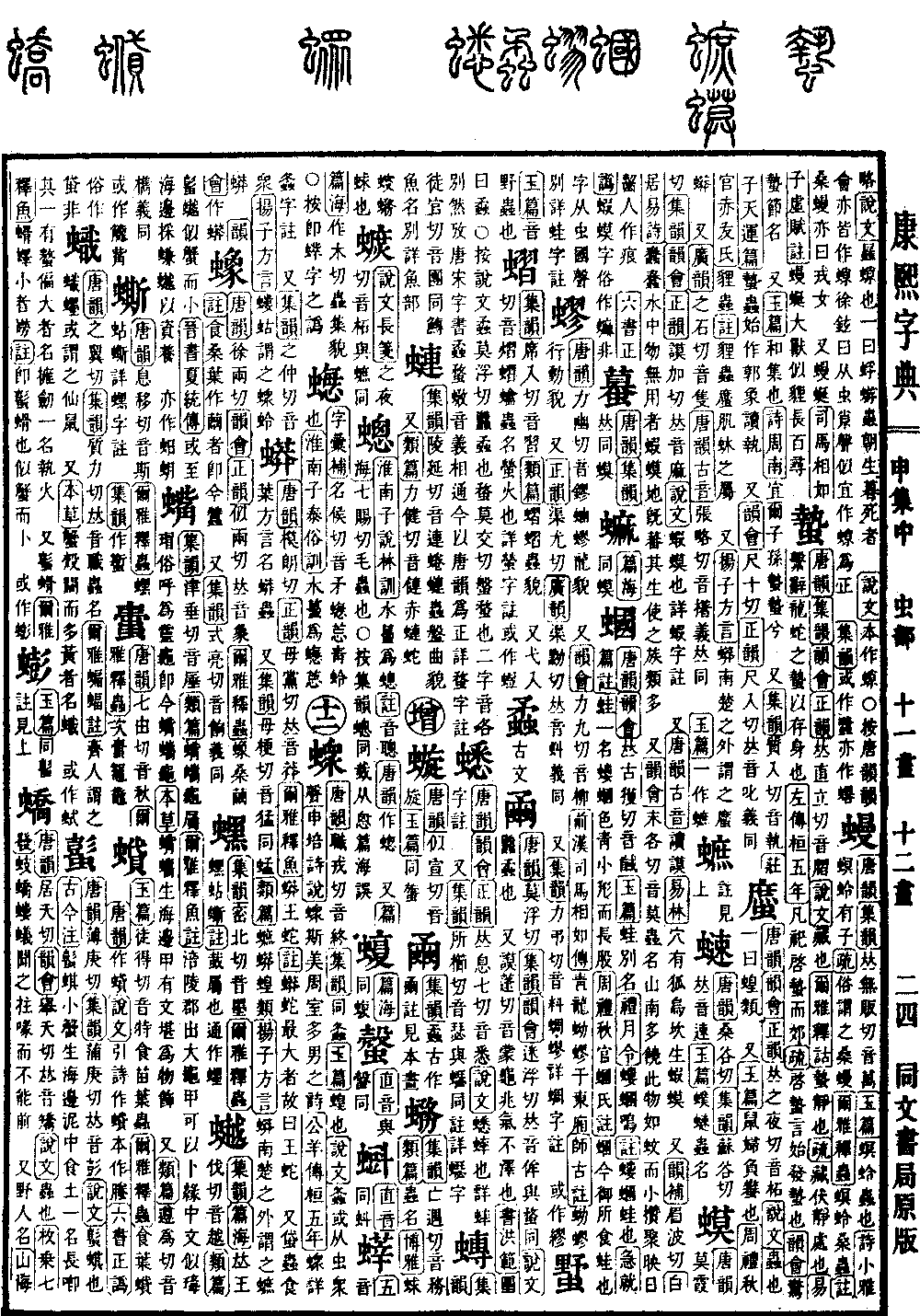
Shen Collection, Middle Volume. Radical: Insect (chóng). Kangxi stroke count: 17. Page 1096, Entry 02.
Pronounced zhe.
According to the Explaining Graphs and Analyzing Characters (Shuowen Jiezi), it means to hide away.
In the Er Ya, which is an ancient dictionary explaining glosses (Erya Shigǔ), it states that this term signifies being quiet and still. The commentary explains this as hiding and crouching in a quiet place.
The Book of Changes (Yijing), Xici, states that the hibernation of dragons and snakes is for the purpose of preserving oneself.
The Zuo Tradition (Zuozhuan), fifth year of Duke Huan, states that for all sacrifices, the suburban sacrifice is held at the time of the waking of hibernating insects. The commentary explains that the waking of hibernating insects refers to the end of the period of hibernation.
The Rhyme Collection (Yunhui) notes that the Waking of Hibernating Insects (Jingzhe) is the name of a solar term.
Furthermore, according to the Jade Chapters (Yupian), it means to be harmonious and gathered together. The Book of Odes (Shijing), Zhounan, states: Your descendants are harmonious and gathered.
Pronounced zhi. In the Zhuangzi, Tianyun Chapter, it refers to hibernating insects beginning to move. Guo Xiang reads it as zhi.
Pronounced chi. The meaning is the same.