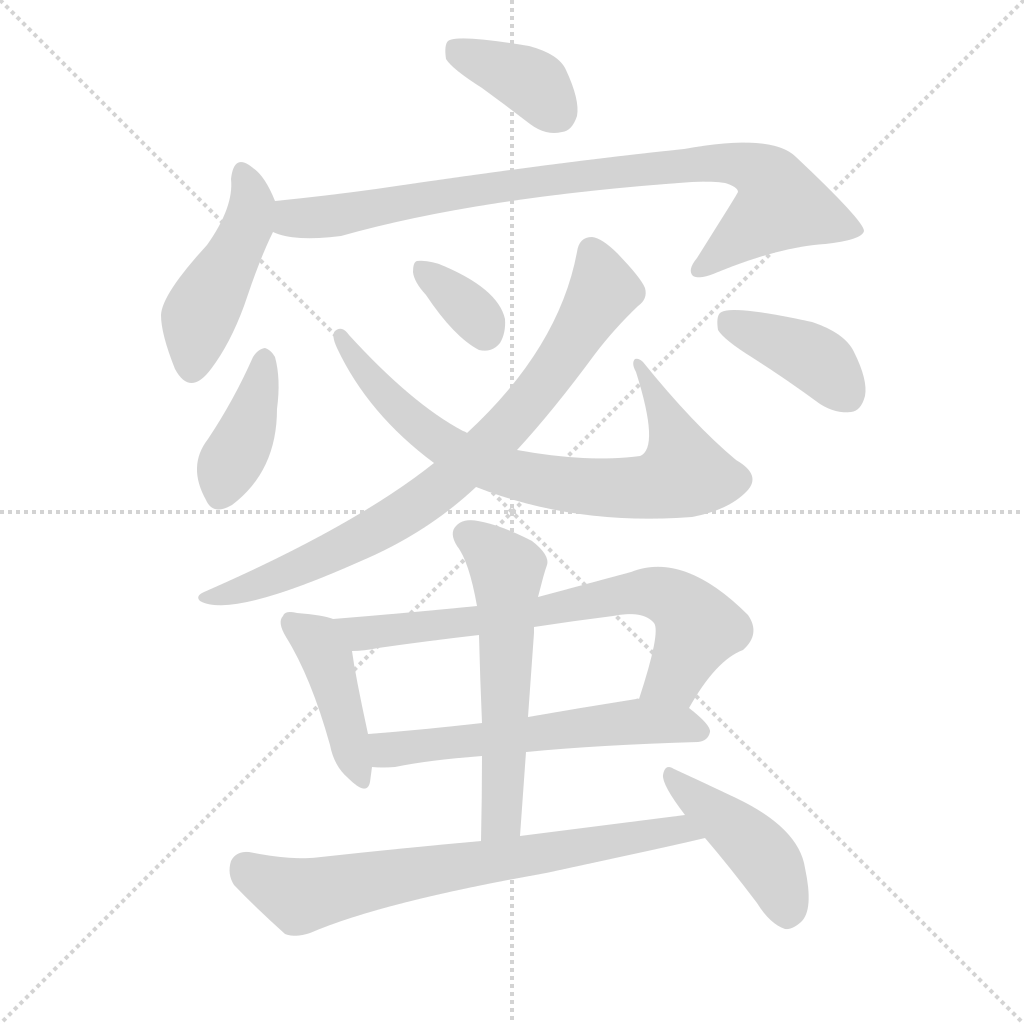
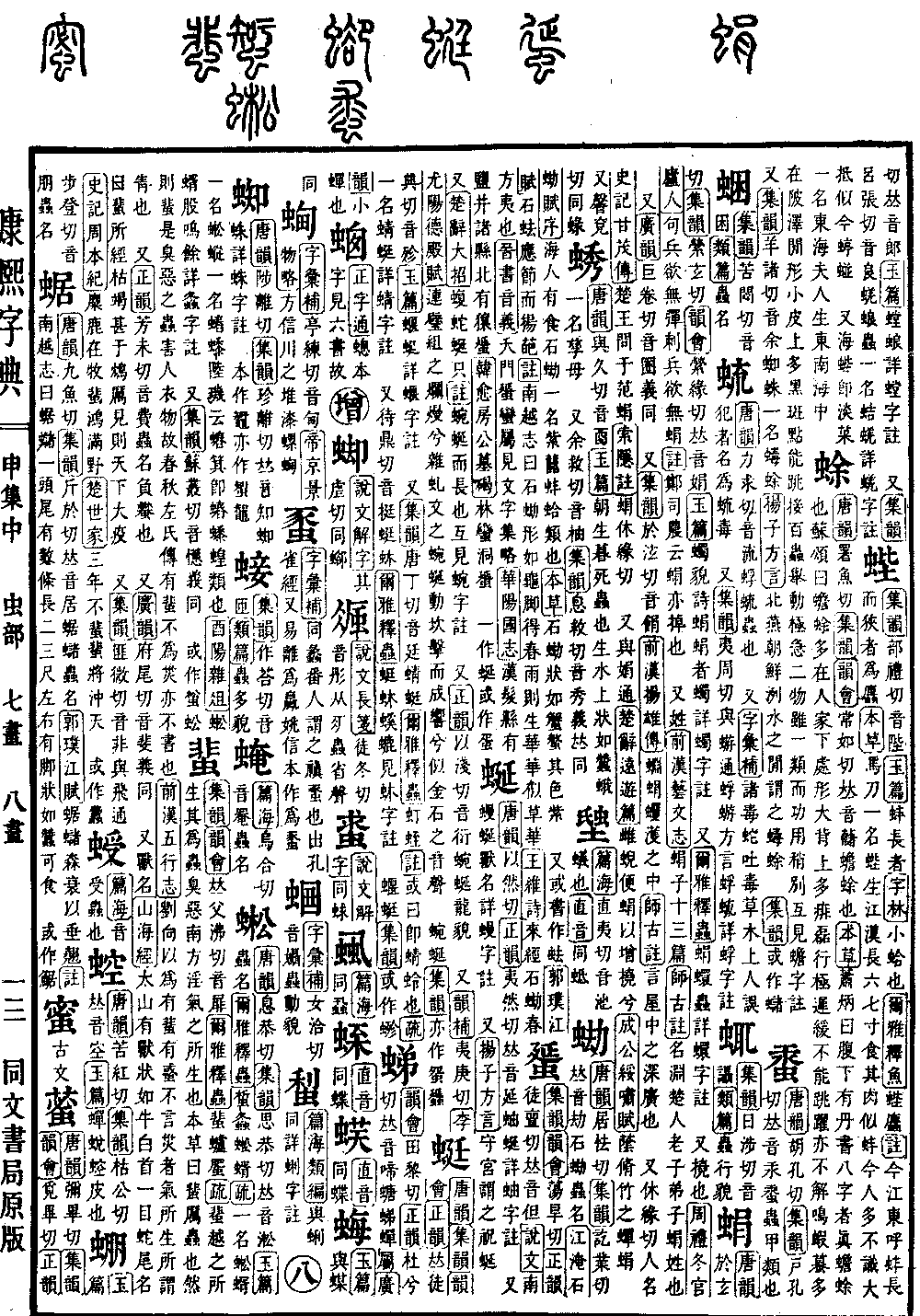
Shen Collection, Middle Volume. Radical: Insect (chóng). Character: Honey. Kangxi stroke count: 14. Page 1085, Entry 36.
Ancient text. According to Tang Rhymes (Tangyun), pronounced mi. According to Collection of Rhymes (Jiyun) and Rhyme Collection (Yunhui), pronounced mi. According to Correct Rhymes (Zhengyun), pronounced mi (rising tone). According to Explaining Graphs and Analyzing Characters (Shuowen), the sweet syrup brewed by bees. From Songs of Chu (Chuci): Summoning the Soul, sweet wine mixed with honey. From Edicts of Emperor Wen of Wei (Wei Wenzhao), people in the Shu region enjoyed adding maltose and honey when preparing food. Also, according to Expanded Annotations to the Erya (Eryayi), there is earth honey. Because the northern climate is dry, bees often build nests in the ground, hence the name earth honey. There is also wood honey. Because the southern climate is damp, bees often build nests in trees, hence the name wood honey. There is also rock honey. From Miscellaneous Records of the Western Capital (Xijing Zaji), the King of Nanyue presented five hu of rock honey to the Han Emperor Gaozu. There is also jackfruit, which is the name of a fruit. According to Materia Medica (Bencao), jackfruit is a transliteration from Sanskrit; because the fruit is sweet, the character for honey was borrowed. There is also cliff honey, which is an alternative name for cherries. From the Rhapsody by Lu Shiheng, crimson cherries. Also used interchangeably with the character for dense. In ancient inscriptions, the word for dense is often written with the character for honey. This character is derived from the silent radical. The common vulgar form is considered incorrect. The character for honey is visually similar to the common form of the character for dense.