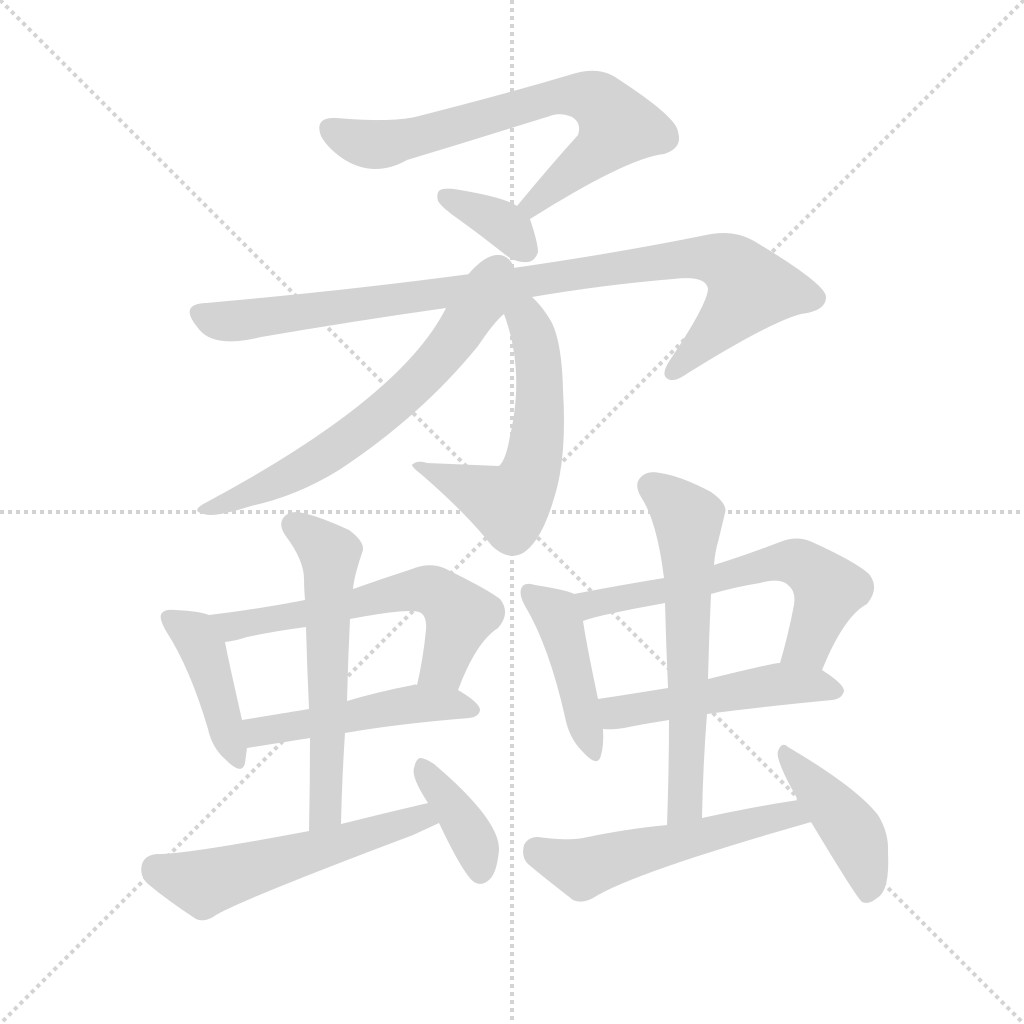
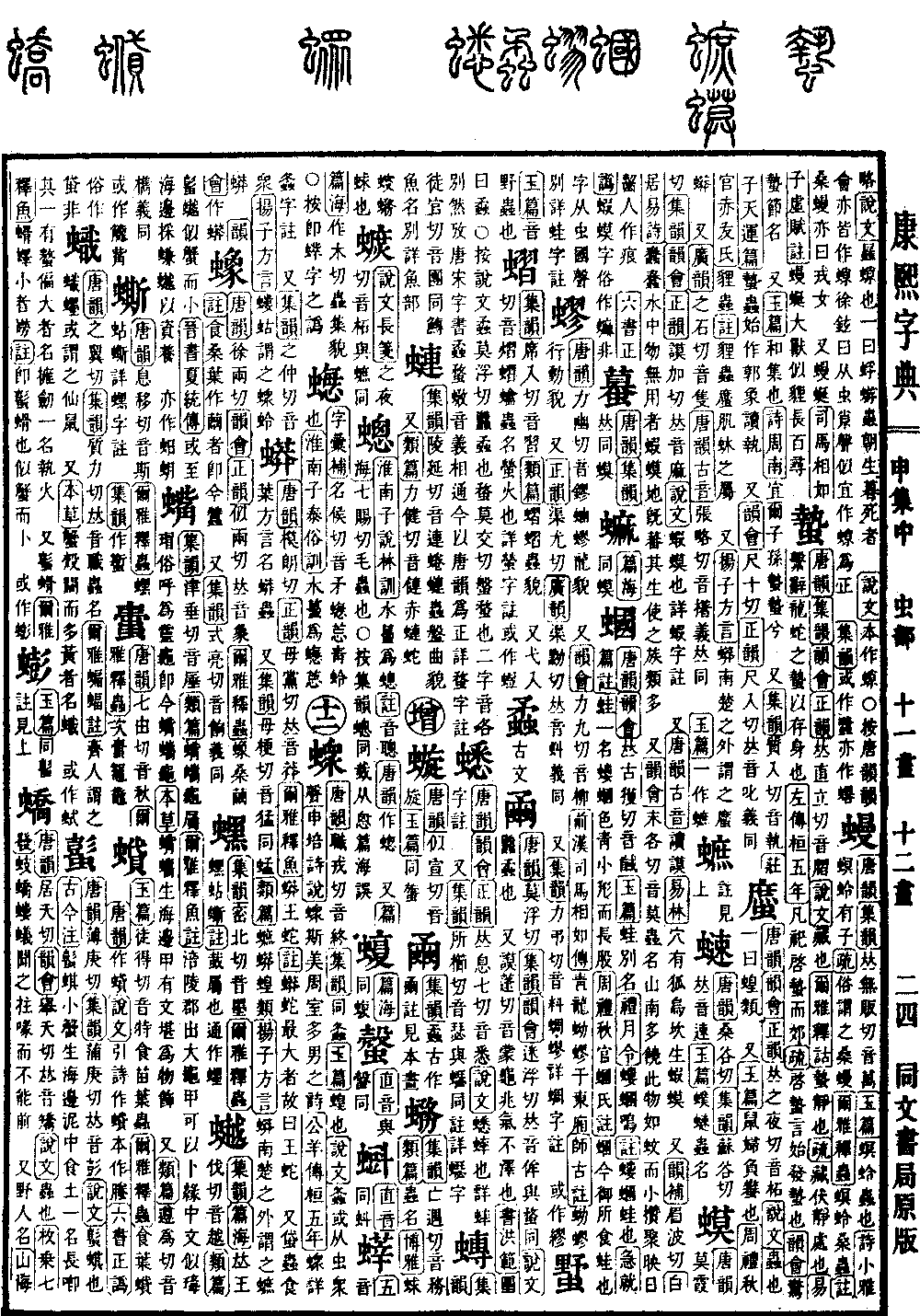
Shen Collection, Middle Volume
Radical: Insect (chóng)
Character: Mao
Kangxi stroke count: 17
Page 1096, Entry 13
Ancient texts record: According to the Tang Rhymes (Tangyun), pronounced mou. According to the Collected Rhymes (Jiyun) and the Rhyme Compilation (Yunhui), pronounced mi. Its pronunciation is the same as the character mou. It shares the same meaning as the character mao. The Explaining Graphs and Analyzing Characters (Shuowen Jiezi) defines it as a type of insect known as zhimao. It has another pronunciation, mou, which is the same as the character meng, referring to the lack of luster in the omens during tortoise shell divination. The Book of Documents (Shangshu), specifically the Great Plan (Hongfan) chapter, records the phrase: "One is called yi, one is called mao." According to the Explaining Graphs and Analyzing Characters, the character mao is pronounced mou, meaning zhimao; the character mao is pronounced mao, meaning banmao. Both characters originally differed in pronunciation and meaning. However, examination of dictionaries from the Tang and Song dynasties reveals that the pronunciation and meaning of mao and mao can be used interchangeably; the pronunciation provided in the Tang Rhymes is now taken as the standard. For a detailed explanation, refer to the annotations for the character mao.
Textual research: In the original text of the Book of Documents, Great Plan, it states: "The interpretation of yi is called mao." Following the versions of Zheng Xuan and Wang Su as cited in the Correct Meaning (Zhengyi), the character yue has been added after the character yi.