Chou Collection, Upper Volume
Radical: Mouth (kǒu)
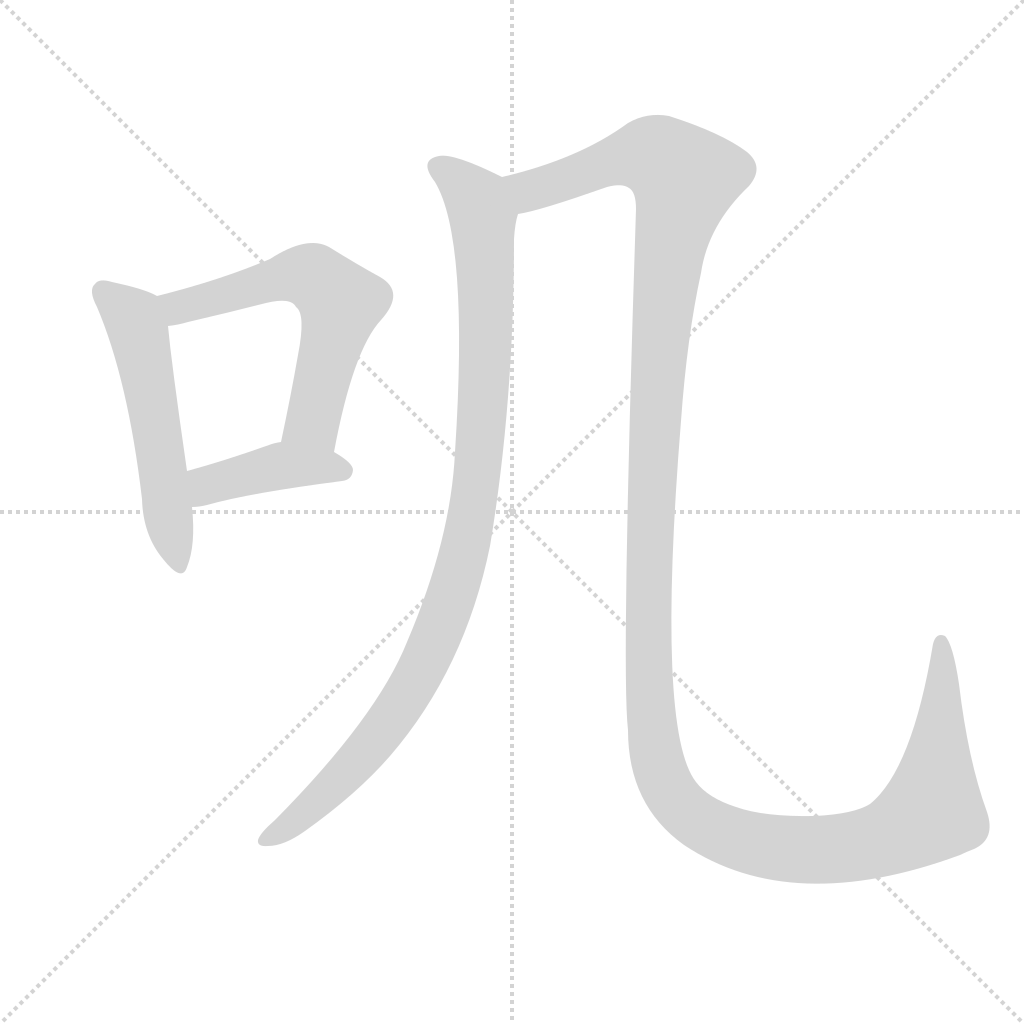
Character: ji
Kangxi Strokes: 15
Page 173, Entry 01
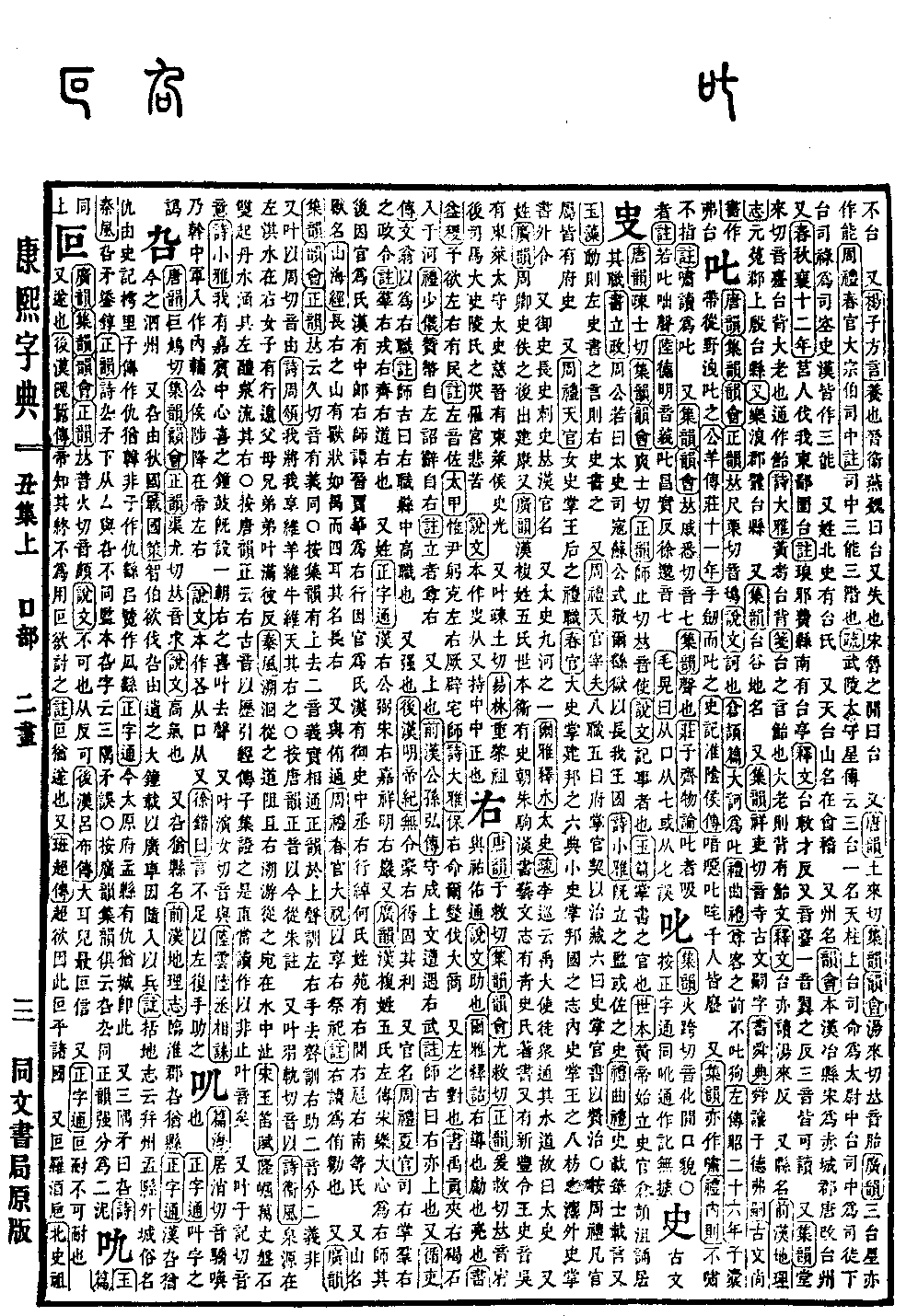
Pronounced ji. In the Tang Rhyme (Tangyun), it is pronounced ji. In the Collected Rhymes (Jiyun) and the Rhyme Gathering (Yunhui), it is also pronounced ji. According to the Explaining Graphs and Analyzing Characters (Shuowen), it means to eat a little. In the Jade Chapters (Yupian), it is defined as to sigh or lament. When King Zhou of Shang used ivory chopsticks, Jizi sighed. In the Records of the Grand Historian (Shiji), specifically the Table of the Twelve Feudal Lords, it is written as to sigh. In the Huainanzi, it is written that one cries out and weeps, sighs and expresses sorrow, and thus understands how sounds move. In the Extensive Rhymes (Guangyun), it means to pout the mouth. In the Collected Rhymes (Jiyun), it is pronounced qi. In Sima Xiangru's Rhapsody on the Great Man (Daren fu), it is written that one chews the flowers of the divine fungus and eats the jade-like flowers. The commentary by Xu Guang states that it is pronounced qi, meaning to eat a little. In the Collected Rhymes (Jiyun), it is also pronounced ji. The meaning is the same.