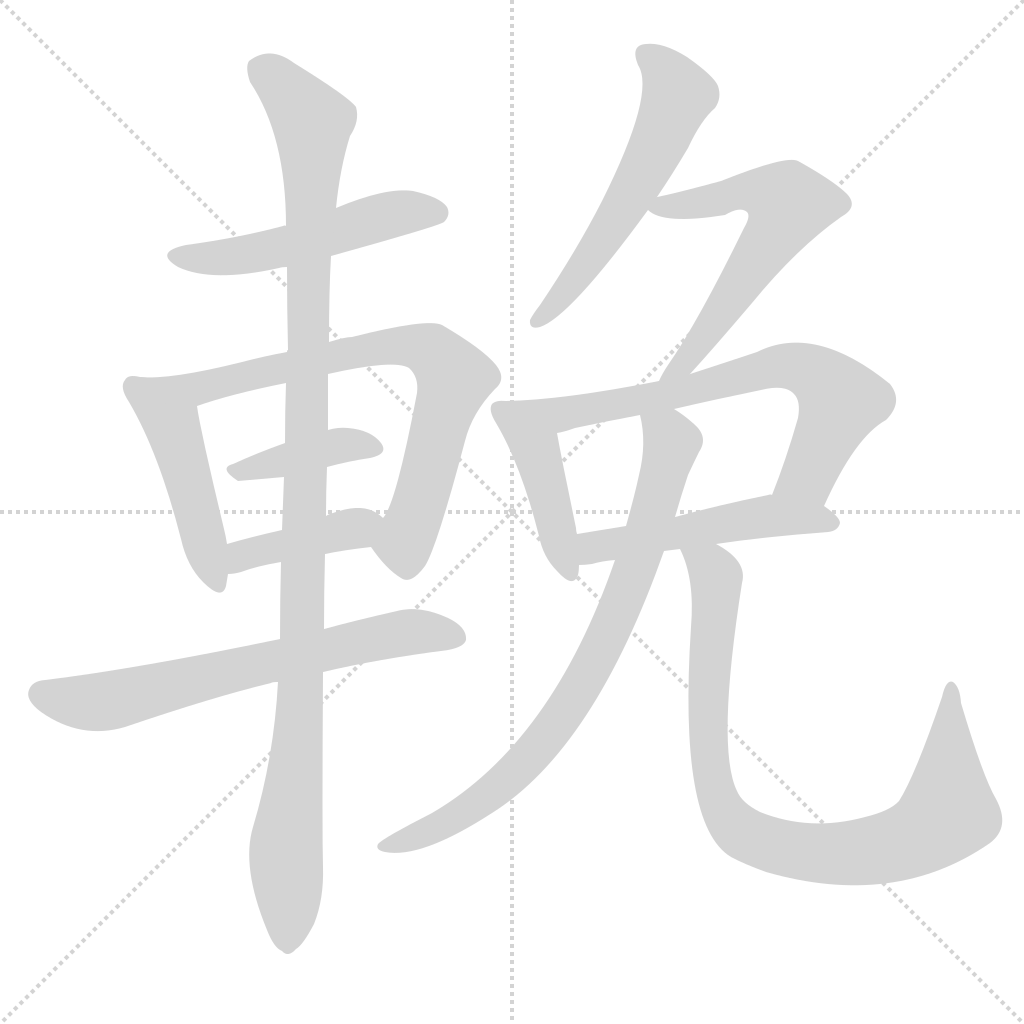
You Collection, Lower Volume
Radical: Carriage (chē)
Entry: Wan
Kangxi strokes: 14
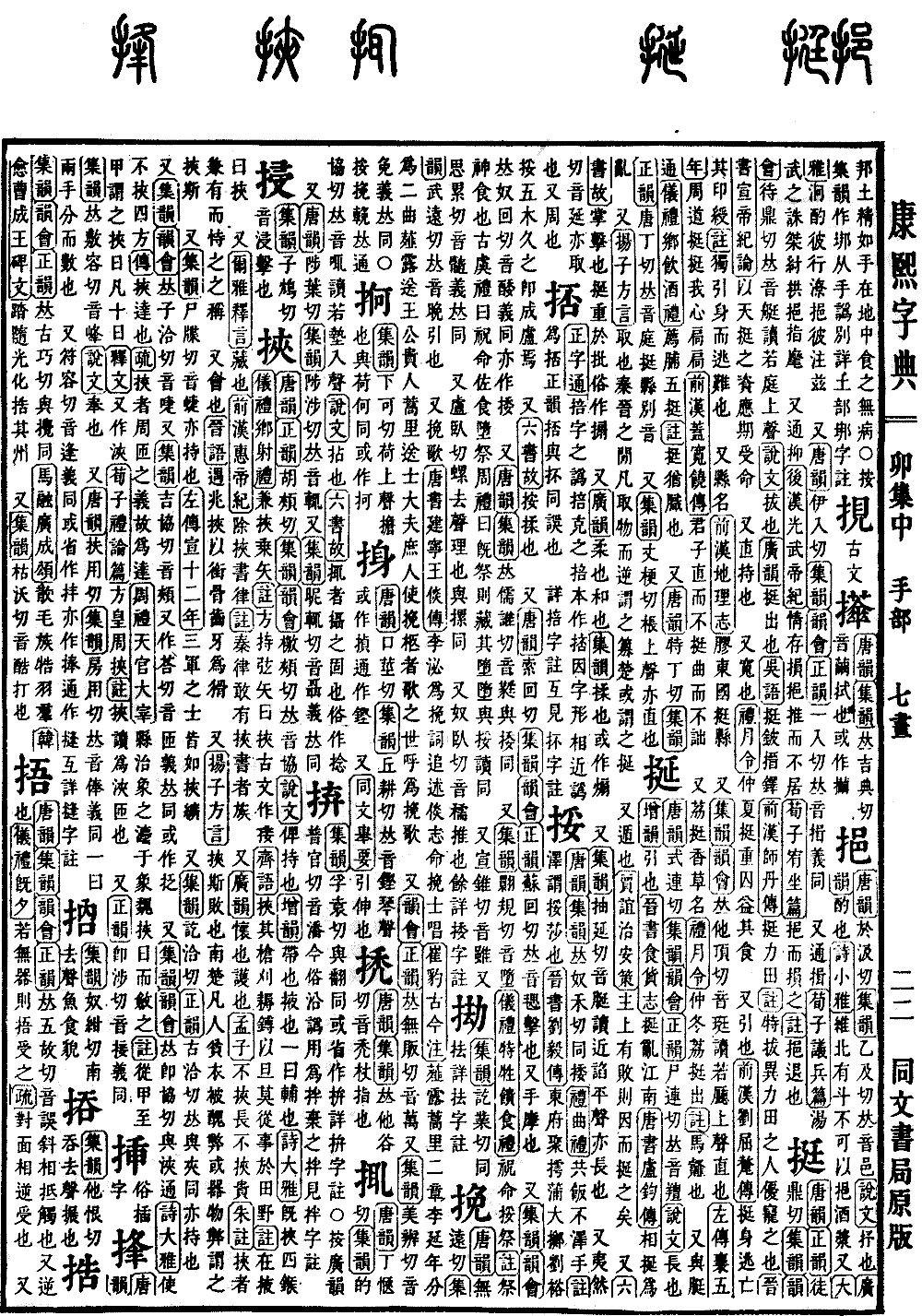
Page 432, Entry 02
According to the Extensive Rhyme (Guangyun), pronounced wan (falling tone). According to the Collection of Rhymes (Jiyun) and the Rhyme Compilation (Yunhui), pronounced wan (falling tone). As stated in the Explaining Graphs and Analyzing Characters (Shuowen), it means to pull a carriage. In the Rites of Zhou (Zhouli), Spring Office, it mentions pulling the carriage by ropes. In the Zuo Tradition (Zuo Zhuan), Year 14 of Duke Xiang, it is written: some pull it, some push it. The commentary notes that pulling from the front is called wan, while pushing from the back is called tui. Furthermore, the Rhyme Compilation (Yunhui) cites the Biography of Zhang Liang in the History of the Former Han (Qianhan Shu), which refers to the transport of grain by river and canal to supply the capital. It also cites the Biography of Yang Xiong, which mentions the abandoning of the carriage and the release of the pull-ropes. Pronounced wan (falling tone). Sometimes written in a variant form (wan). It also refers to funeral songs, which are the rhythmic sounds made by those holding the ropes of a hearse. Additionally, according to the Rhyme Compilation (Yunhui) and the Orthography of Rhymes (Zhengyun), pronounced wan (falling tone). The meaning is the same.