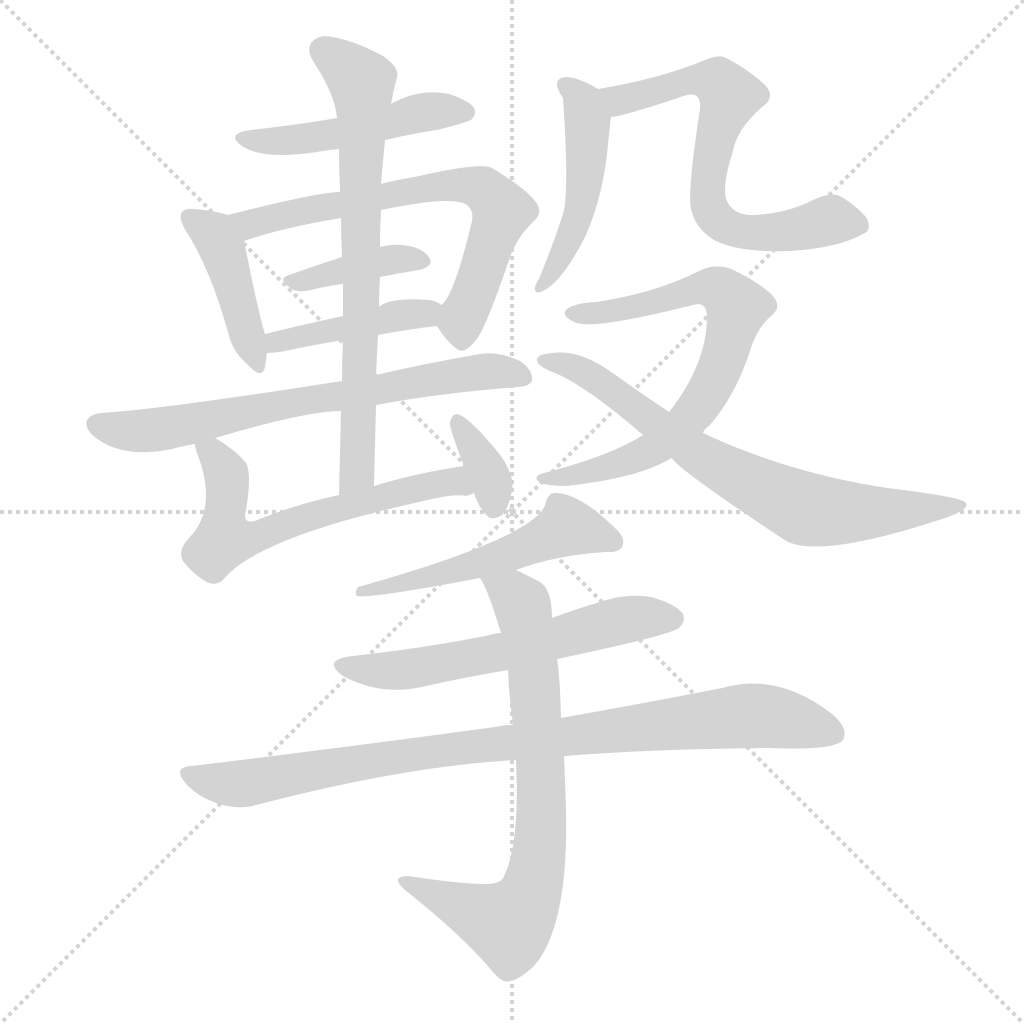
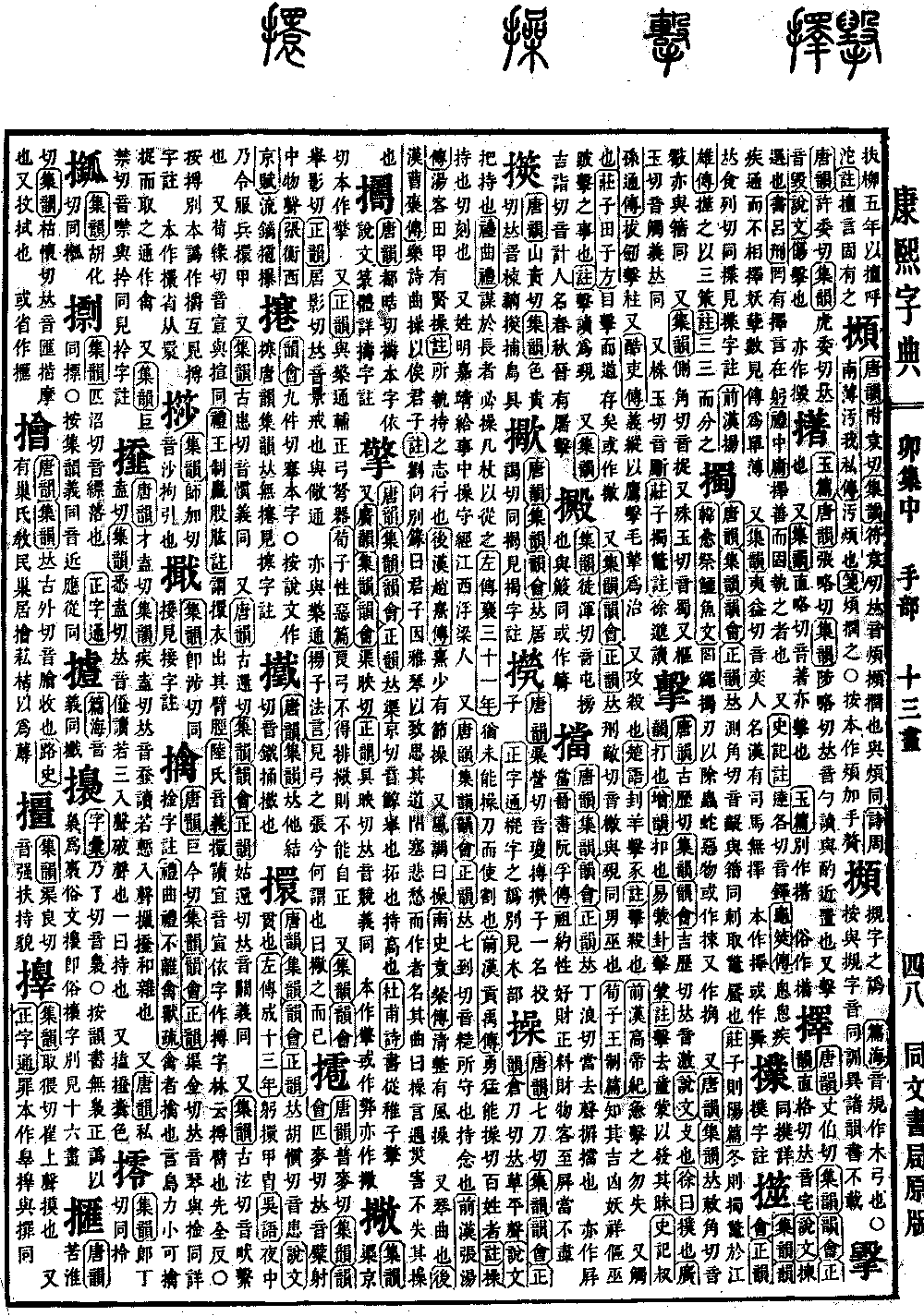
Mao Collection, Middle Volume. Radical: Hand (shǒu). Kangxi strokes: 17. Page 458, Entry 09.
Pronounced ji.
Shuowen Jiezi (The Analytical Dictionary of Characters) explains it as a light strike. Xu says it means to strike or beat. Guangyun (Broad Rimes) explains it as to hit. Zengyun (Expanded Rimes) explains it as to knock or strike.
Book of Changes (Yijing), Hexagram Meng: "Strike at the ignorance." Commentary: It means to remove childhood ignorance and enlighten the foolish. Records of the Grand Historian (Shiji), Biography of Shusun Tong: "Drew his sword and struck the pillar." Also, Biography of Harsh Officials: "Yi Zong governed with the sharpness of an eagle striking its prey."
It also refers to attacking or killing. Discourses of the States (Guoyu), Chu Yu: "Slaughtering the sheep and striking the pig." Commentary: Strike means to kill. Book of Han (Hanshu), Annals of Emperor Gao: "Attack them fiercely and do not let them escape."
It also refers to contact or touching. Zhuangzi, Tian Zifang: "Seeing with the eyes, the Way is preserved." Sometimes written in a variant form (qiao).
Pronounced di. Same sound as xi. Identical to the character (xi). Refers to a male shaman. Xunzi, Regulations of a King: "Knowing the auspicious and the ominous, the strange and the lucky, this is the business of the hunchbacked, the lame, and the shaman." Commentary: Here, the character is pronounced and means the same as the shaman character.
Pronounced ji. Used in names. During the Spring and Autumn period, there was a man named Tu Ji in the State of Jin.