Chou Collection, Upper Volume
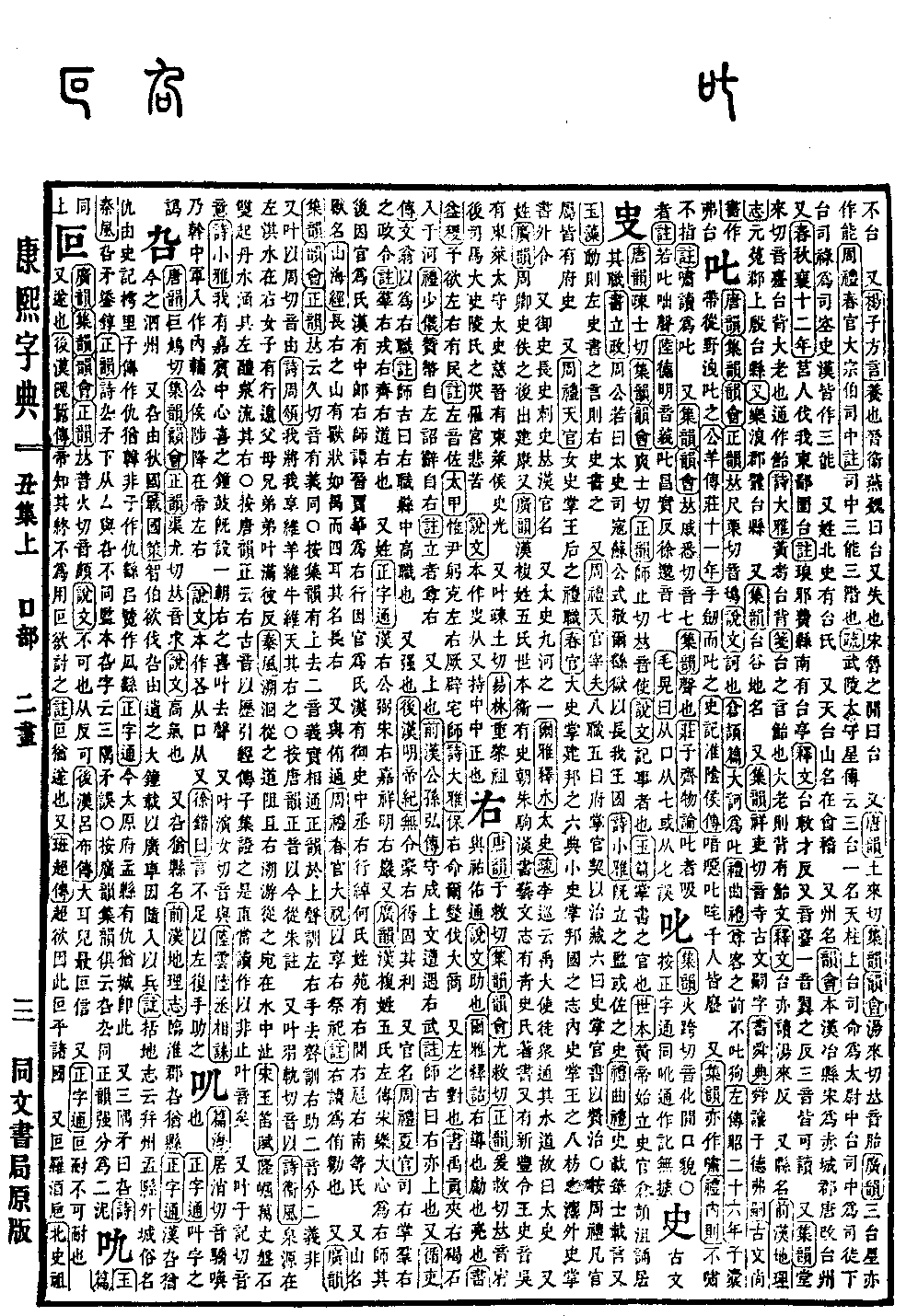
Radical: Mouth (kǒu)
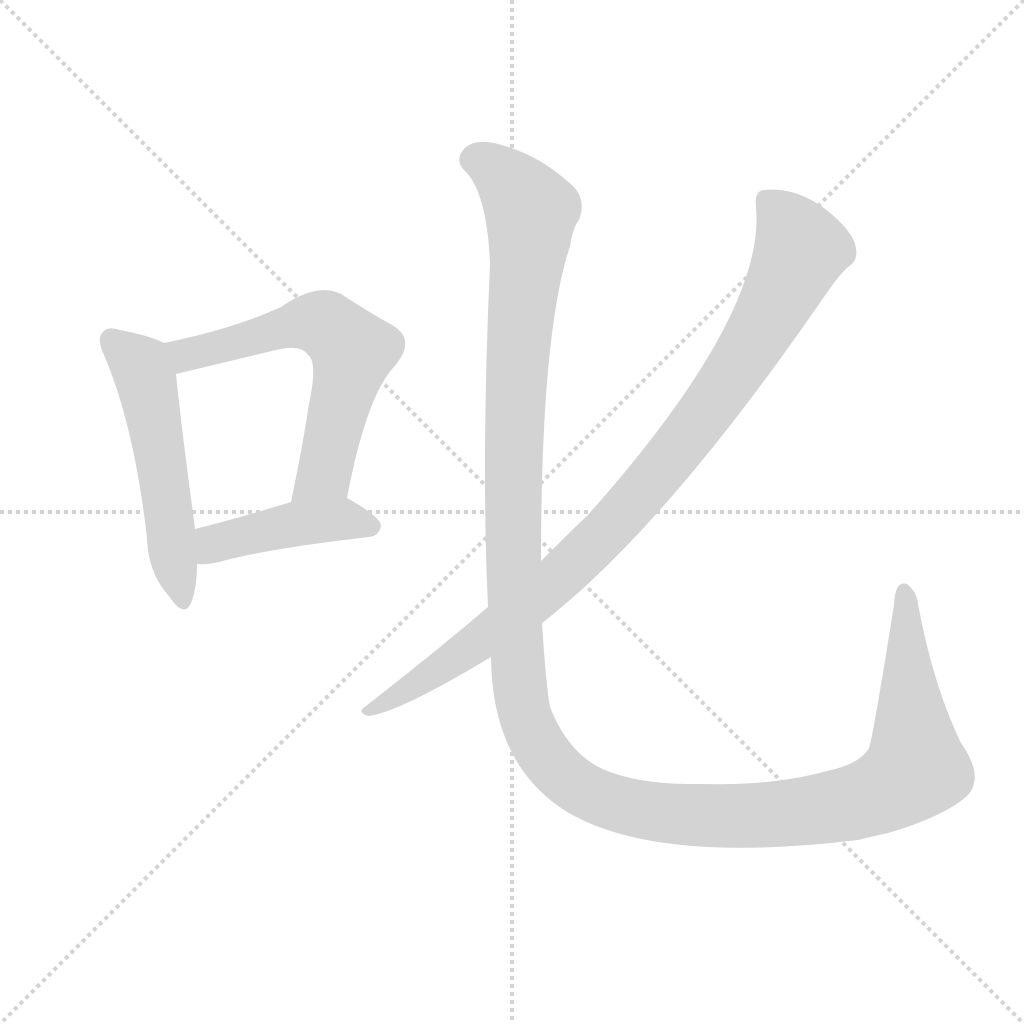
Character: Chi
Kangxi Stroke Count: 5
Page 173, Entry 01
Tang Rhyme (Tangyun), Collected Rhymes (Jiyun), Rhyme Compendium (Yunhui), Correct Rhymes (Zhengyun): Pronounced chi (falling tone).
Shuowen Jiezi: To scold.
Cangjie Pian: A loud scolding is called chi.
Book of Rites (Liji), Songs of Refinement (Quli): Do not scold dogs in the presence of honored guests.
Zuo Tradition (Zuozhuan), Year 26 of Duke Zhao: Zi Nang, wearing a belt, followed Ye Xie and scolded him.
Gongyang Commentary (Gongyangzhuan), Year 11 of Duke Zhuang: Holding a sword and shouting at him.
Records of the Grand Historian (Shiji), Biography of the Marquis of Huaiyin: With a silent yet fierce shout, a thousand men were rendered helpless.
Also, Collected Rhymes (Jiyun): Also written as xiao.
Book of Rites (Liji), Patterns of the Inner Quarters (Neize): Do not whistle and do not point.
Commentary: Xiao is read as chi.
Also, Collected Rhymes (Jiyun), Rhyme Compendium (Yunhui): Pronounced qi (high level tone).
Collected Rhymes (Jiyun): A sound.
Zhuangzi, Discussion on Making All Things Equal (Qiwulun): The chi sounds and the xi sounds.
Commentary: Like the sounds of scolding and reproaching.
Lu Deming, Phonology and Meaning: Pronounced chi. Xu Miao pronounces it qi.
Mao Huang says: Composed of the radicals for mouth and seven. Sometimes written with the radical for spoon (bǐ), which is incorrect.