Si Collection, Upper Volume
Radical: Water (shuǐ)
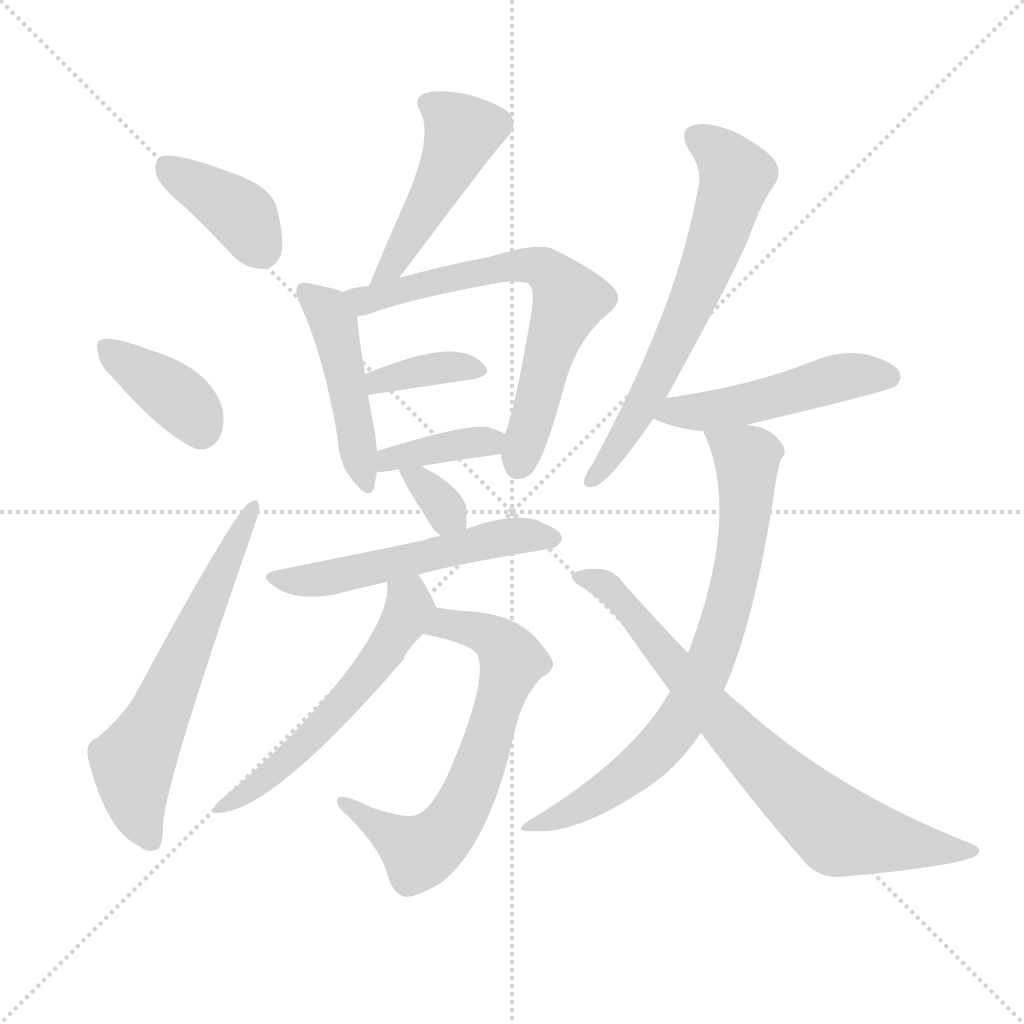
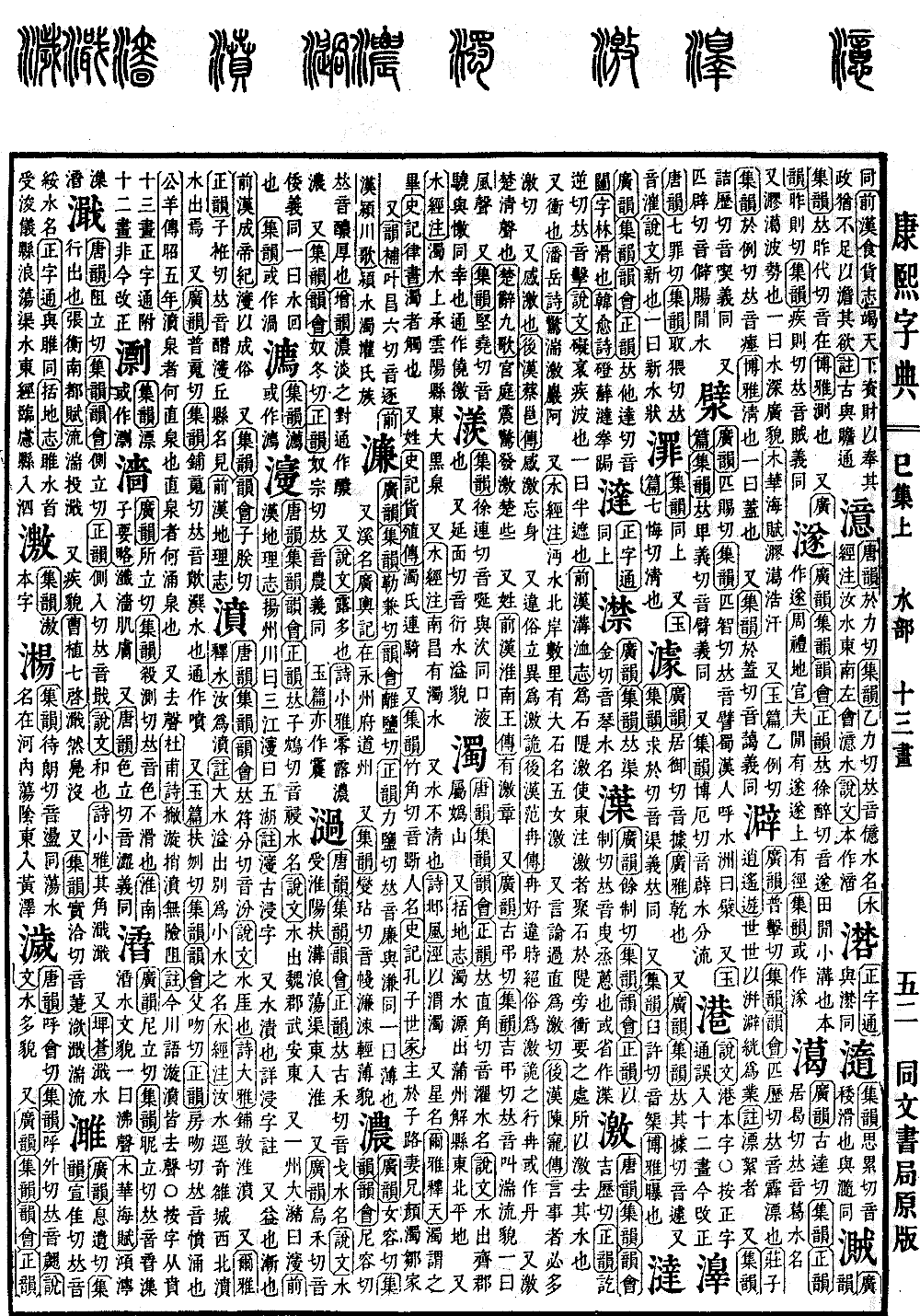
激
Kangxi Dictionary Stroke Count: 17
Page 654, Entry 17
Pronounced ji (entering tone).
According to the Explaining and Analyzing Characters (Shuowen Jiezi), it refers to a rapid current obstructed at an angle. Another definition suggests it refers to a partial obstruction.
Book of Han (Hanshu), Treatise on Rivers and Canals: Constructing stone embankments to obstruct the current and force it to flow eastward. This process involves piling stones at the vital points where the current strikes near the embankment, thereby obstructing and diverting the flow.
It also refers to the act of striking or impacting. Pan Yue, Poetry: Rapid currents strike against the mountain cliffs.
According to the Commentary on the Water Classic (Shuijing Zhu), several miles north of the Mian River, there is a large boulder called the Five Women's Strike (Wunv ji).
It also refers to speech that is overly blunt or intense, known as jiqie (intense/vehement). Book of the Later Han (Hou Hanshu), Biography of Chong: Those who offer remonstrances often use intense and blunt language.
It also refers to being moved to action or inspired by an external stimulus. Book of the Later Han (Hou Hanshu), Biography of Cai Yong: Inspired and agitated, one disregards one's own safety.
It also refers to acting contrary to common customs or being unconventional, known as ji gui (defiant/eccentric). Book of the Later Han (Hou Hanshu), Biography of Fan Ran: Fan Ran liked to oppose popular customs, and his behavior was eccentric and extreme. Ran is sometimes written with the character dan (a variant form).
Jichu refers to a clear, resonant sound. Songs of the South (Chuci), Summoning the Soul (Zhaohun): The court is shaken by the resonant and clear sounds of the music.
It is also a surname. Book of the Later Han (Hou Hanshu), Biography of the King of Huainan: There was a person named Ji Zhang.
Pronounced jiao (falling tone). The appearance of a rapid current. Another source suggests it refers to the sound of the wind.
Pronounced xiao. Same as the character jiao. It means good fortune or luck. Commonly written as jiao or jiao (variant forms).
Editorial Note: Songs of the South (Chuci), Nine Songs (Jiuge): The court is shocked, emitting the sounds of Jichu. Following the original text, this has been corrected to Summoning the Soul (Zhaohun).