Chou Collection, Upper Volume
Radical: Mouth (kǒu)
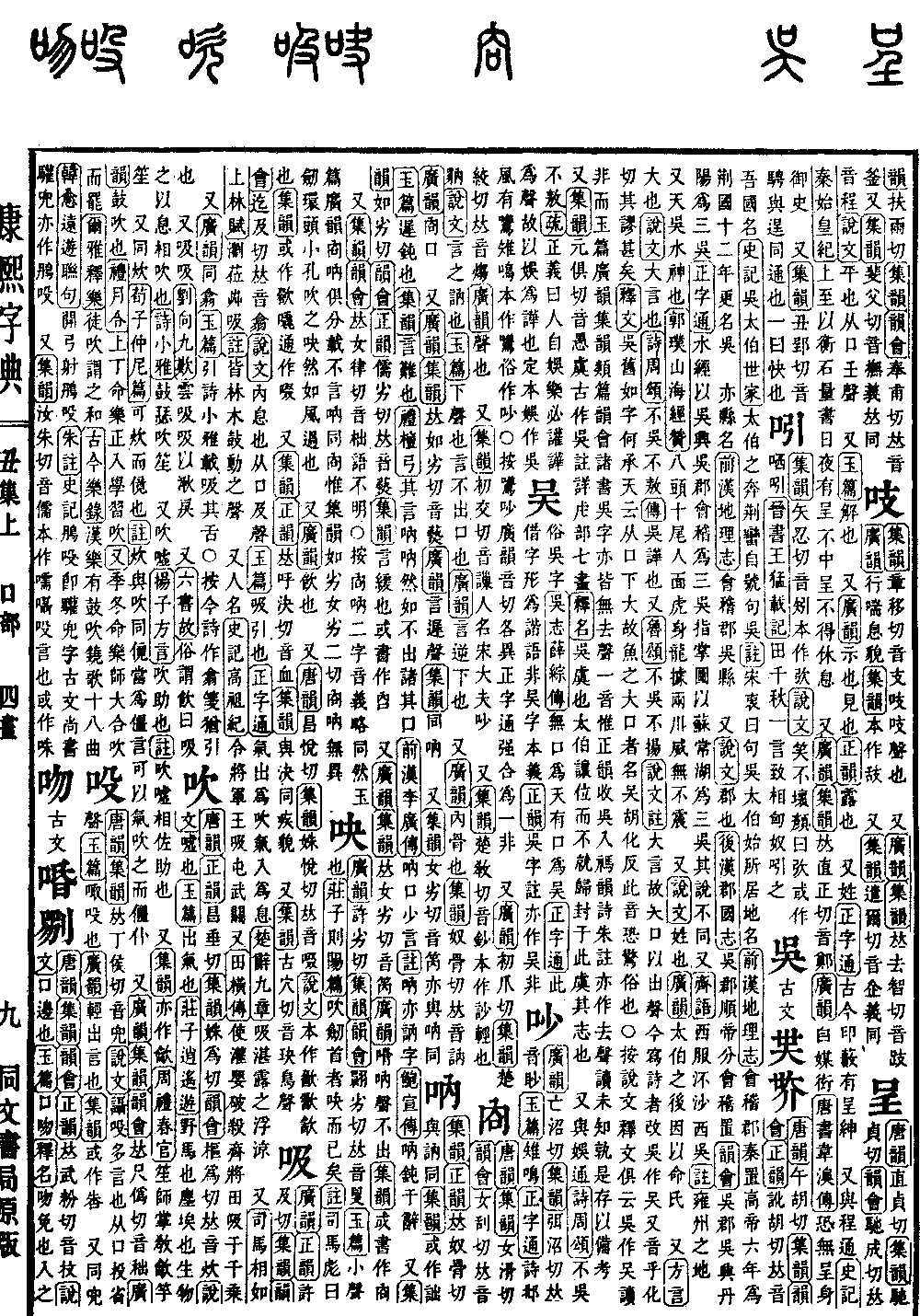
吻
Kangxi Strokes: 7
Page 179, Entry 15
Ancient phonetic dictionaries, including Tang Rhyme (Tangyun), Collection of Rhymes (Jiyun), Rhyme Meetings (Yunhui), and Orthodox Rhymes (Zhengyun), state the pronunciation is wen (falling tone), same as the pronunciation for the character pronounced wen (rising tone).
Explaining Characters (Shuowen Jiezi) defines it as the edge of the mouth. The Jade Chapters (Yupian) defines it as the corners of the mouth.
Explanation of Names (Shiming) states: A mouth corner is called wen, meaning to avoid. When food enters, it is broken down; when it exits, it avoids contact. It also takes the meaning of to wipe. Because saliva often flows out from here and always requires wiping, it is named accordingly.
Book of Rites (Zhouli), section Winter Officials, Records of Artificers (Dongguan Kaogongji), mentions sharp beaks and parted mouth corners. The commentary explains: Wen refers to the edges of the lips.
History of the Former Han (Qian Hanshu), Biography of Dongfang Shuo, records spitting from the lips.
The Jade Chapters (Yupian) also writes it in a variant form. Collection of Rhymes (Jiyun) sometimes writes it as variants wen or min. The original character form is composed of the radical for mouth and the character pronounced hun.
Textual research: Explanation of Names (Shiming) states: Wen means to avoid. When entering, it is broken down; when exiting, it avoids. It also takes the meaning of to wipe. Because saliva flows out, it is constantly wiped, and thus it is named. Based on the meaning of the original text, the phrase to pull is corrected to to wipe.