Addendum
Chou Collection, Middle Volume
Radical: Big (dà)
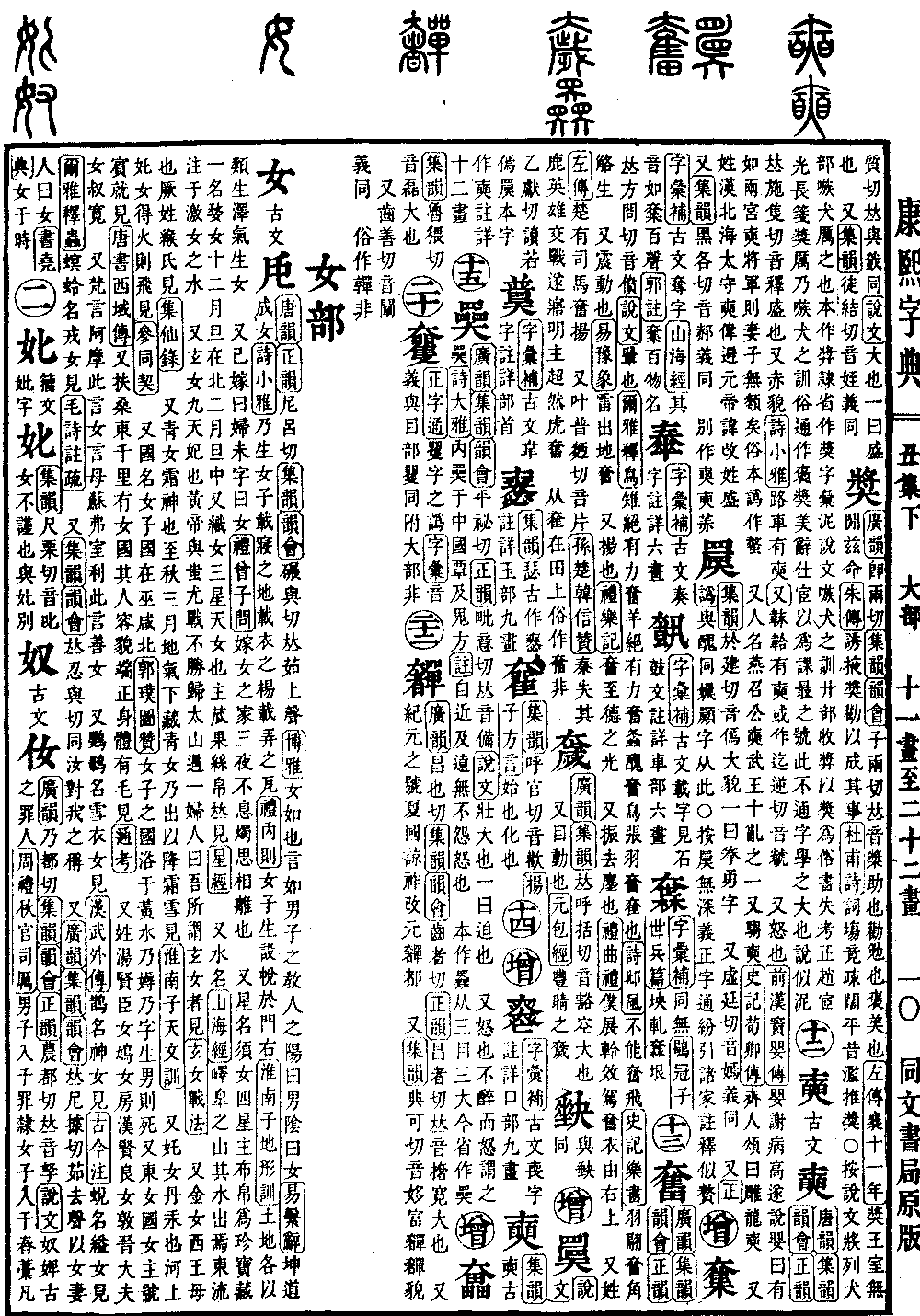
Fen; Kangxi strokes: 16; Page 254
Pianhai Leibian: Pronounced lang (rising tone), gang (rising tone). It refers to a salt marsh. Also pronounced ben.
Fen
Guangyun, Jiyun, Yunhui, Zhengyun: Pronounced fen (falling tone).
Shuowen: To flap wings.
Erya, Interpretation of Birds: As for the pheasant, it is powerful when it flaps its wings. As for the sheep, it is powerful when it stamps its feet. As for the locust, it flaps its wings. To spread wings and flap them is called fen.
Book of Odes (Shijing), Beifeng: Cannot flap wings and fly.
Records of the Grand Historian (Shiji), Treatise on Music: Wings and feathers flap, horns and antlers grow.
Also, to shake or move.
Book of Changes (Yijing), Yu hexagram: Thunder emerges from the earth and shakes.
Also, to raise or manifest.
Book of Rites (Liji), Record of Music: To manifest the light of supreme virtue.
Also, to shake off dust.
Book of Rites (Liji), Qu Li: The charioteer inspects the carriage and checks the yoke, shakes his clothes, and enters from the upper right side.
Also, a surname.
Zuo Tradition (Zuo Zhuan): In the State of Chu, there was Sima Fenyang.
Also, rhyming with pian (falling tone).
Sun Chu, Eulogy for Han Xin: The Qin dynasty lost its deer, heroes engaged in battle. Then he realized the wise lord, tiger-like he rose with great vigor.
Composed of the character for gathering wings on top of the character for field. The common form is incorrect. The original character was formed from the characters for gathering wings and old.