Wu Collection, Middle Volume
Radical: White (bái)
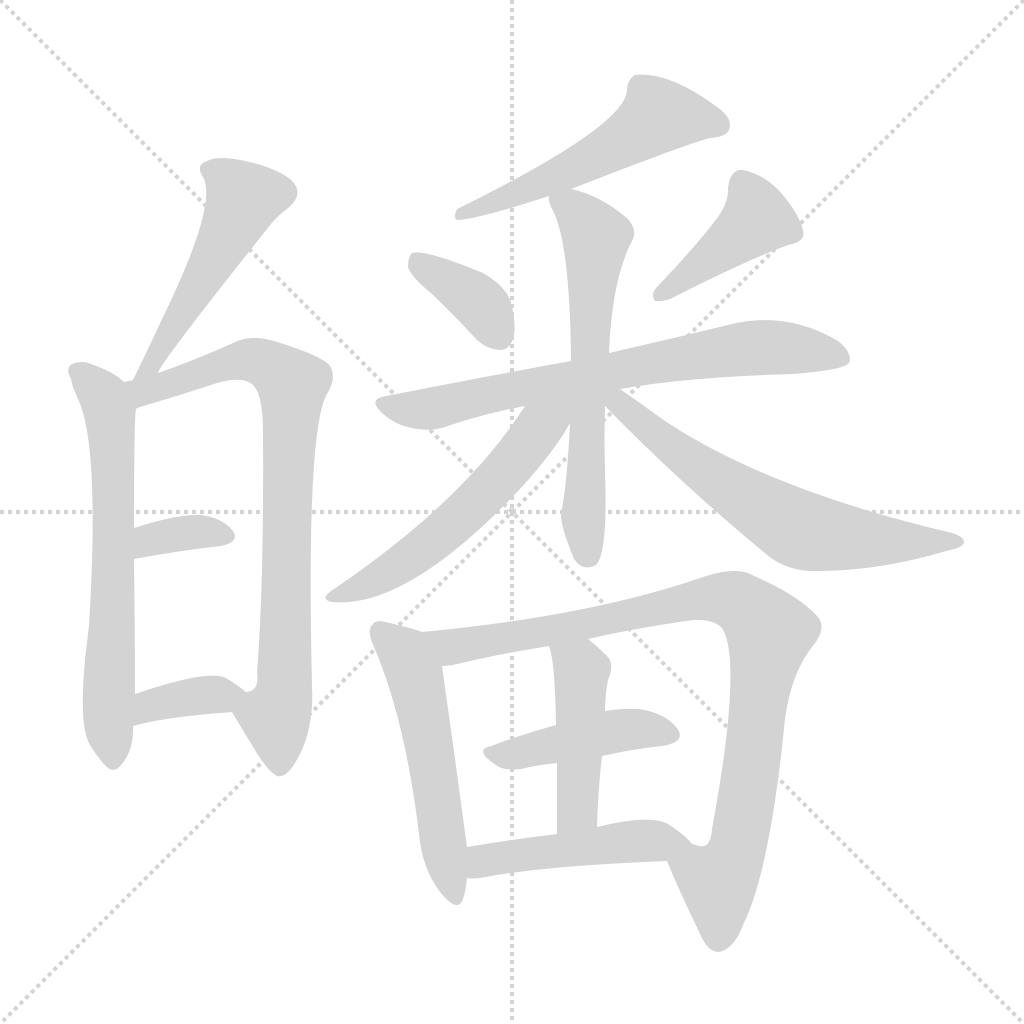
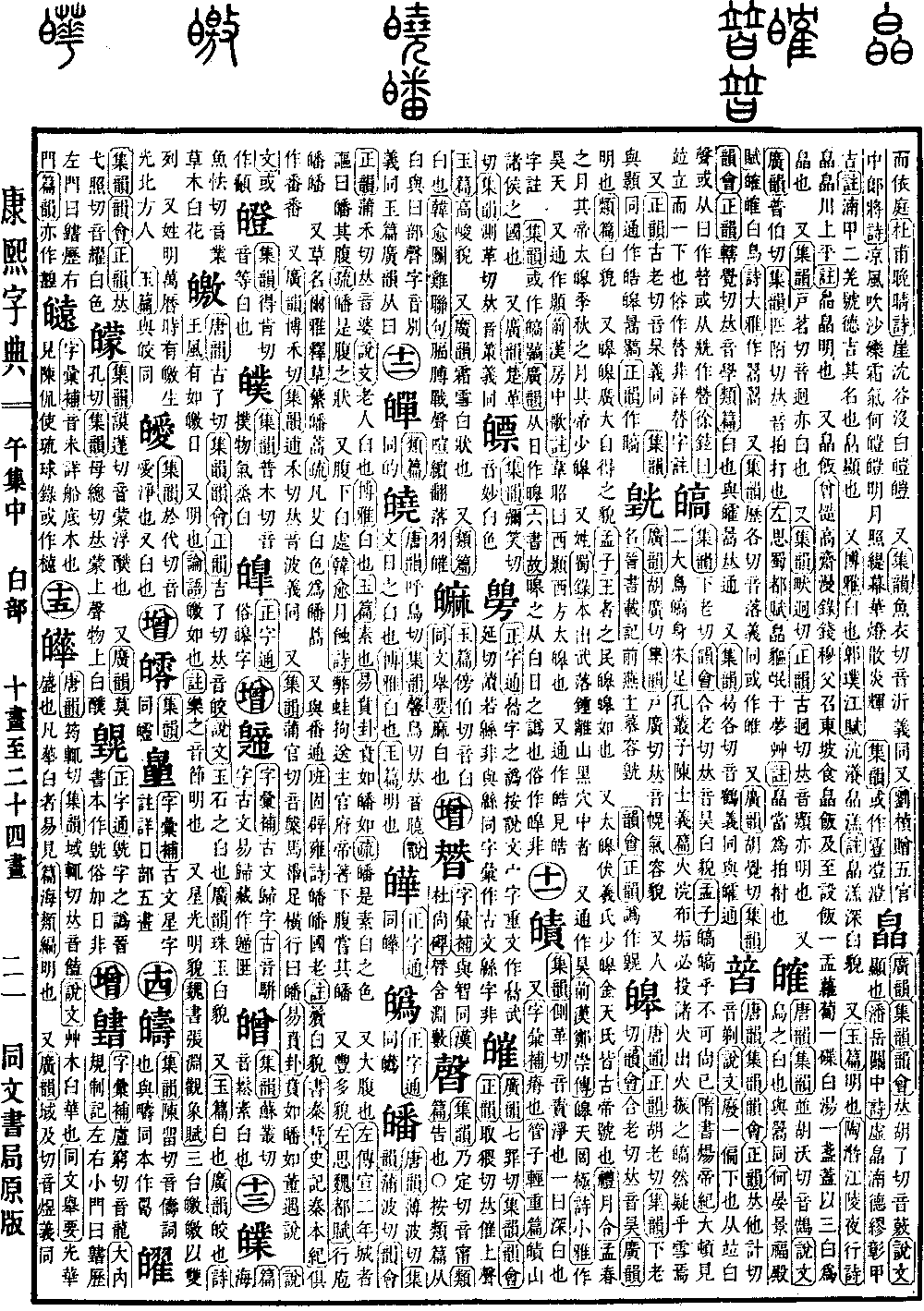
皤
Kangxi strokes: 17
Page 789, Entry 18
Pronounced po
Shuowen Jiezi (Explaining Graphs and Analyzing Characters): White hair of an old person.
Boya (Enlarged Odes): White.
Yupian (Jade Chapters): Plain or unadorned.
Book of Changes (Yijing), Hexagram Bi: Adorned like, plain like.
Commentary: Po refers to a plain white color.
Also refers to a large belly.
Zuo Commentary (Zuo Zhuan), Second Year of Duke Xuan: The builders sang: Extend its belly.
Commentary: Po describes the shape of a belly.
Also refers to the white spot on an animal's underbelly.
Han Yu, Poem on the Lunar Eclipse: The disabled frog is seized and sent to the magistrate; the Emperor points to the lower belly to taste its white.
Also describes a full or abundant appearance.
Zuo Si, Rhapsody on the Capital of Wei (Wei Du Fu): The palace kitchen is bountiful.
Also refers to a type of plant.
Erya (Approaching Elegance), Explaining Grasses: Fan is Po Hao.
Commentary: Any wormwood that is white in color is called Po Hao.
Also interchangeable with Fan.
Ban Gu, Ode to the Hall of Harmony (Piyong Shi): The white-haired elders of the nation.
Note: Describes white hair at the temples.
Book of Documents (Shangshu), Oaths of Qin; Records of the Grand Historian (Shiji), Annals of Qin: Both use the character Fan.
Also pronounced bo
Meaning same as above.
Also pronounced pan
A horse with shackled feet walking sideways is called Po.
Book of Changes (Yijing), Hexagram Bi: Adorned like, plain like. Dong Yu's explanation.
Shuowen Jiezi (Explaining Graphs and Analyzing Characters): Sometimes also written in a variant form.