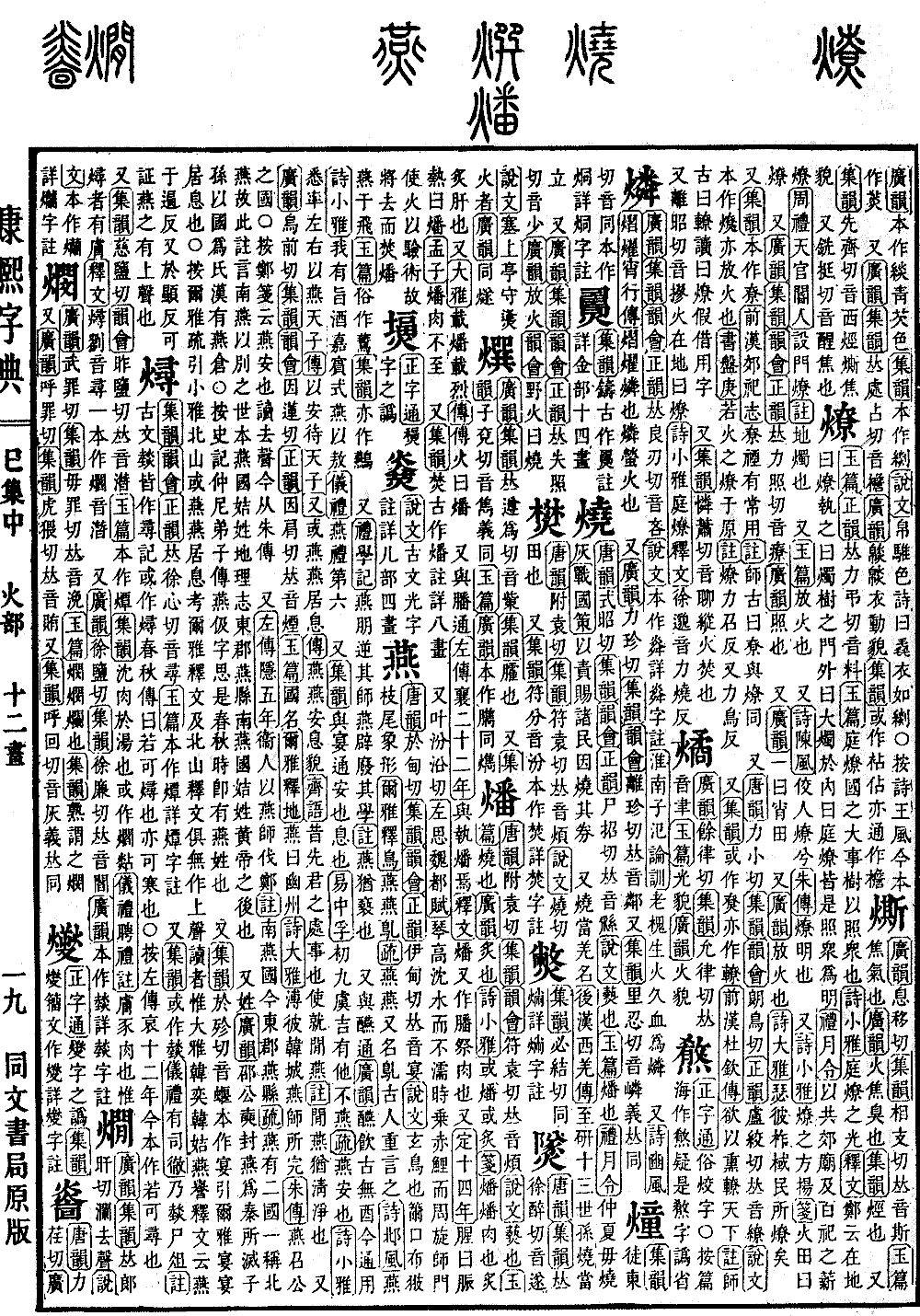
Si Collection, Middle Volume
Radical: Fire (huǒ)
燔
Kangxi strokes: 16
Page 683, Entry 13
Tang Rhymes (Tangyun): Pronounced fan. Collected Rhymes (Jiyun) and Rhyme Compendium (Yunhui): Pronounced fan, the sound is the same as fan.
Explanation in Explaining Graphs and Analyzing Characters (Shuowen): Defined as ruo (to burn).
Jade Chapters (Yupian): Means to burn.
Broad Rhymes (Guangyun): Means to roast.
Book of Odes (Shijing), Lesser Odes: Some burn the meat, some roast the meat.
Commentary (Jian): Fan refers to burning meat; zhi refers to roasting liver.
Also, Greater Odes: Burning while roasting.
Tradition (Zhuan): Using fire to burn directly is called fan.
Also used interchangeably with fan.
Zuo Tradition (Zuo Zhuan), 22nd Year of Duke Xiang: Participating in the handling of sacrificial roasted meat.
Explanation of Text (Shiwen): Fan is also written as fan. Refers to meat used in sacrifice.
Also, 14th Year of Duke Ding: Raw sacrificial meat is called shen, cooked sacrificial meat is called fan.
Mencius: The cooked sacrificial meat was not sent.
Also, Collected Rhymes (Jiyun): Fan is an ancient character for the word fen (to burn). Detailed explanation can be found in the entry for the character fen, under eight strokes.
Also, rhyming reading pronounced fen.
Zuo Si, Wei Capital Rhapsody (Wei Du Fu): Qin Gao submerged himself in the water without getting wet, often riding a red carp to travel about. The master used fire to verify his arts, thus when he was about to depart, he burned them.