You Collection, Lower Volume
Radical: Carriage (chē)
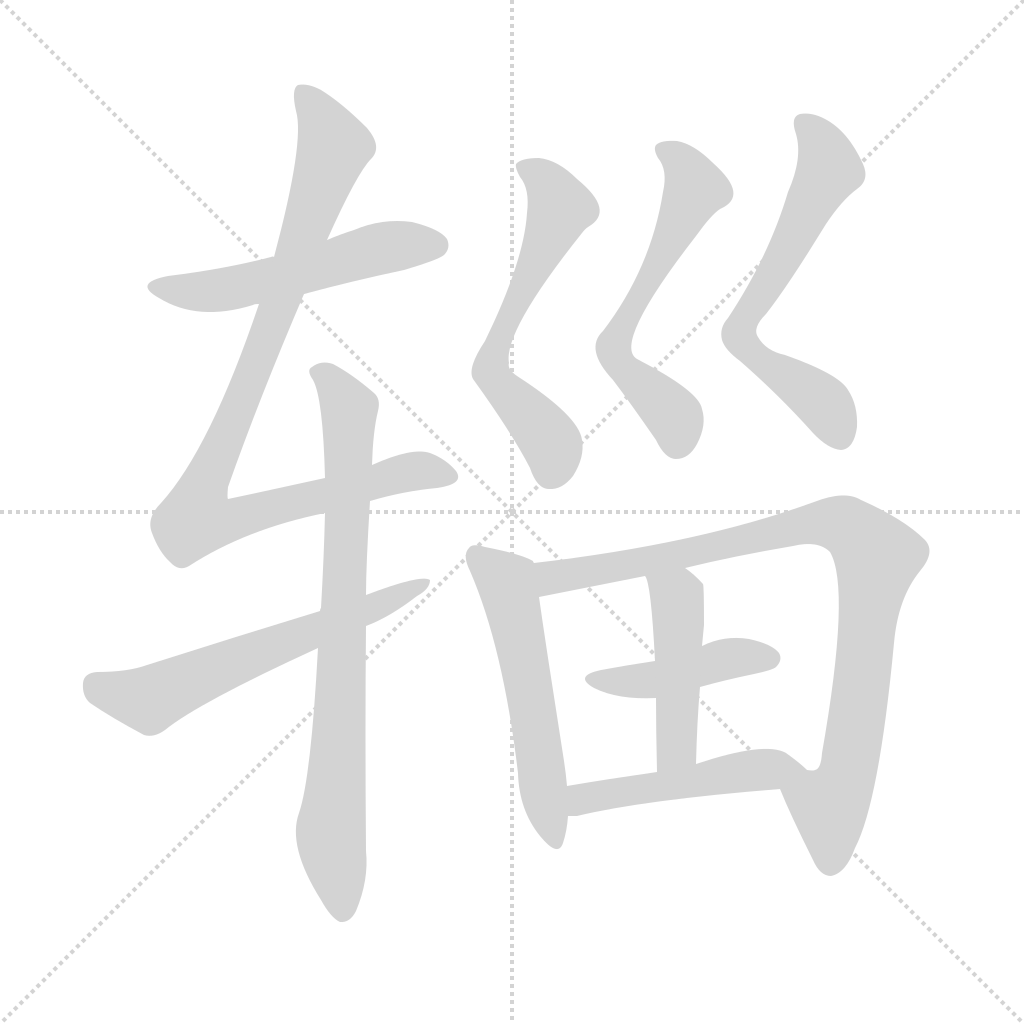
Zi
Kangxi stroke count: 15
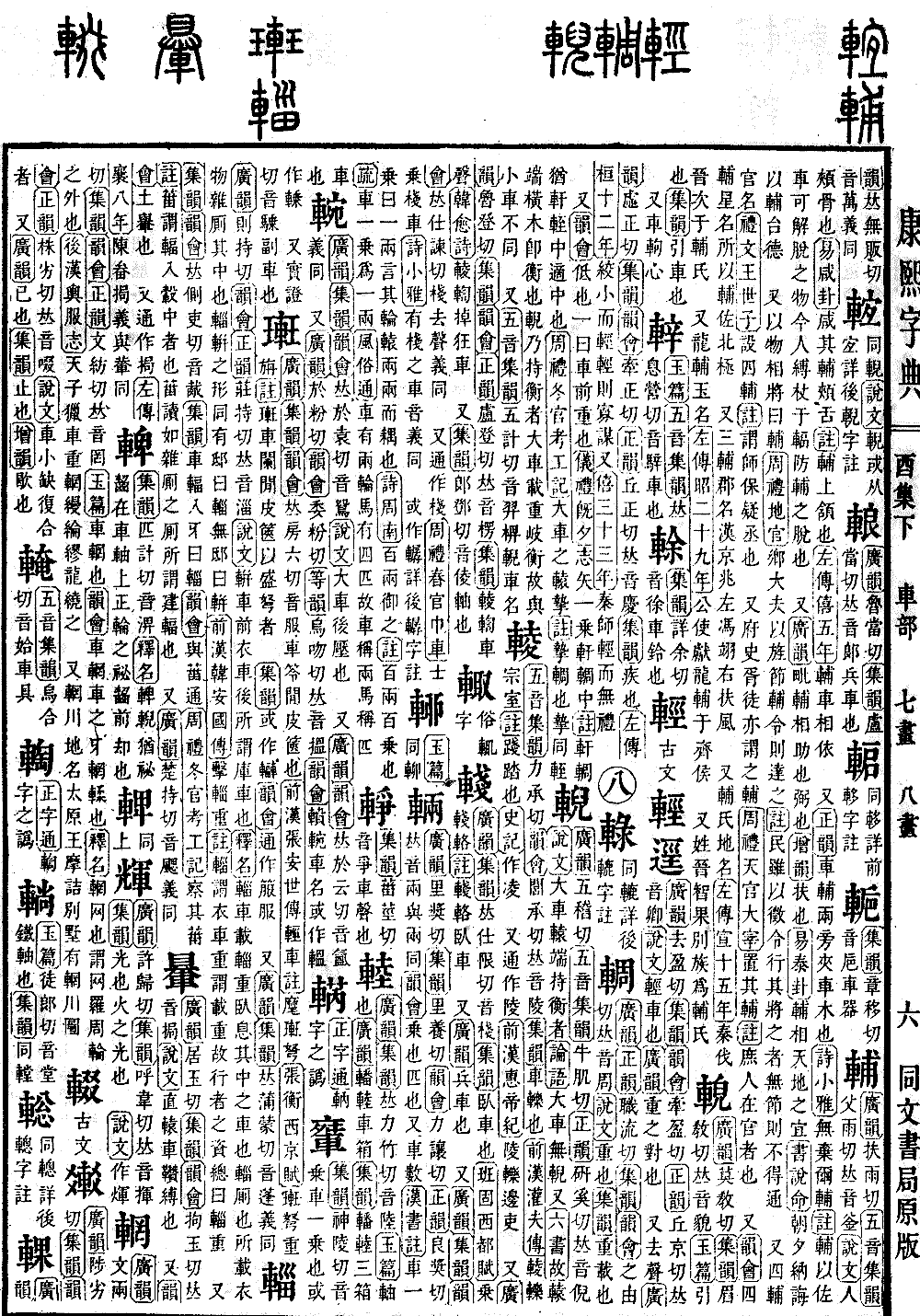
Page 1244, Entry 01
Pronounced zī.
Shuowen Jiezi (Shuowen): A transport carriage with a curtained cover; it features shielding in the front and back, also known as a warehouse carriage.
Explanation of Names (Shiming): A carriage that carries supplies and allows for sleeping. Zi implies a mixed placement, where clothing and miscellaneous items are placed together inside. The zi carriage and the ping carriage have the same shape; the one with a floorboard is called zi, while the one without is called ping.
History of the Former Han (Qianhan), Biography of Han Anguo: To attack the baggage train.
Commentary: Zi refers to the carriage for clothing, and zhong refers to heavy cargo; therefore, the supplies carried by a marching army are collectively called baggage (zīzhòng).
Also pronounced zì.
Jiyun (Jiyun): The part of the carriage spoke that is inserted into the hub is called zi.
Dictionary of Rhymes (Yunhui): Interchangeable with zi.
Rites of Zhou (Zhouli), Winter Offices, Record of Artificers (Kaogongji): Examine its zi.
Commentary: Zi refers to the part where the carriage spoke is inserted into the hub. The pronunciation of zi is like the word for latrine, which is what is meant by the vertical spoke.
Also pronounced sī.
Meaning is the same.