Wu Collection, Upper Volume
Radical: Field (tián)
Qi; Kangxi strokes: 11; Page 762, Entry 11
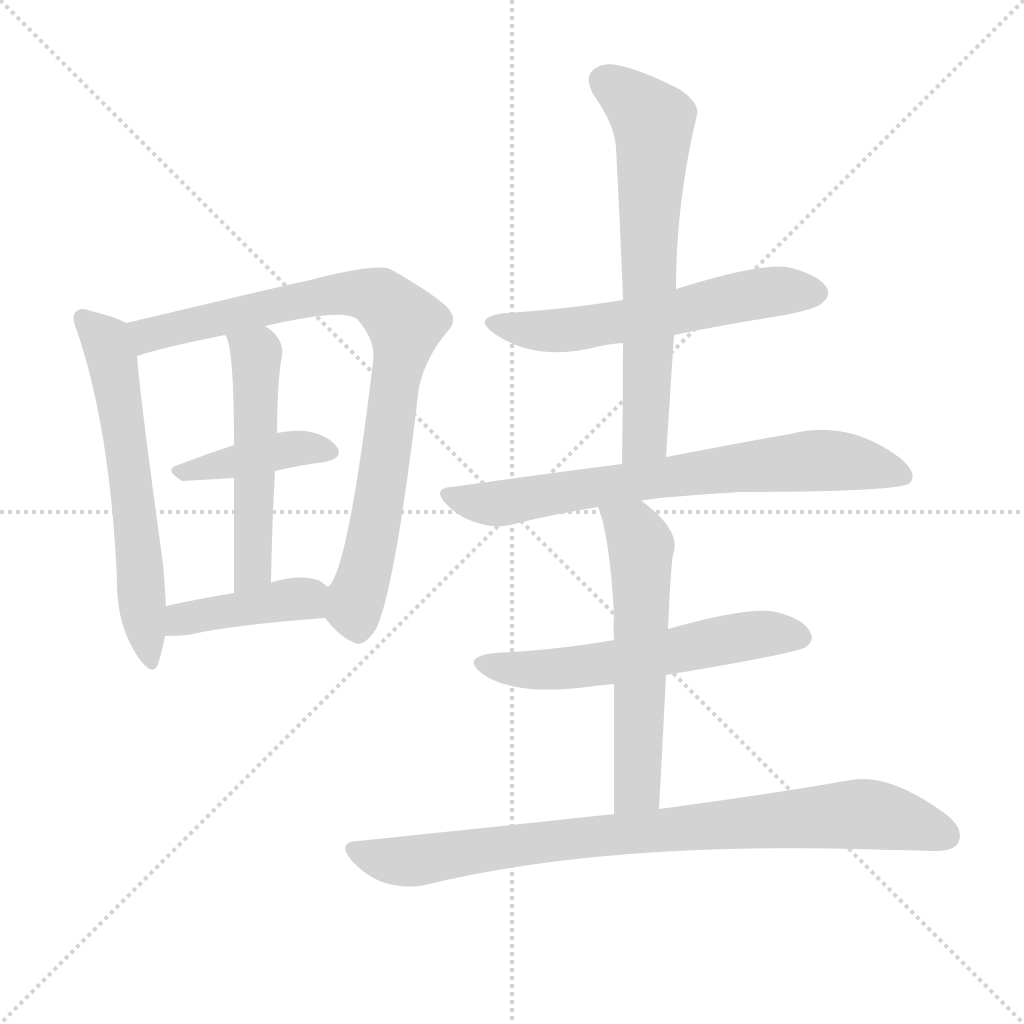
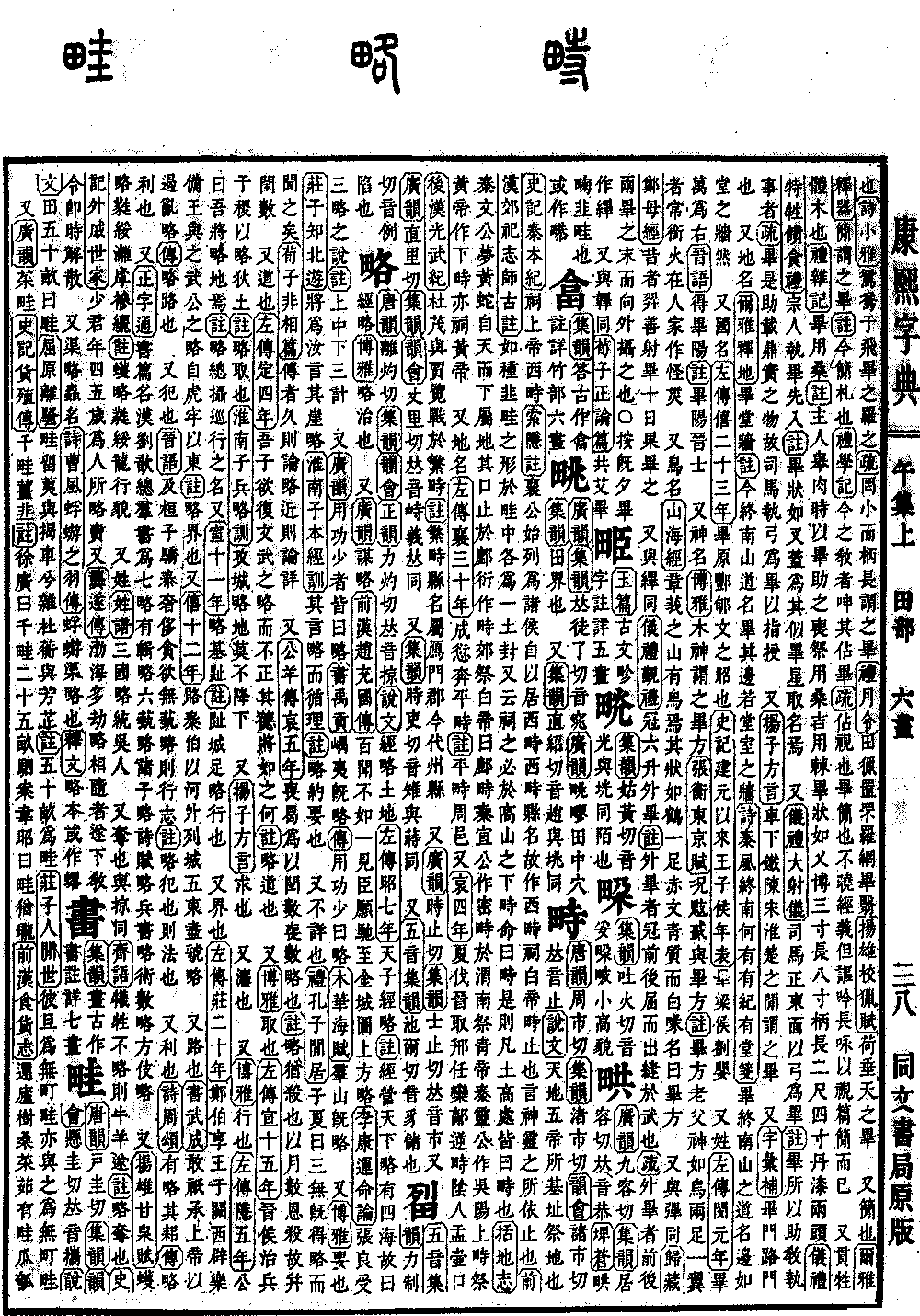
According to Tang Rhymes (Tangyun), pronounced xie (rising tone). According to Collected Rhymes (Jiyun) and Rhymes Collection (Yunhui), pronounced xie (rising tone). According to Explaining Graphs and Analyzing Characters (Shuowen), a field of fifty mu is called a qi. Qu Yuan, Encountering Sorrow (Lisao): Planted patches of mountain herb and jiezhe, mixed with fragrant angelica and sweet grass. Commentary: Fifty mu is a qi. Zhuangzi, In the World of Men (Renjianshi): If he does not act in a constrained or divided manner, then I shall not act in a constrained or divided manner toward him. Also, according to Extensive Rhymes (Guangyun), vegetable plot. Records of the Grand Historian (Shiji), Biographies of the Money Makers (Huozhizhuan): A thousand patches of ginger and leeks. Commentary: Xu Guang says, a thousand patches is twenty-five mu. Yin notes: Wei Zhao says, qi is synonymous with ridge. Book of Han (Qianhan), Treatise on Food and Money (Shihuozhi): Return to the cottage and plant mulberry trees; vegetables have patches, and melons, gourds, and fruits are grown. Commentary: Shi Gu says, qi means plots. Also, a place name. Records of the Grand Historian (Shiji), Treatise on the Feng and Shan Sacrifices (Fengshanshu): Therefore, sacrificial altars were built at Qiyuan in Liyang to worship the White Emperor. Commentary: The Han Old Ceremonies (Hanjiuyi) states: When the people of the Western County in Longxi performed sacrifices, they first ascended the mountains. On the mountains were earth mounds, and above and below them were altars, similar to planted leek patches; within each patch were two earth mounds, hence they are called sacrificial patches. Also, according to Collected Rhymes (Jiyun), pronounced gui (level tone). It refers to the ridges raised around a field. Also, according to Collected Rhymes (Jiyun), pronounced gui (level tone). Also, according to Five Sounds Collected Rhymes (Wuyin Jiyun), pronounced sui (level tone). The meanings are the same.
Textual Research: Records of the Grand Historian (Shiji), Biographies of the Money Makers (Huozhizhuan): A thousand patches of ginger and leeks. Commentary: Xu Guang says, a thousand patches is twenty-five mu. Si notes: Wei Zhao says, qi is synonymous with ridge. We note that Si is a corruption of Yin; Yin refers to Pei Yin. We have corrected Si to Yin according to the original text.