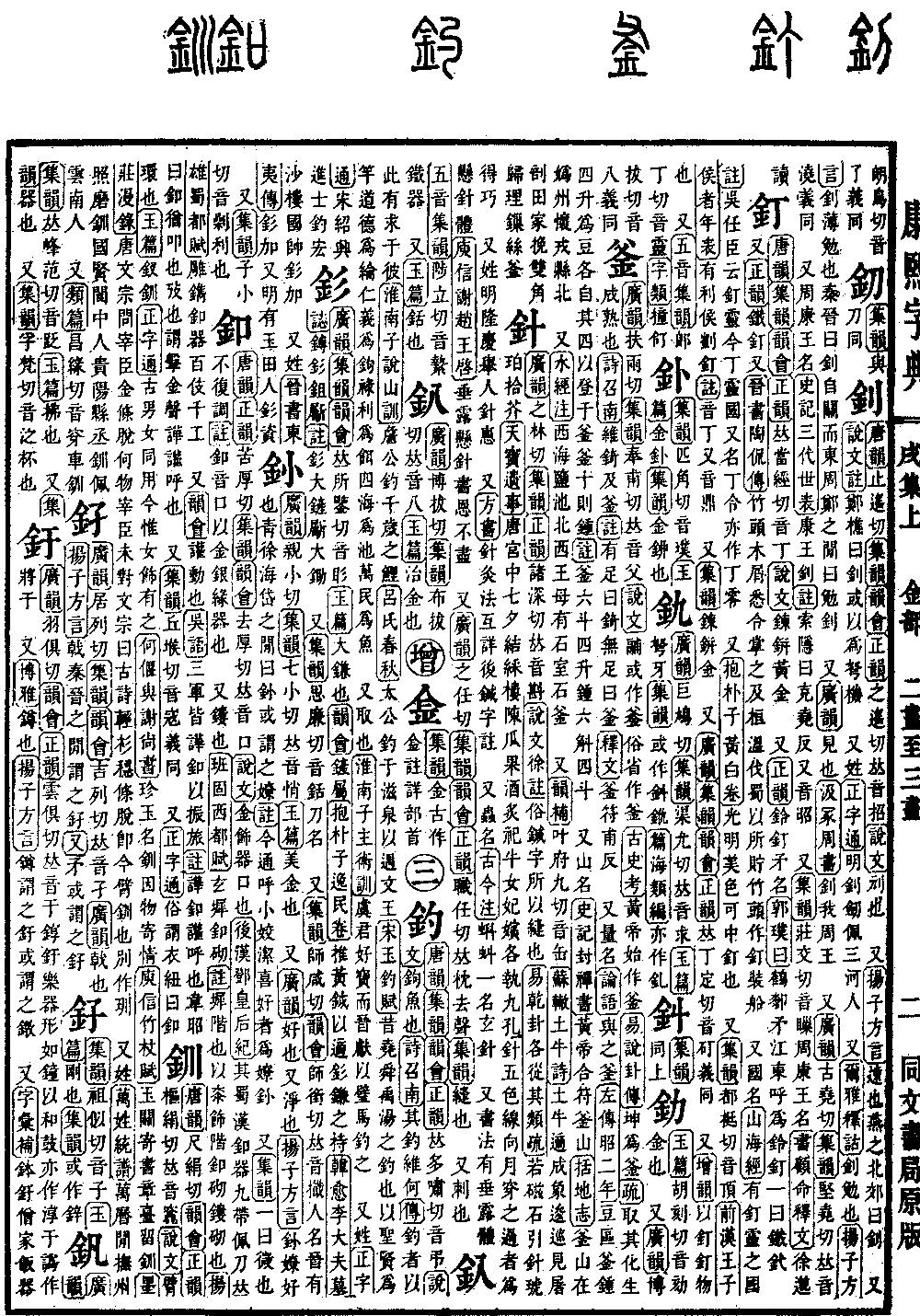
Xu Collection, Upper Volume
Radical: Metal (jīn)
Page 1296, Entry 10
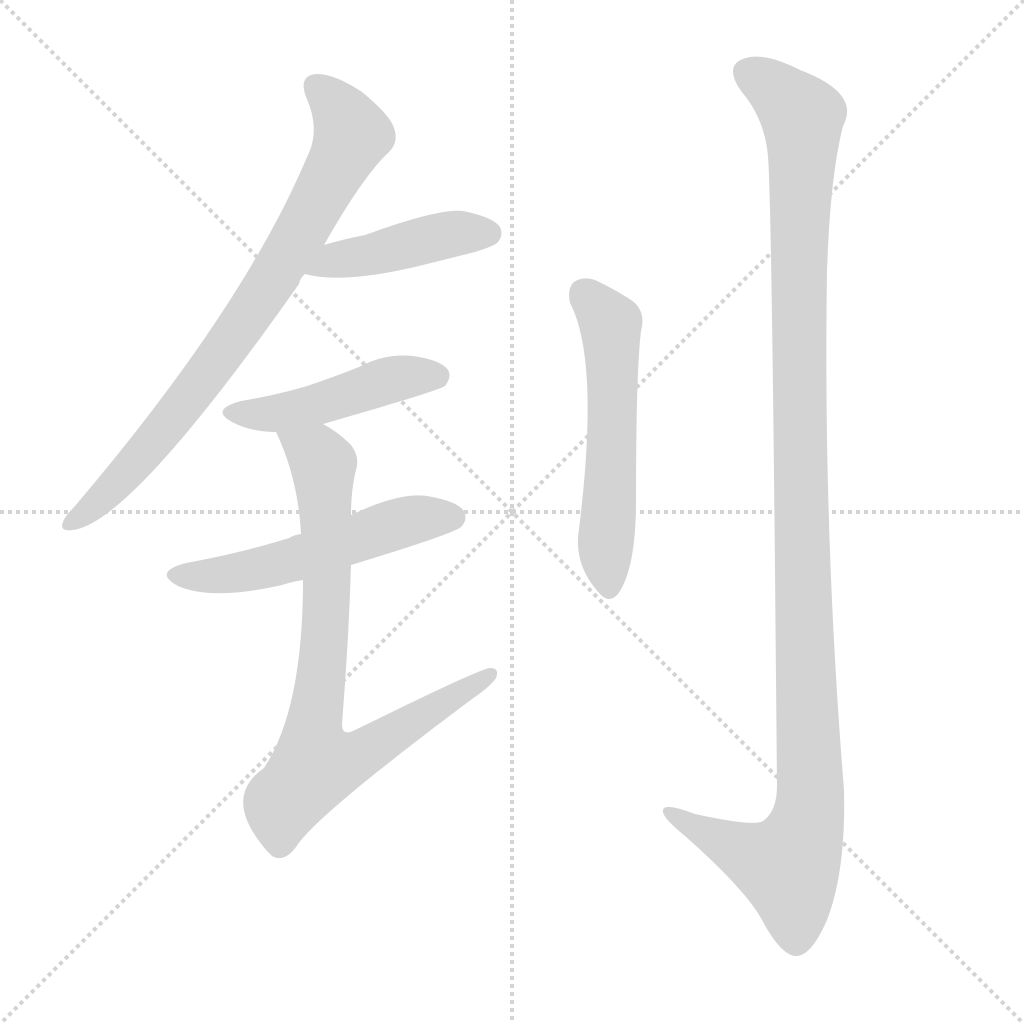
Pronounced zhao.
According to the Explaining Graphs and Analyzing Characters (Shuowen Jiezi), it means to carve or engrave.
According to the Regional Speech (Fangyan) by Yang Xiong, it means far. In the northern suburbs of the Yan region, it is called zhao.
According to the Annotations to the Explaining Graphs and Analyzing Characters, Zheng Qiao suggests that some believe it refers to the trigger mechanism of a crossbow.
It is also used as a surname. According to the Guide to Standard Characters (Zhengzitong), there was a man named Zhao Jianpei during the Ming dynasty who was from Sanhe.
According to the Erya, a dictionary of definitions, zhao means to encourage or exert effort. According to the Regional Speech (Fangyan) by Yang Xiong, zhao carries the meaning of encouragement and supervision. In the Qin and Jin regions, it is referred to as zhao; from east of the Hangu Pass through the Zhou and Zheng territories, it is referred to as mianzhao.
Also pronounced jian. In the Bamboo Annals (Jizhong Zhoushu), it is written: come to visit our King of Zhou.
Also pronounced jiao. The meaning is the same.
It is also the personal name of King Kang of Zhou. In the Records of the Grand Historian (Shiji), specifically the Genealogical Tables of the Three Dynasties, it is written as King Kang Zhao. The commentary, Records of Searching for Hidden Meanings (Suoyin), notes it should be read as ke-yao.
Also pronounced zhao.
Also pronounced jiao. It is the personal name of King Kang of Zhou. In the Commentary on the Testamentary Charge (Guming Shiwen) from the Book of Documents (Shangshu), Xu Miao reads it this way.