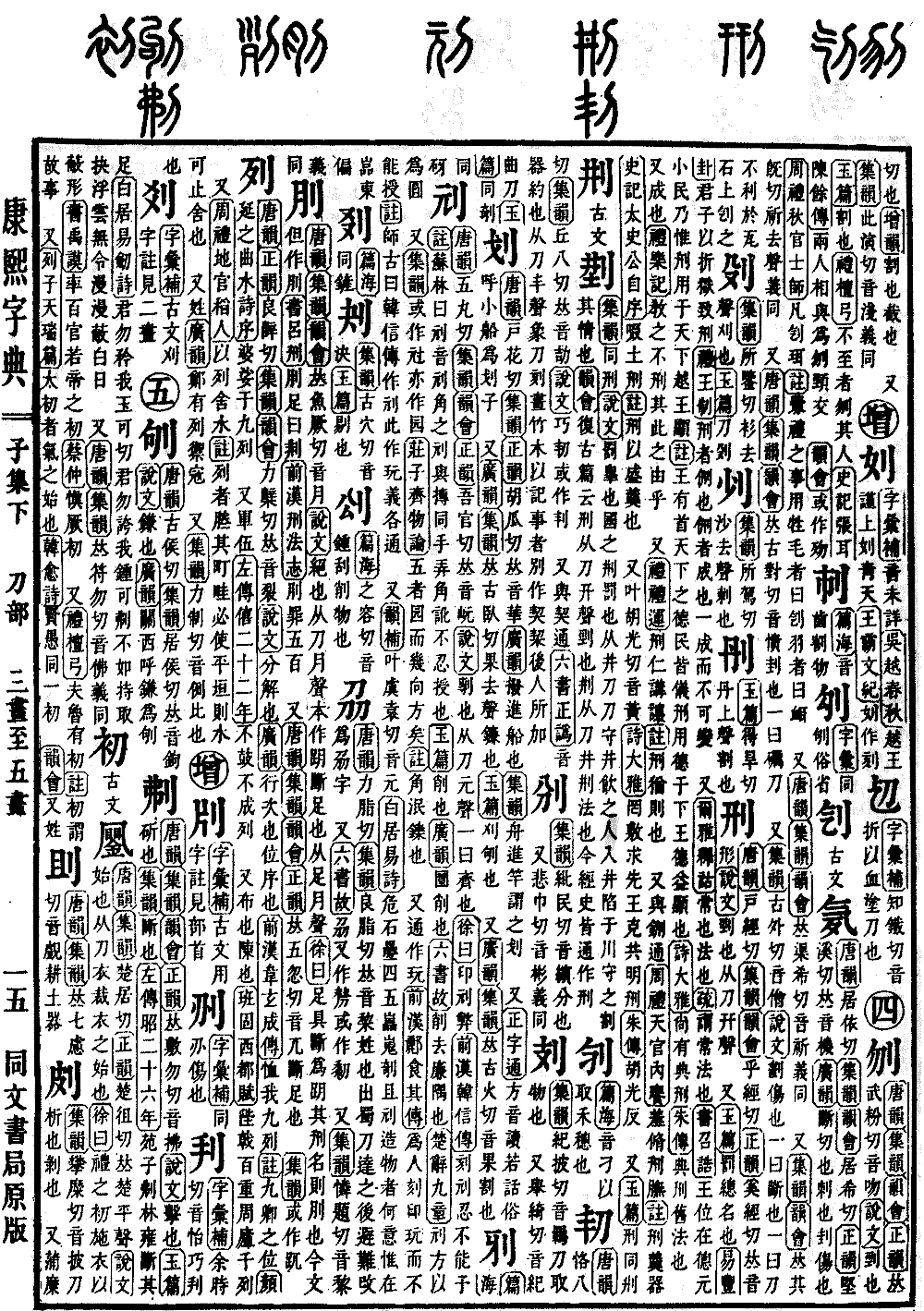
Zi Collection, Page Position: Lower. Radical: Knife (dāo). Kangxi Dictionary stroke count: 6 strokes. Page 137, line 11. In ancient scripts, it was recorded in the Collected Rimes (Jiyun) as being identical to the character xíng. The Explaining Graphs and Analyzing Characters (Shuowen Jiezi) explains it as punishing crimes, referring to the penalties of the state. The character form is composed of the elements for a well (jǐng) and a knife (dāo); the knife guards the well, which is a metaphor suggesting that if a person commits a crime it is like falling into a well, and the guard uses the knife to cut off the criminal circumstances. The Meeting of Rimes (Yunhui) quotes the Essay on Returning to Antiquity (Fugupian) stating that the character follows the radical dāo, while jiān provides the pronunciation, meaning to cut the neck. Composed of the elements dāo and jǐng, it symbolizes the law. In contemporary editions of the classics and histories, it is commonly written as xíng.