Zi Collection, Page Position: Lower
Radical: Knife (dāo)
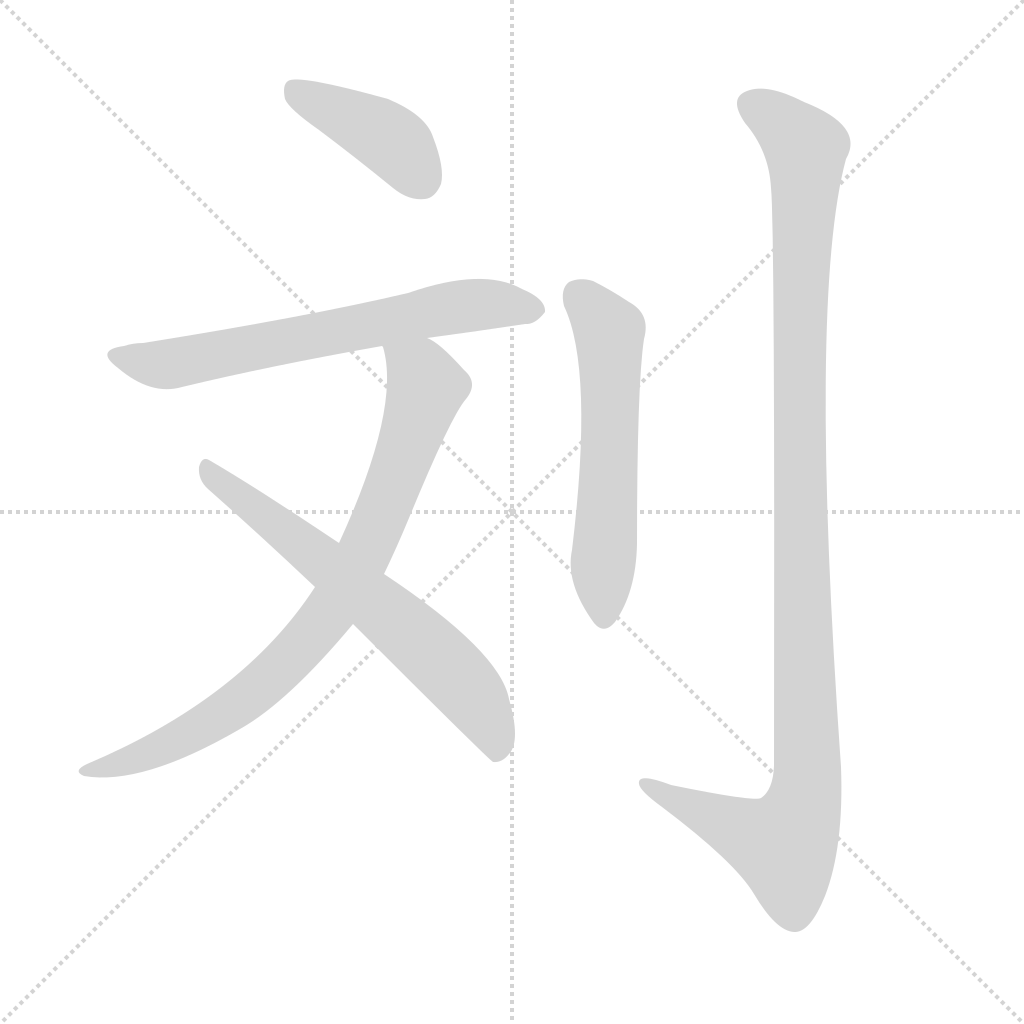
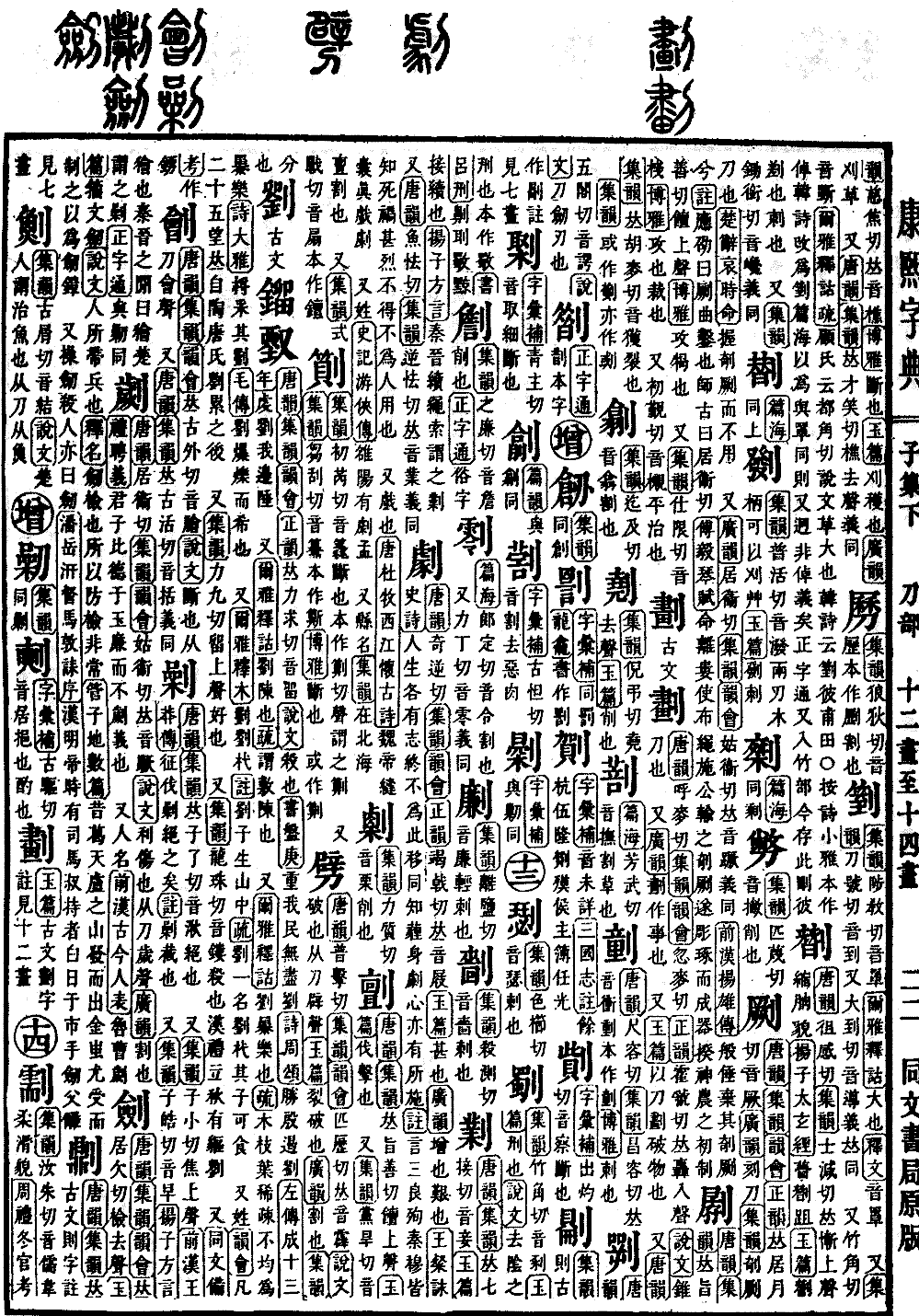
Liu; Kangxi Dictionary strokes: 15; Page number: 144. In ancient texts, written as "鎦".
Pronounced liú (entering tone), same as "liú".
"Shuowen Jiezi" explains it as "to kill".
The "Book of Documents (Shujing)" records: "Heavy are our people, do not exhaustively kill."
The "Book of Odes (Shijing)" states: "Victorious over Yin, suppress and kill."
The "Zuo Zhuan (Zuozhuan)" has: "Kill our borderlands."
Also, "Erya (Erya)" explains: "Liu, to arrange." The commentary clarifies it means "to spread out".
Also, "Erya (Erya)" explains: "Liu, sparse." The commentary clarifies it describes the appearance of trees with sparse and uneven branches and leaves.
The "Book of Odes (Shijing)" has: "Pluck and gather its sparse leaves." The "Mao Commentary (Maoshu)" explains: "Liu refers to being sparse and scattered."
Also, "Erya (Erya)" records: "Liu, Liu yi." The annotation clarifies: "Liu zi grows in the mountains." The commentary explains: "Liu is also called Liu yi, and its fruit is edible."
Also used as a surname. "Yunhui (Yunhui)" records: There are twenty-five prominent clans, all descendants of Liu Lei of the Tao Tang clan.
Also, pronounced liǔ (rising tone), meaning "good".
Also, pronounced lòu, same as "lòu", meaning "to kill". In the Han Dynasty ritual system, there was a ceremony called "Chun liu" during the立秋 (Establishment of Autumn).
Also written as "鐂" in "Tongwen Beikao".