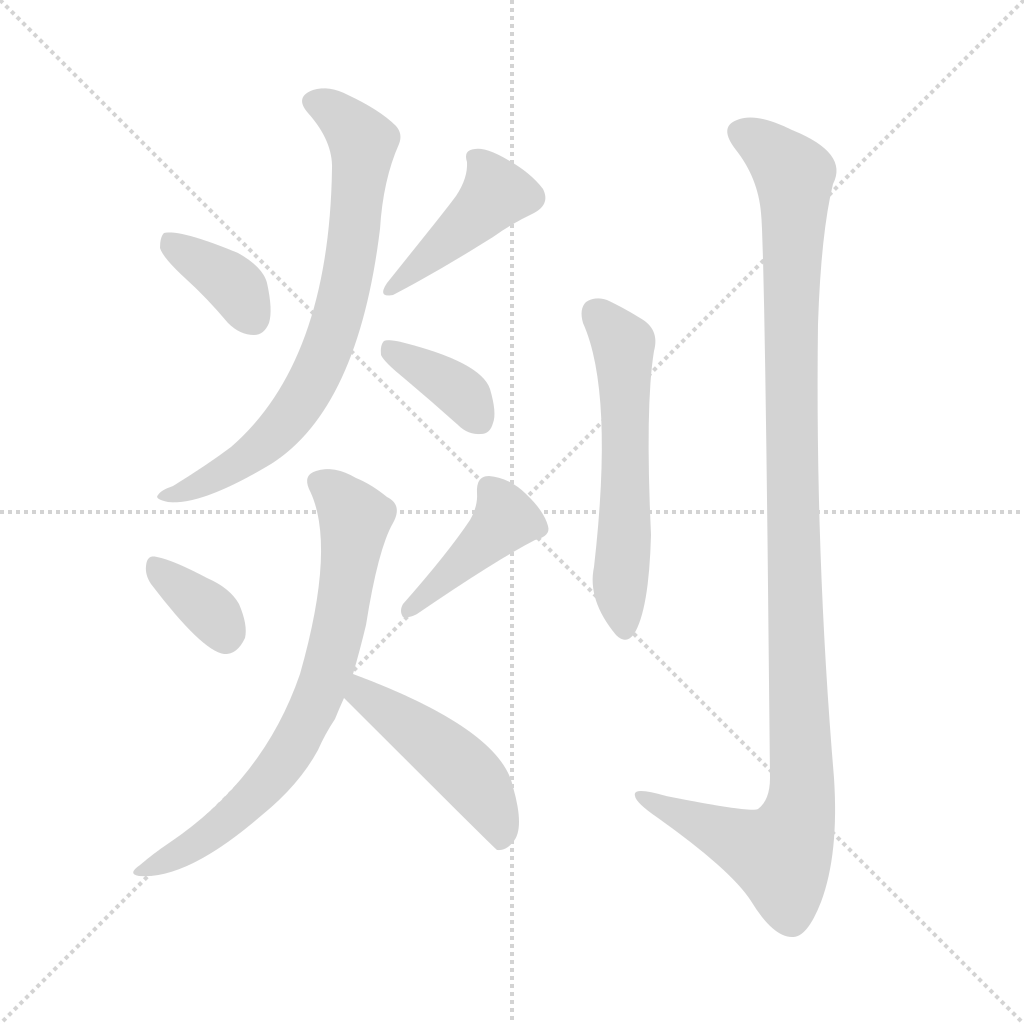
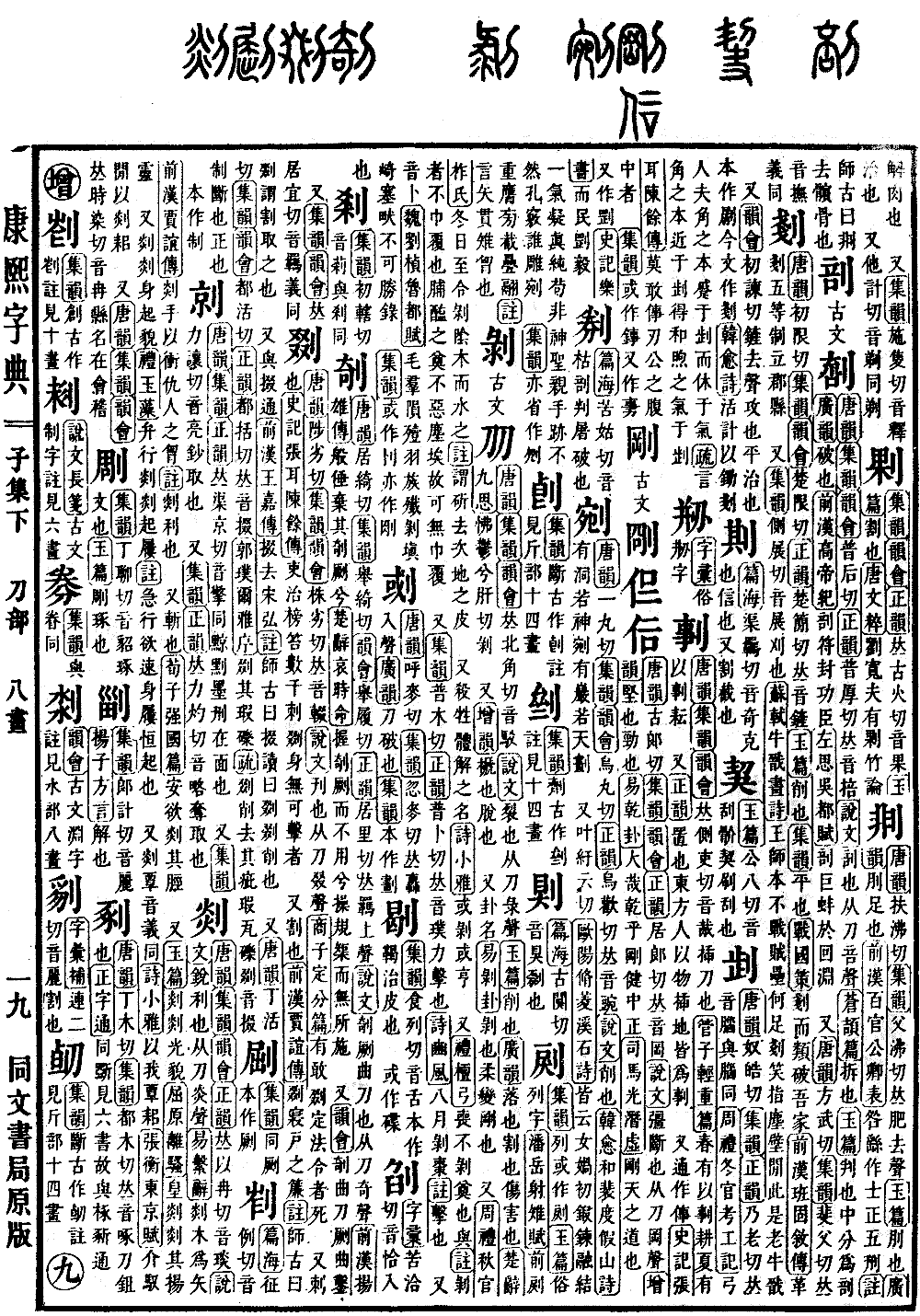
Zi Collection, Page Position: Lower. Radical: Knife (dao). Kangxi Stroke Count: 10. Page 141, Number 32.
According to the Tang Rhymes (Tangyun), the Collected Rhymes (Jiyun), the Rhyme Meeting (Yunhui), and the Correct Rhymes (Zhengyun), the character is pronounced yan.
The Analytical Dictionary of Characters (Shuowen Jiezi) defines the character as sharp. The character form is composed of the Knife (dao) and Flame (yan) components, where the latter indicates the pronunciation.
Sharpened wood to make arrows — Classic of Changes (Yijing).
Raising the hand to stab the enemy's chest — Book of Han (Hanshu). The commentary notes that the character means sharp.
The character also means to cut off.
Why would one wish to cut off his shins? — Xunzi (Xunzi).
Also, the Jade Chapters (Yupian) explains the reduplicated form yanyan as a bright and shining appearance.
The divine brilliance shines and manifests — On Encountering Sorrow (Lisao).
The character also indicates the appearance of the body lifting or rising.
Wearing a ceremonial cap and walking with light and hurried steps — Book of Rites (Liji). The commentary notes that when one is eager to walk quickly, the body and feet always seem as if they are about to rise.
Furthermore, the character shares the same pronunciation and meaning as the character tan.
Using my sharp plowshares — Book of Odes (Shijing).
Using sharp plowshares in the intervals between chariots — Rhapsody on the Eastern Capital (Dongjing Fu).
According to the Tang Rhymes, Collected Rhymes, and Rhyme Meeting, the character is also pronounced shan. It is the name of a county located in Kuaiji Commandery.