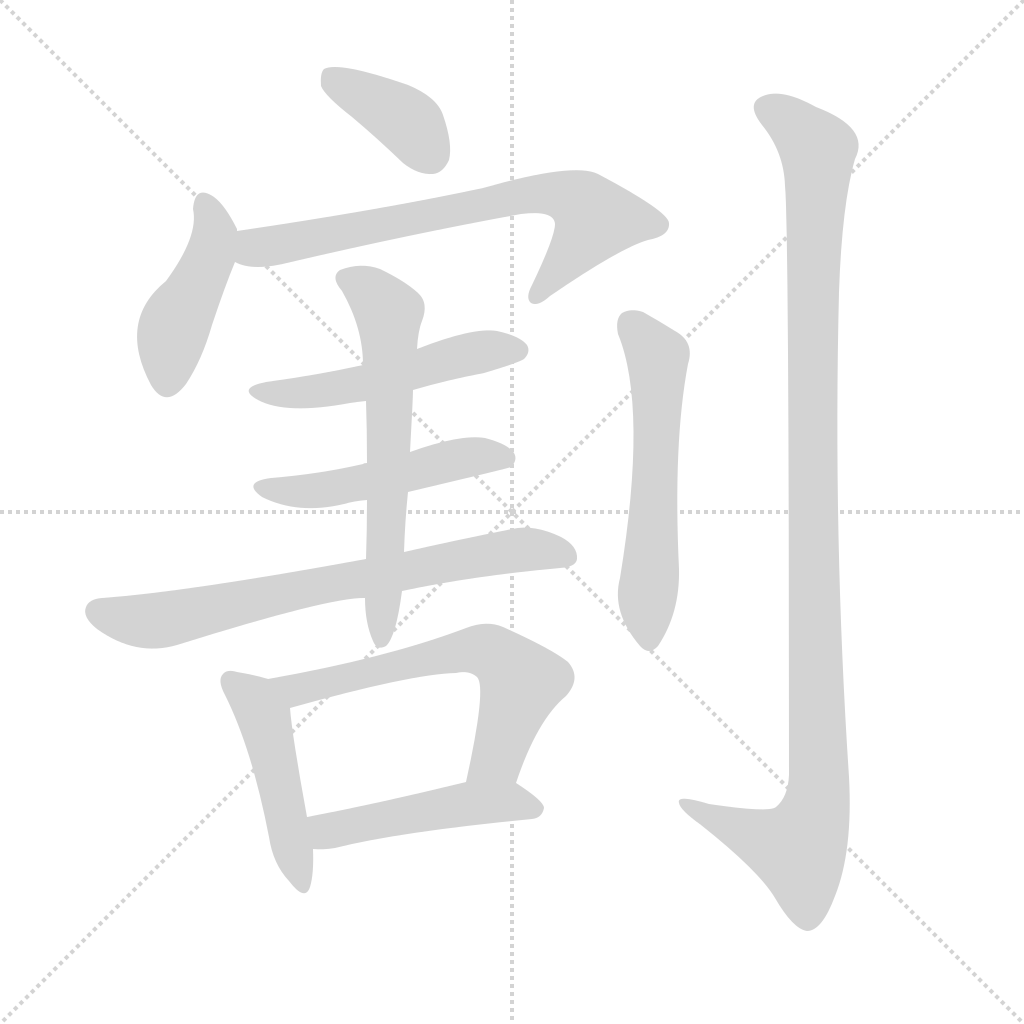
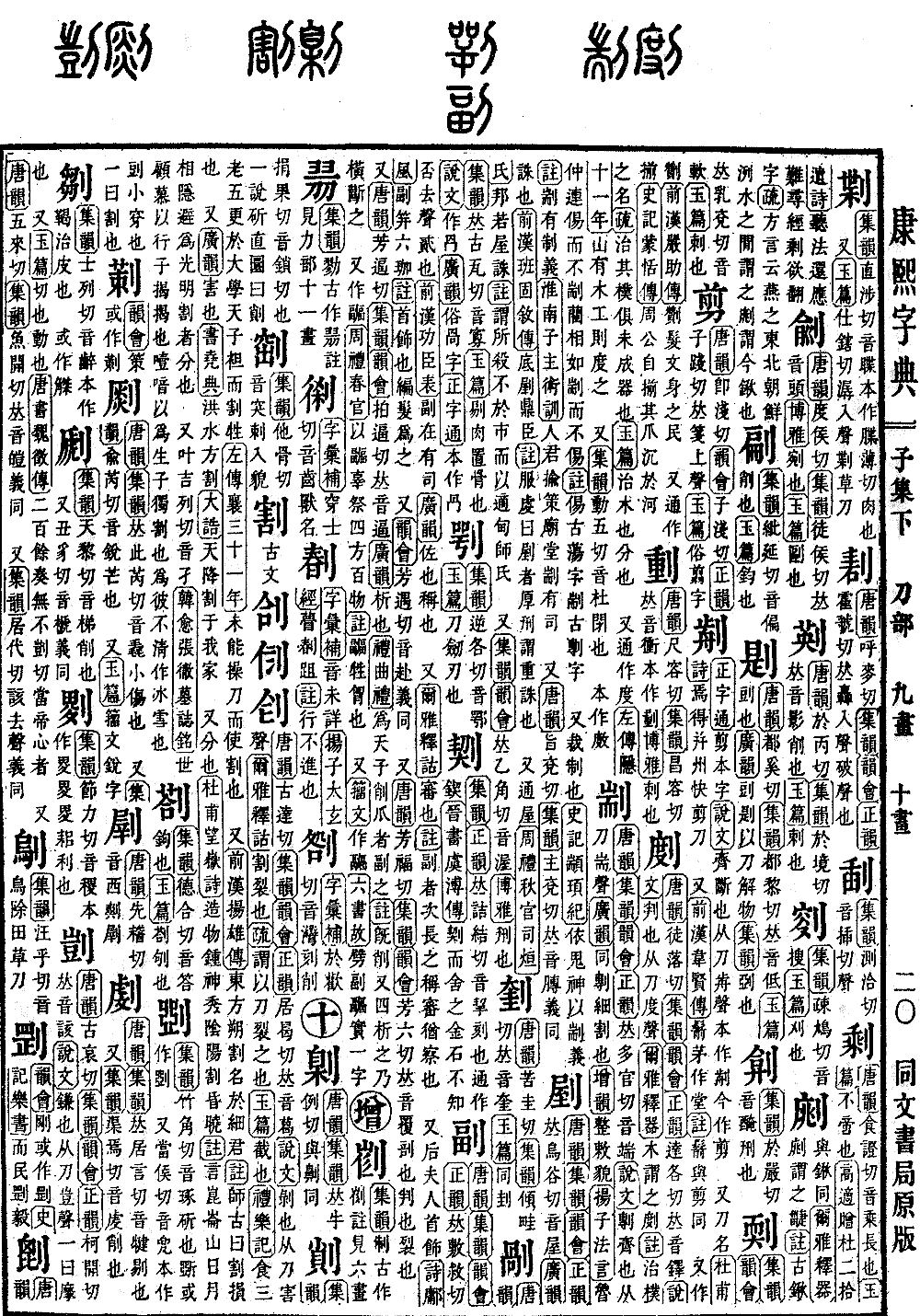
Zi Collection, Page Position: Lower. Radical: Knife (dāo). gē. Kangxi stroke count: 12. Page number: Page 142, Position 32. Ancient script form. According to the Tang Dynasty Rhymes (Tangyun), the pronunciation is gǔ-dá. According to the Collected Rhymes (Jiyun), the Rhyme Meeting (Yunhui), and the Correct Rhymes (Zhengyun), the pronunciation is jū-hé. Its sound is like gě. According to the Explanation of Scripts and Characters (Shuowen), it means to flay. It is composed of the radical knife (dāo) and the phonetic element harm (hài). According to the Literary Expositor (Erya), it means to tear or split. The commentary explains it as using a knife to tear something apart. According to the Jade Chapters (Yupian), it means to sever. According to the Record of Music (Yueji) in the Book of Rites (Liji), when the Son of Heaven provided food for the elders at the Imperial Academy (Daxue), he bared his shoulder and slaughtered the sacrificial animals. According to the Zuo Commentary (Zuozhuan) for the 31st year of Duke Xiang, "He cannot yet handle a knife, yet you have him attempt to cut." Also, in the Biography of Yang Xiong in the History of the Former Han (Qian Han Shu), "Dongfang Shuo damaged his reputation before his wife (xìjūn)." The commentator Yan Shigu states that here gē means to damage or diminish. Also, according to the Comprehensive Rhymes (Guangyun), it means to harm. As written in the Canon of Yao in the Book of Documents (Shujing), "The floodwaters are causing great harm." Also in the Great Announcement (Dagao) section, "Heaven has sent down disaster upon our house." Also means to divide. In the poem Gazing at the Mountain (Wang Yue) by Du Fu, "The Creator concentrated all spiritual beauty here; the dark and light slopes divide morning and evening." The commentary notes that this refers to how mountain peaks cause the sun and moon to be hidden or revealed, creating light and shadow. In this context, gē means to divide. Also used with a rhyming pronunciation of jí-liè, sounding like jié. In the Epitaph for Zhang Che (Zhang Che Muzhiming) by Han Yu, "The world follows the crowd with lingering gazes, yet you stood tall and independent. While others live in stifled silence, you alone stood out with distinct clarity. Amidst the impurity of the world, you acted like ice and snow."