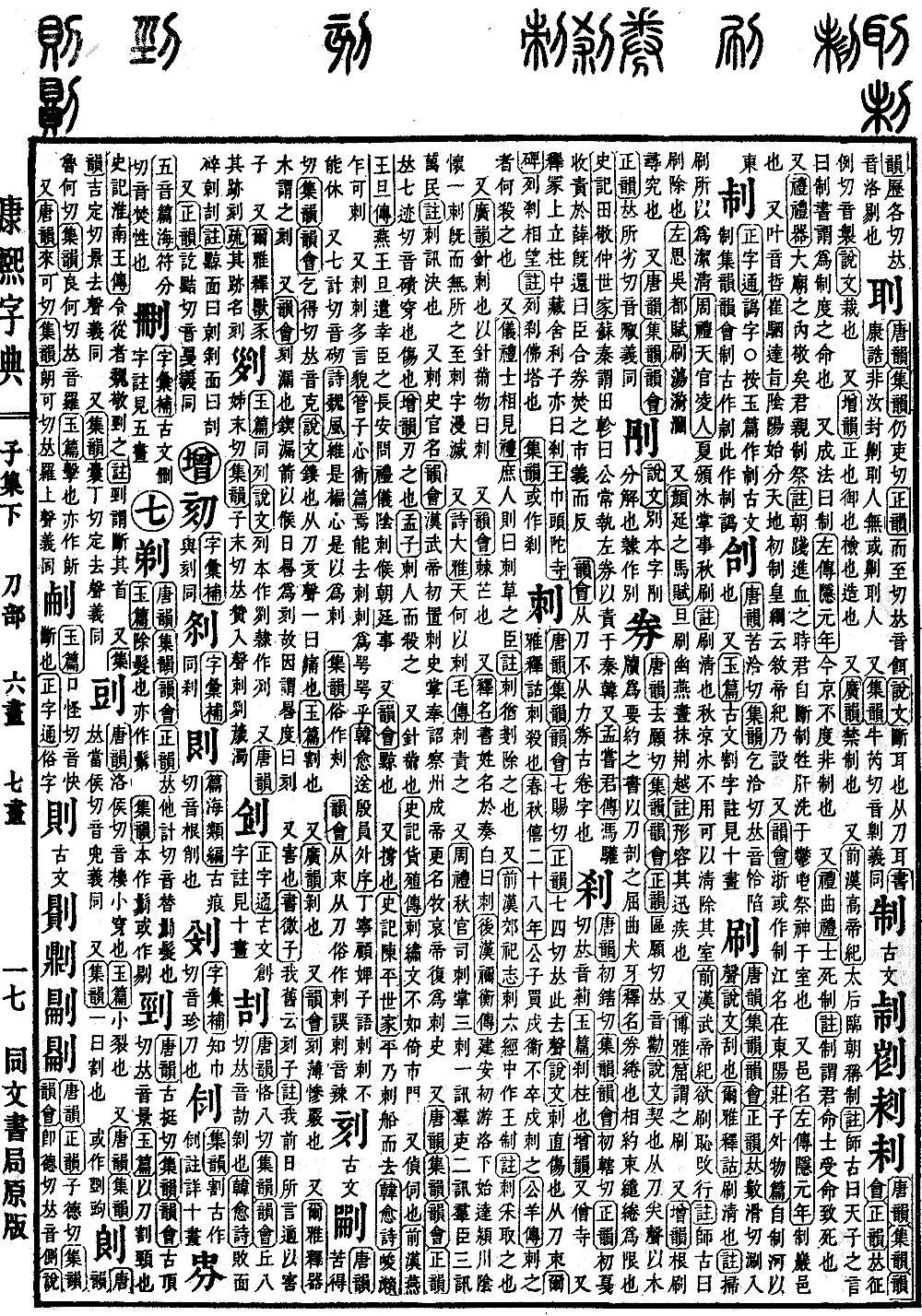
Zi Collection, Page Position: Lower. Radical: Knife (dāo). Character: kè. Kangxi Stroke Count: 8. Page 139, Number 14.
Ancient literary records:
Tang Dynasty Rhymes (Tangyun) provides the fanqie pronunciation kǔ-dé. Collected Rhymes (Jiyun) and Rhyme Assembly (Yunhui) provide the fanqie pronunciation qǐ-dé. The pronunciation is the same as the word for overcome (kè).
Explaining Graphs and Analyzing Characters (Shuowen Jiezi) defines it as carving or engraving. The character structure follows the Radical: Knife (dāo) with hài as the phonetic component. Another meaning is suffering or pain.
Jade Chapters (Yupian) defines it as to cut.
Expanded Rhymes (Guangyun) defines it as to peel or strip.
Rhyme Assembly refers to being mean, harsh, or cruel.
Engraving on wood is called kè — Erya (Erya).
Rhyme Assembly refers to the water clock (kèlòu). The water clock is a timekeeping instrument that marks time via scales on a leakage arrow, dividing the scales according to the length of the sundial shadow; therefore, the degrees of the sundial are called kè.
It also means to harm.
My previous words happened to harm you — Book of Documents (Shangshu). Commentary: What I said before just happened to cause you injury.
The footprints of a pig are called kè — Erya. Commentary: Its footprints are named kè.