Zi Collection, Page Position: Lower
Radical: Knife (dāo)
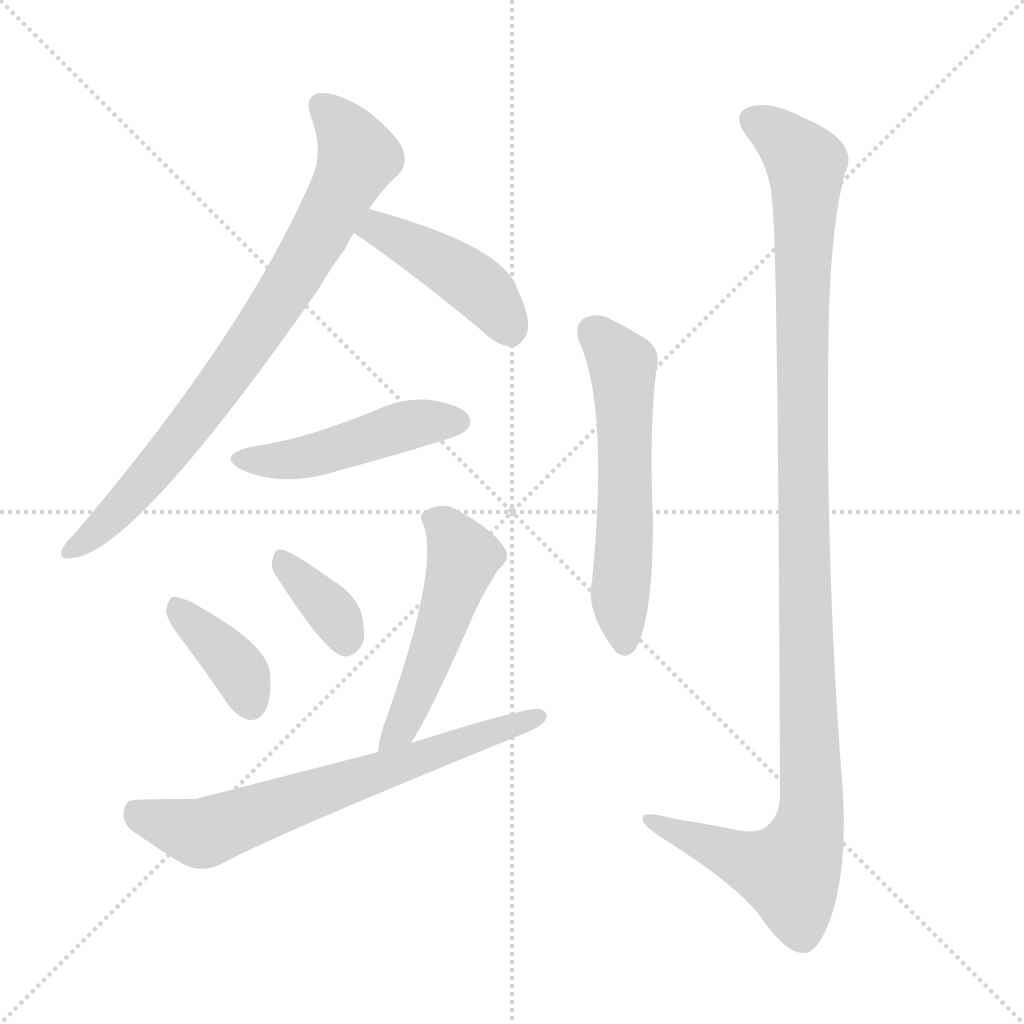
Jiàn
Kangxi Stroke Count: 15
Page 144
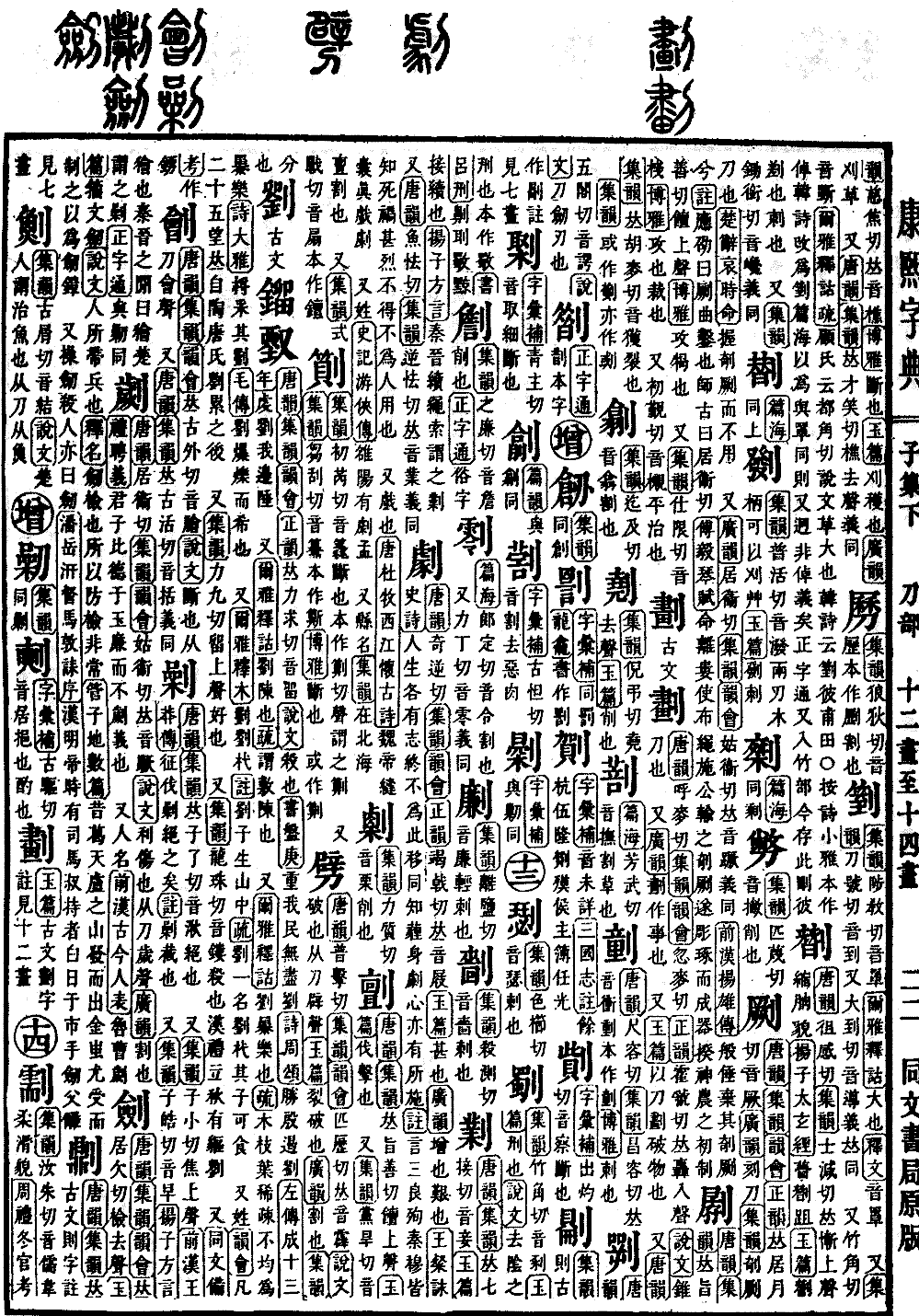
According to the Tang Rhymes (Tangyun), the Collected Rhymes (Jiyun), and the Rhyme Assembly (Yunhui), the pronunciation is derived from the initial jū and the final qiàn, read in the departing tone of the character jiǎn. The Jade Chapters (Yupian) states this is the seal script form (zhòuwen) of the character jiàn. Explaining Graphs and Analyzing Characters (Shuowen Jiezi) explains this as a weapon that people carry on their persons. Explaining Names (Shiming) states that jiàn carries the meaning of prevention and restraint, used to guard against unexpected events. Master Guan (Guanzi) in the Earthly Numbers (Dishupian) chapter records that metal was mined from Mount Gelu, and Chiyou obtained it to manufacture swords, armor, spears, and halberds. Additionally, the act of killing someone with a sword is also referred to as jiàn. Pan Yue in the Preface to the Eulogy for the Governor of Qian, Ma Dun (Qiandu Ma Dun Lei Xu) records that during the reign of Emperor Ming of Han, there was a man named Sima Shuchi who personally used a sword to kill his father's enemy in the marketplace during the day.