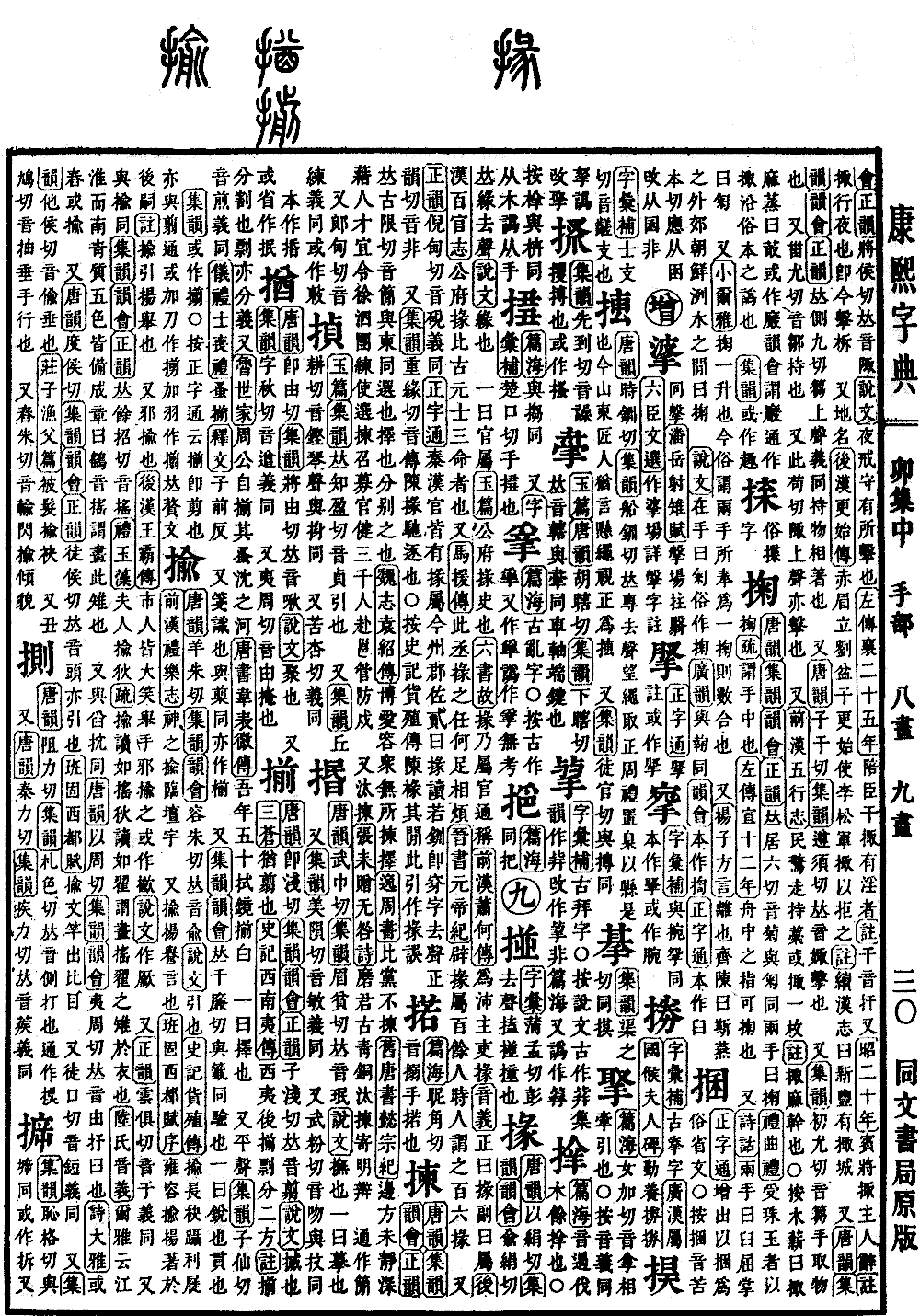
Mao Collection, Middle Volume
Radical: Hand (shǒu)
Kangxi stroke count: 13
Page 440, Entry 27
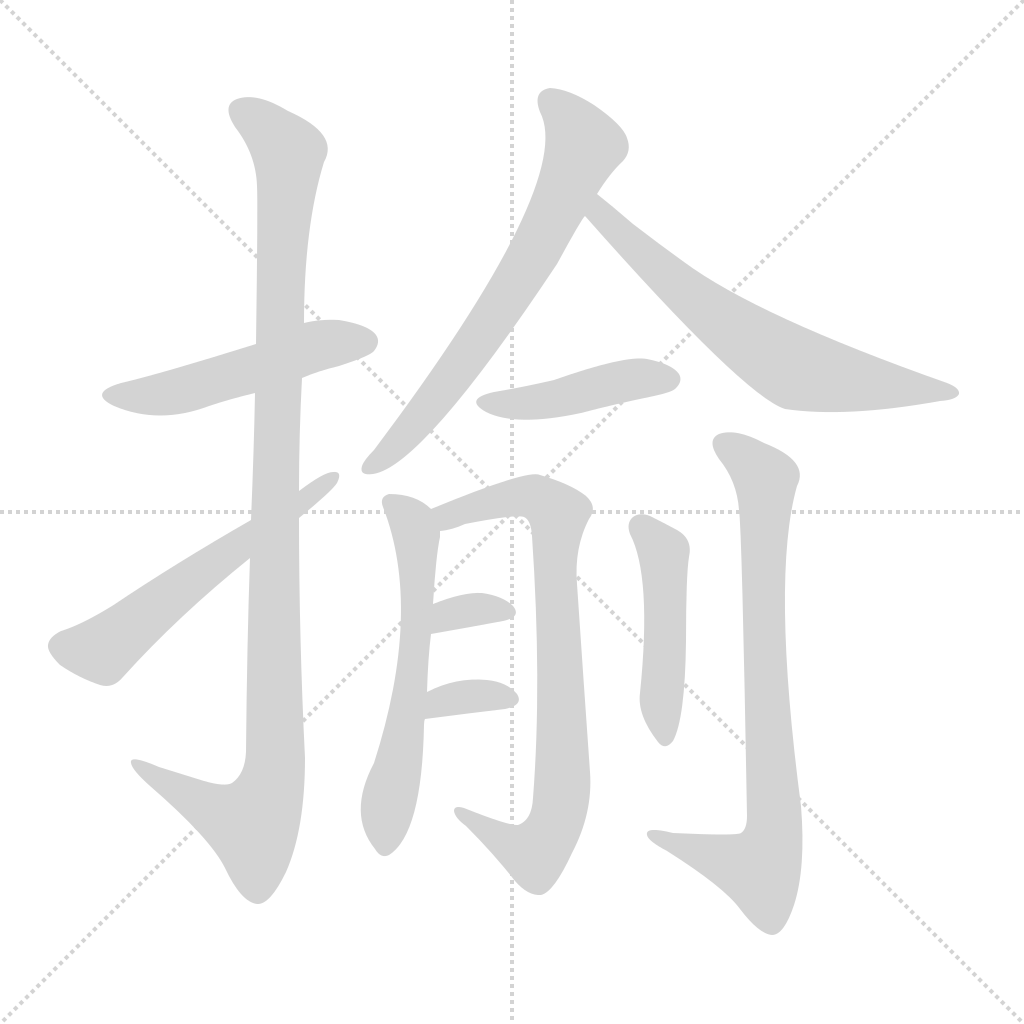
Pronounced yu.
According to the Explaining Graphs and Analyzing Characters (Shuowen Jiezi), it means to pull or lead. In the Records of the Grand Historian (Shiji), Biography of the Money-makers: Pulling up long sleeves and treading on sharp-edged shoes. In the Book of Han (Hanshu), Treatise on Rites and Music: The spirits descend and hover over the altar.
Also, yu-yang (to praise or extol). In the preface to the Western Capital Rhapsody (Xidu Fu) by Ban Gu: Harmonious and graceful praise, recorded for later descendants. The commentary notes that it means to pull forward and raise up.
Also, xie-yu (to mock or ridicule). In the Book of the Later Han (Houhanshu), Biography of Wang Ba: The people in the market all laughed loudly, raising their hands to mock him. Sometimes written as a variant form. The Explaining Graphs and Analyzing Characters (Shuowen Jiezi) writes it as a variant form.
Pronounced yu. The meaning is the same.
Also, same as the character meaning a type of royal robe (yu). According to the Collected Rhymes (Jiyun), the Rhyme Compendium (Yunhui), and the Correct Rhymes (Zhengyun), it is pronounced yao. In the Book of Rites (Liji), Jade Pattern: The consort wears the embroidered pheasant robe. The commentary states: Yu is read like yao. Di is read like zhai. This refers to painting the rocking pheasant on the garment. Lu’s Sound and Meaning (Lu shi yin yi) states: The Erya says: South of the Yangtze and Huai rivers, garments with five colors on a blue background are called yao. It is pronounced yao, referring to the painting of this pheasant.
Also, the same as the character for scooping or ladling (yao). Pronounced you. To scoop from a mortar. In the Book of Odes (Shijing), Greater Odes: Some pound the grain, some scoop it out.
Pronounced tou. Also means to pull or lead. In the Western Capital Rhapsody (Xidu Fu) by Ban Gu: Raising the decorated poles to reveal the flatfish.
Pronounced tou. The meaning is the same.
Pronounced tou. To hang down. In the Zhuangzi, Fisherman chapter: Disheveled hair and hanging sleeves.
Pronounced chou. To walk with hands hanging down.
Pronounced shu. Shan-yu (swaying or tilting appearance).