Zi Collection, Page Position: Lower
Radical: Knife (dāo)
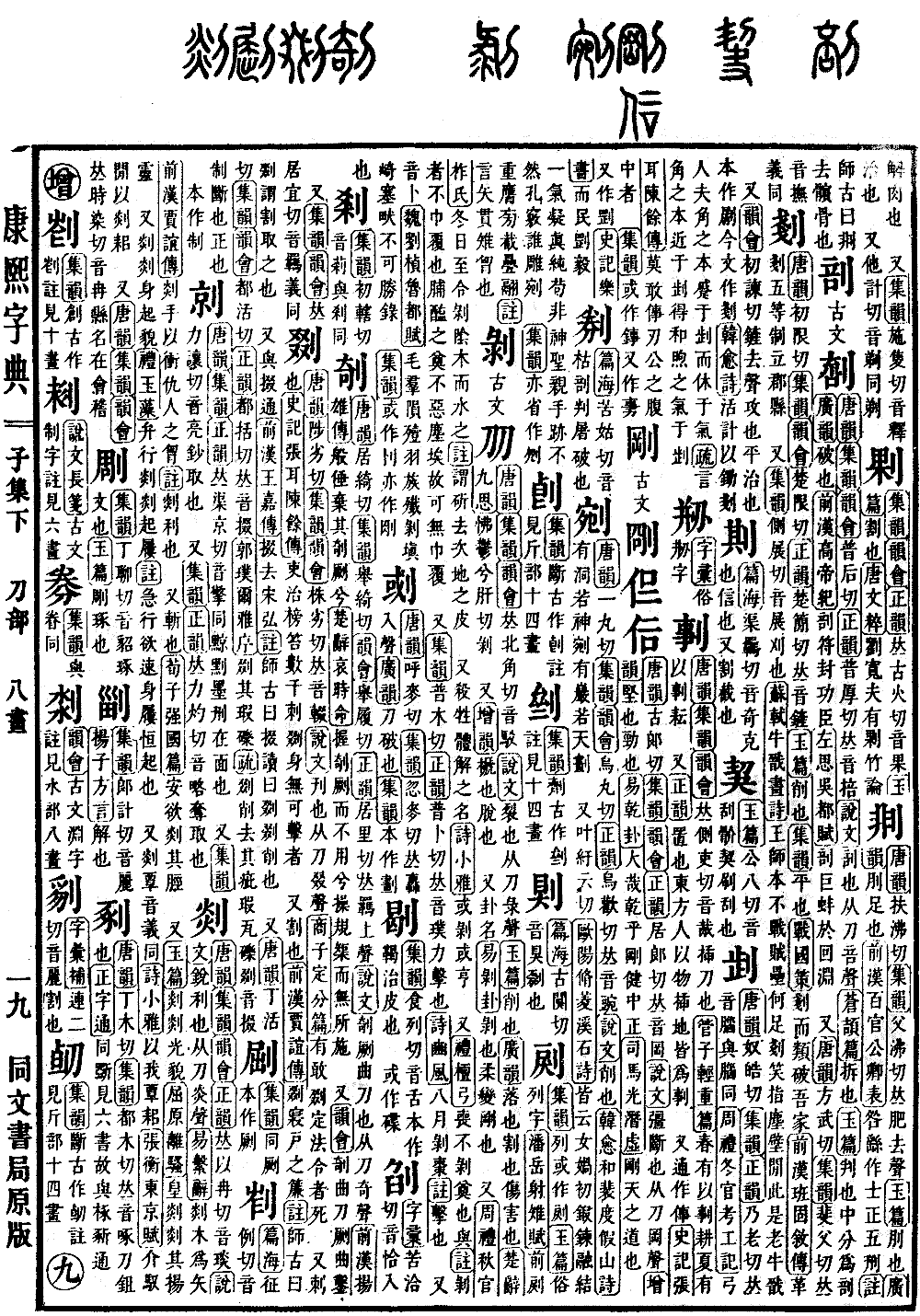
Kangxi Dictionary Stroke Count: 10 strokes
Page 141, Position 03
Ancient phonology records state:
Tang Rhymes (Tangyun), Collected Rhymes (Jiyun), and Rhymes Association (Yunhui) indicate the pronunciation using the fanqie (phonetic combination) method as pǔ-hòu. Correct Rhymes (Zhengyun) indicates the pronunciation as the fanqie pǔ-hòu. The reading is similar to the character pǒu.
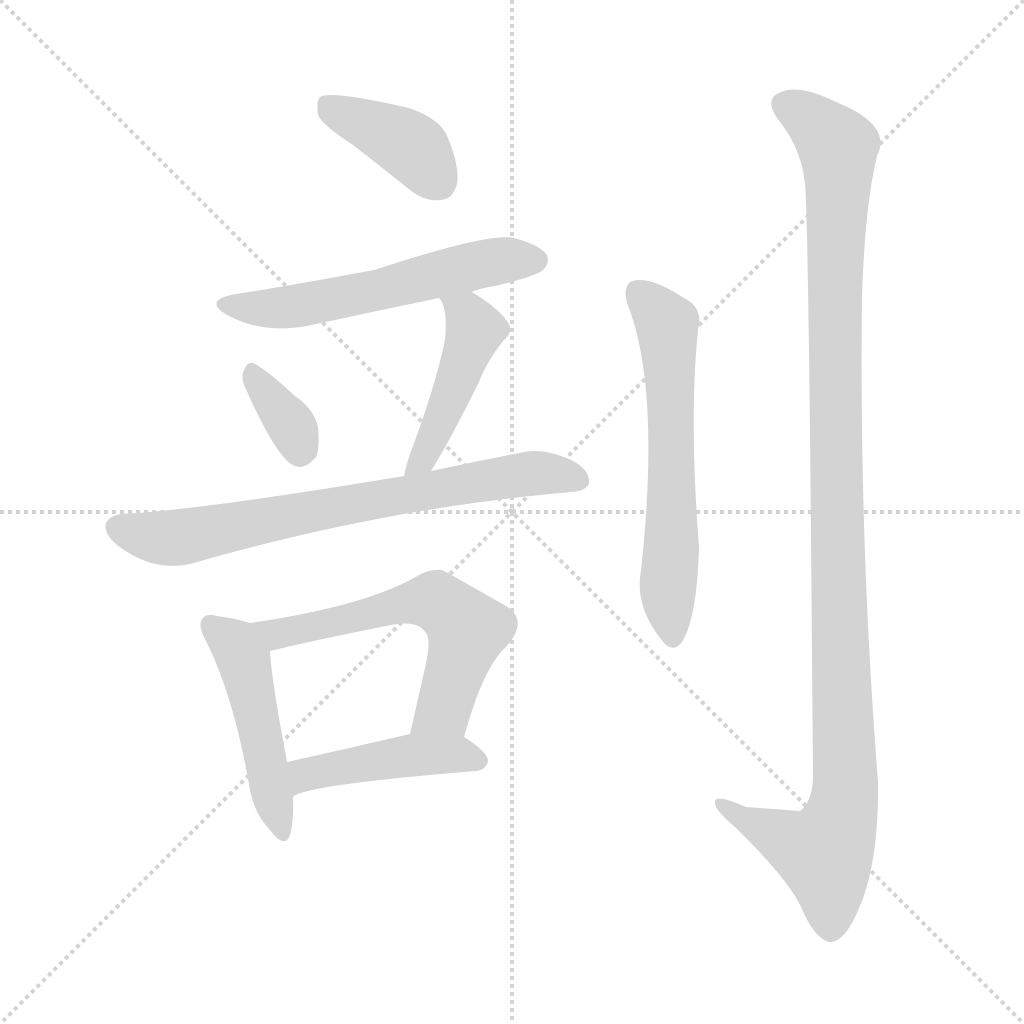
Explaining Graphs and Analyzing Characters (Shuowen Jiezi) explains: The character pǒu means to divide. The form is composed of the radical Knife (dāo) and the phonetic element pǒu.
Cang Jie Chapter (Cangjiepian) explains: To pull apart.
Jade Chapters (Yupian) explains: To divide. Splitting from the middle is called pǒu.
Expanded Rhymes (Guangyun) explains: To break open.
Examples:
Splitting the tally to enfeoff meritorious officials — History of the Former Han (Qian Han), Annals of Emperor Gaozu (Gaodi Ji)
Cutting open a giant clam in the swirling depths — Rhapsody on the Capital of Wu (Wudu Fu)
Another reading:
Tang Rhymes indicates the pronunciation as the fanqie fāng-wǔ. Collected Rhymes indicates the pronunciation as the fanqie fěi-fǔ. The reading is similar to the character fǔ, and the meaning is the same.
Collation note:
Explaining Graphs and Analyzing Characters originally contained the error pǒu; it has now been corrected to pàn based on the original text.