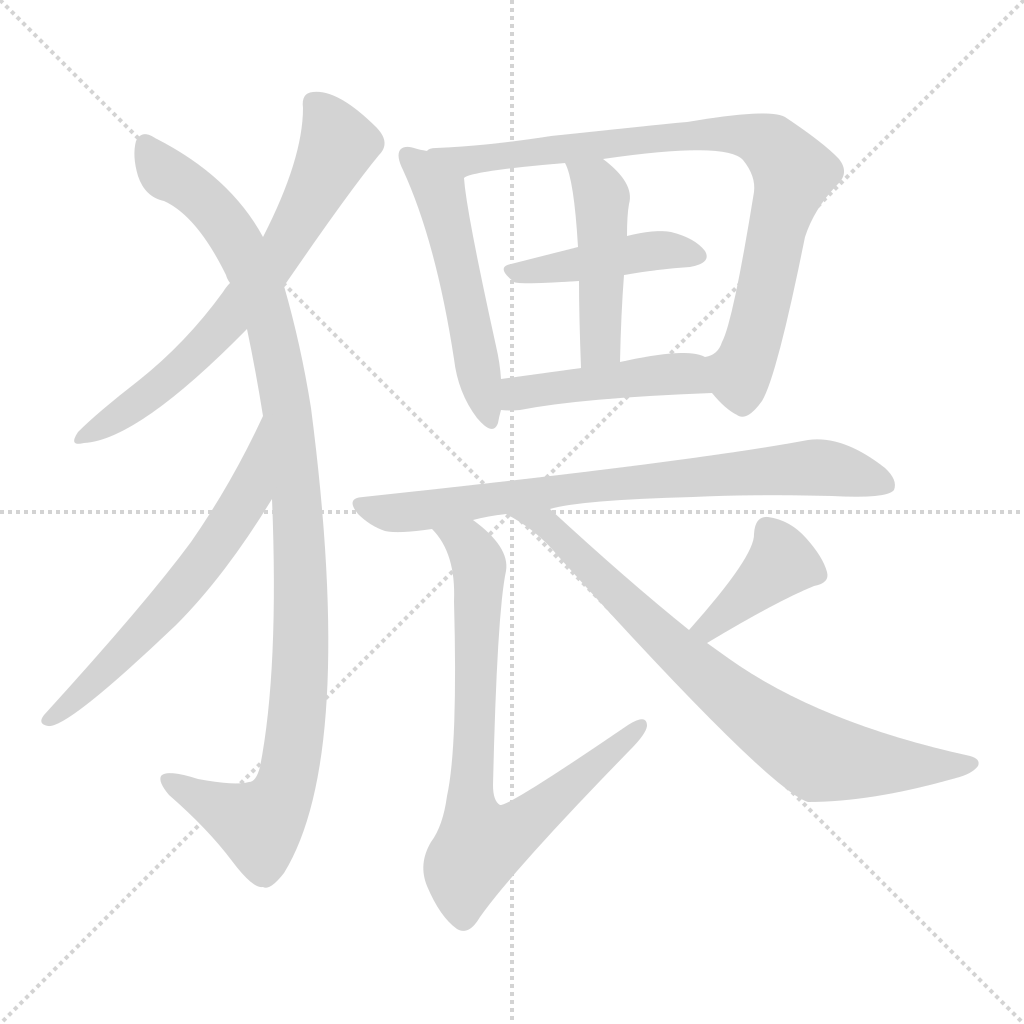
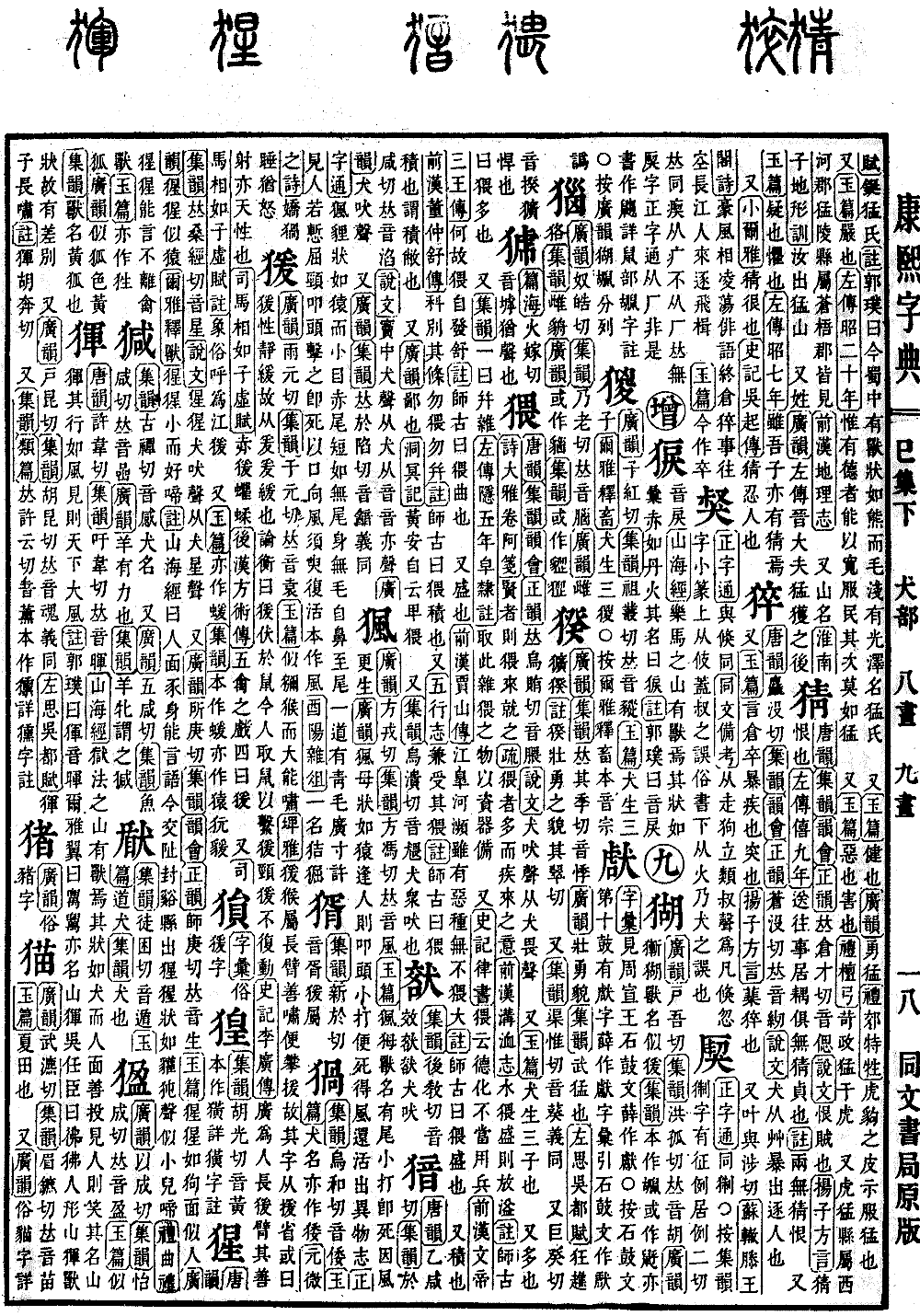
Si Collection, Lower Volume
Radical: Dog (quǎn)
Kangxi Strokes: 13
Page 714, Entry 12
Tang Rhymes (Tangyun), Collection of Rhymes (Jiyun), Rhyme Compendium (Yunhui), Correct Rhymes (Zhengyun): Pronounced wěi.
According to the Explaining Graphs and Analyzing Characters (Shuowen): The sound of a dog barking. From Radical: Dog (quǎn), with the phonetic component wēi.
Jade Chapter (Yupian): A dog birthing three puppies at once. Also denotes many.
Book of Odes (Shijing), Greater Odes of the Kingdom, Scroll: Refers to capable people coming forth in great numbers. Commentary: The term signifies many people arriving quickly.
History of the Former Han (Qianhan Shu), Treatises on Waterways and Irrigation: When the water flow is vast, it will overflow. Commentary: Shigu states that the term means many.
Collection of Rhymes (Jiyun): Also denotes mixed or miscellaneous.
Commentary on Zuo's Commentary (Zuo Zhuan), Year 5 of Duke Yin: Selecting these miscellaneous and impure items to fill the stores of implements.
Records of the Grand Historian (Shiji), Treatise on the Pitch Pipes: Recklessly speaking of using moral education when one should not resort to military force.
History of the Former Han (Qianhan Shu), Biography of the Three Kings of Emperor Wen: Why do you indulge yourself so recklessly? Commentary: Shigu states that the term means arbitrary or careless.
Also denotes luxuriant growth.
History of the Former Han (Qianhan Shu), Biography of Jia Shan: Along the riverbanks, even with poor seeds, there is nothing that does not grow in abundance. Commentary: Shigu states that the term means luxuriant.
Also denotes accumulation.
History of the Former Han (Qianhan Shu), Biography of Dong Zhongshu: Classify items into categories; do not pile them up or merge them. Commentary: Shigu states that the term means piled up.
Treatise on the Five Phases (Wuxing Zhi): Simultaneously bearing those accumulated evils. Commentary: Shigu states that the term means gathered or accumulated, referring to accumulated弊病 (bìbìng - lingering social or political problems).
Broad Rhymes (Guangyun): Denotes humble, base, or vulgar.
Record of Penetrating the Mysteries (Dongming Ji): Huang An described himself as vulgar.
Collection of Rhymes (Jiyun): Pronounced kuì. Dogs barking in a pack.