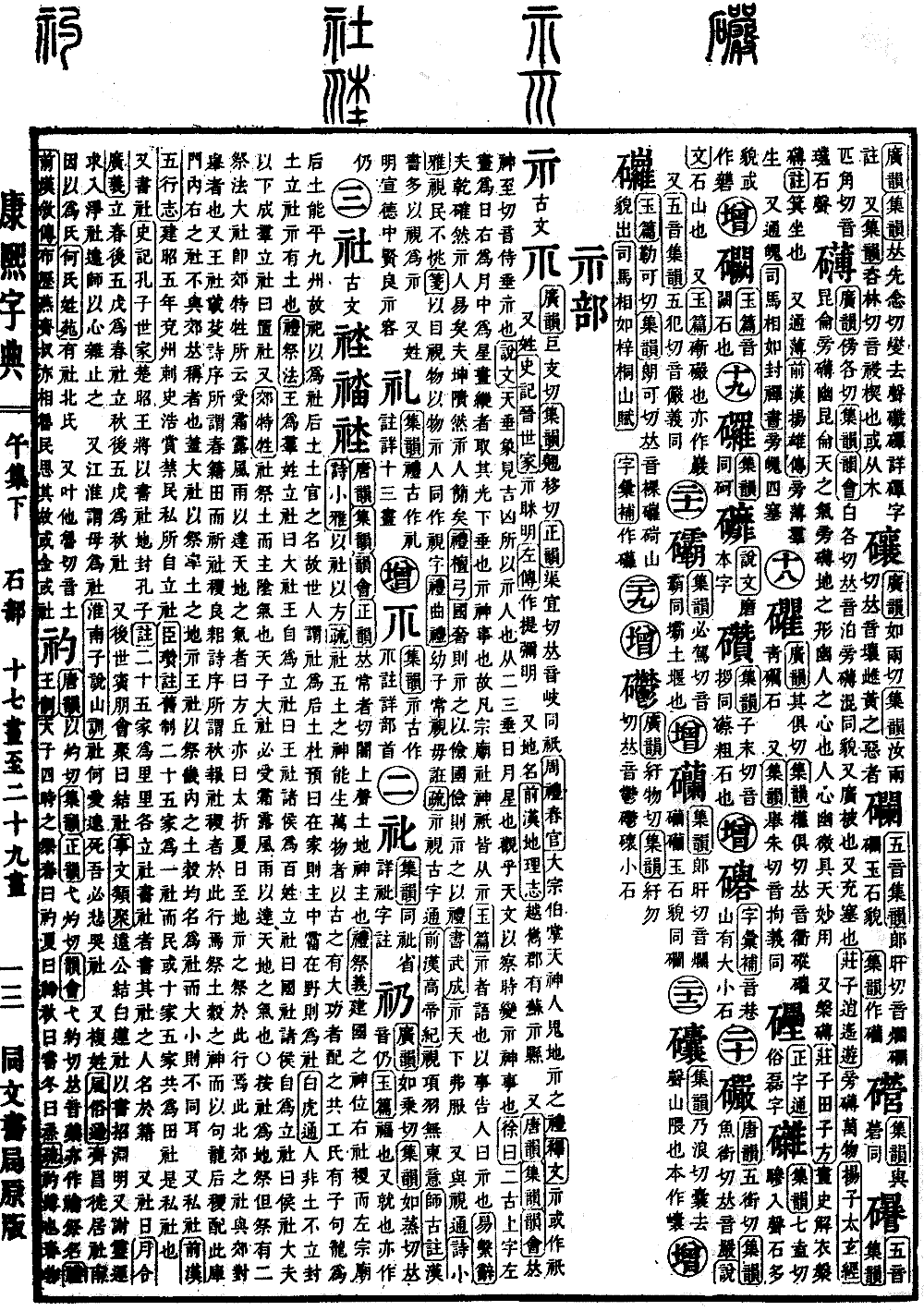
Wu Collection, Lower Volume
Radical: Spirit (shì)
Kangxi Strokes: 5
Page 839, Entry 20
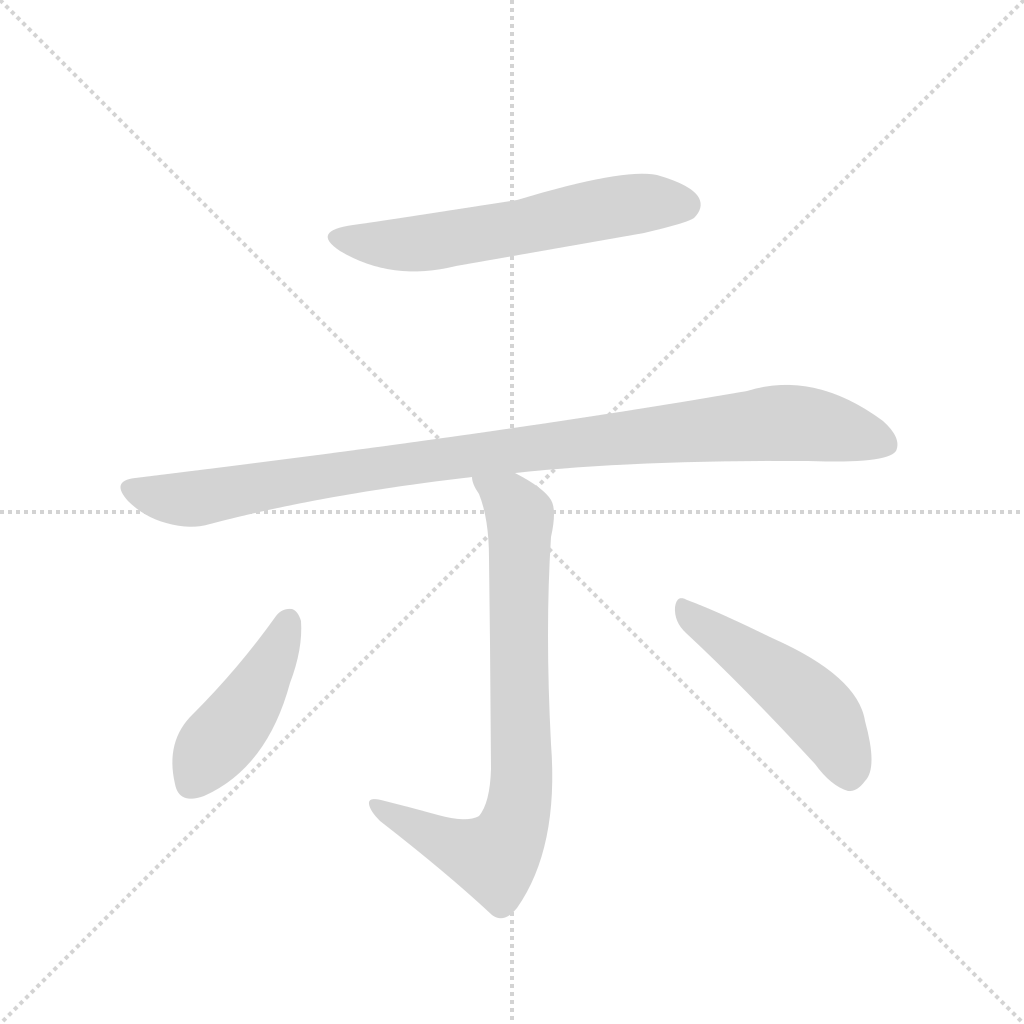
Ancient script. Pronounced qi. Same as the character zhi. In the Rites of Zhou (Zhouli), Spring Officials section: The Grand Minister of Religion manages the rituals for heavenly spirits, human ghosts, and earthly spirits. In the Commentary on the Classics (Shiwen): The character shi is sometimes written as zhi. Also a surname. In the Records of the Grand Historian (Shiji), House of Jin: Shi Muming. In the Zuo Tradition (Zuo Zhuan), it is written as Ti Muming. Also a place name. In the History of the Former Han (Qian Hanshu), Geographical Treatise: Su-shi County is located in Yuexi Commandery.
Also, pronounced shi. To reveal or demonstrate. In the Explaining Graphs and Analyzing Characters (Shuowen): Heaven reveals images to show auspiciousness or misfortune, which is how it reveals things to humans. Formed from the character for two, and three vertical lines representing the sun, moon, and stars. Observing the astronomical phenomena allows for the examination of seasonal changes. Shi refers to divine matters. Xu says: Two is the ancient form of the character for up. The left stroke is the sun, the right is the moon, and the center is the stars. The vertical lines represent light descending. Shi refers to divine matters. Therefore, all characters related to ancestral temples and deities of the soil and grain are formed with this radical. In the Jade Chapters (Yupian): Shi means to speak. Telling someone about matters is called shi. In the Book of Changes (Yijing), Treatise on the Appended Remarks: The Qian hexagram is firm and reveals simplicity to man; the Kun hexagram is yielding and reveals ease to man. In the Book of Rites (Liji), Tan Gong: If the state is extravagant, reveal frugality to the people; if the state is frugal, reveal propriety to the people. In the Book of Documents (Shujing), Completion of War: To show the world that one will not submit.
Also interchangeable with the character for to look at. In the Book of Odes (Shijing), Minor Odes: To view the people without levity. The sub-commentary states: Using the eyes to look at objects and using objects to show people, both functions share this character. In the Book of Rites, Song of Propriety: A young child must be shown not to lie. The commentary states: In ancient times, the characters for show and look were interchangeable. In the History of the Former Han, Annals of Emperor Gao: View Xiang Yu as having no intention of going east. Shigu notes: The History of the Former Han frequently uses the character for look in place of show. Also a surname. During the Xuande period of the Ming dynasty, there was a virtuous official named Shi Rong.