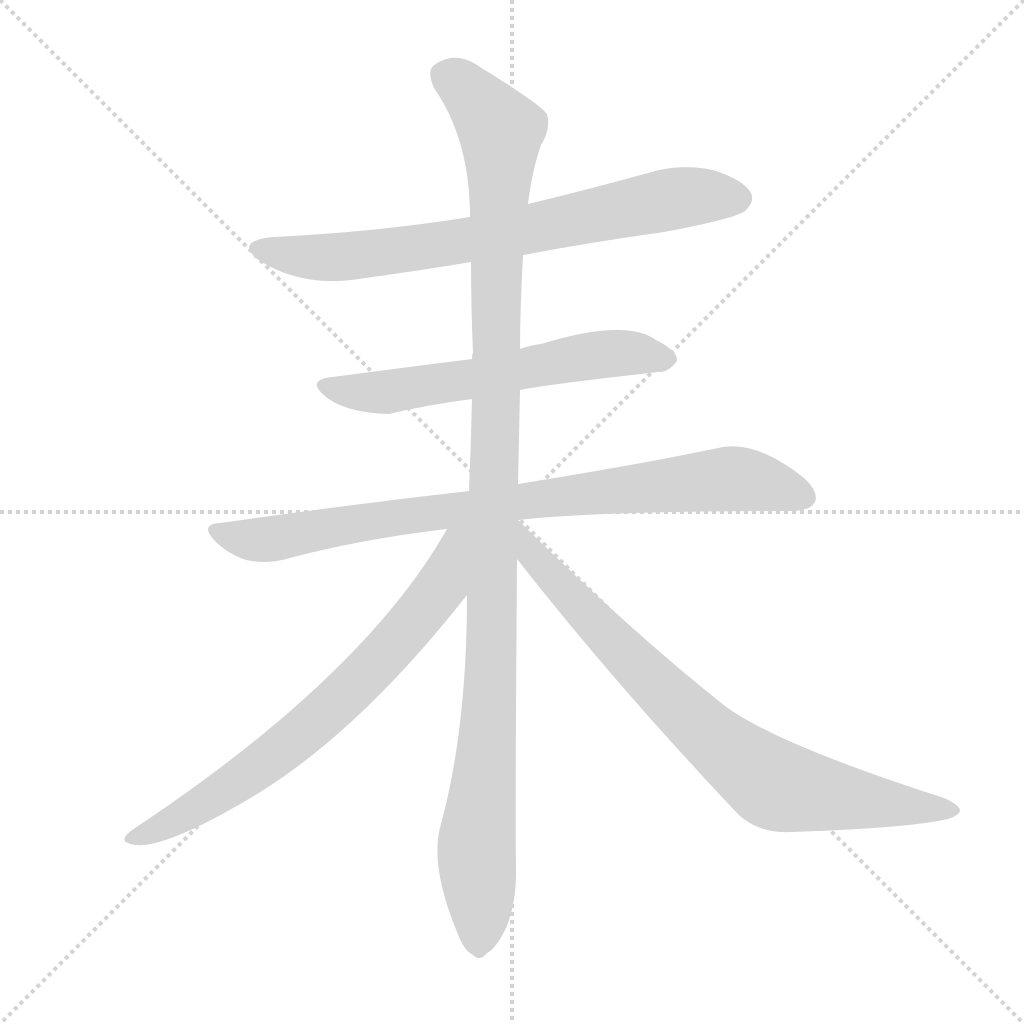
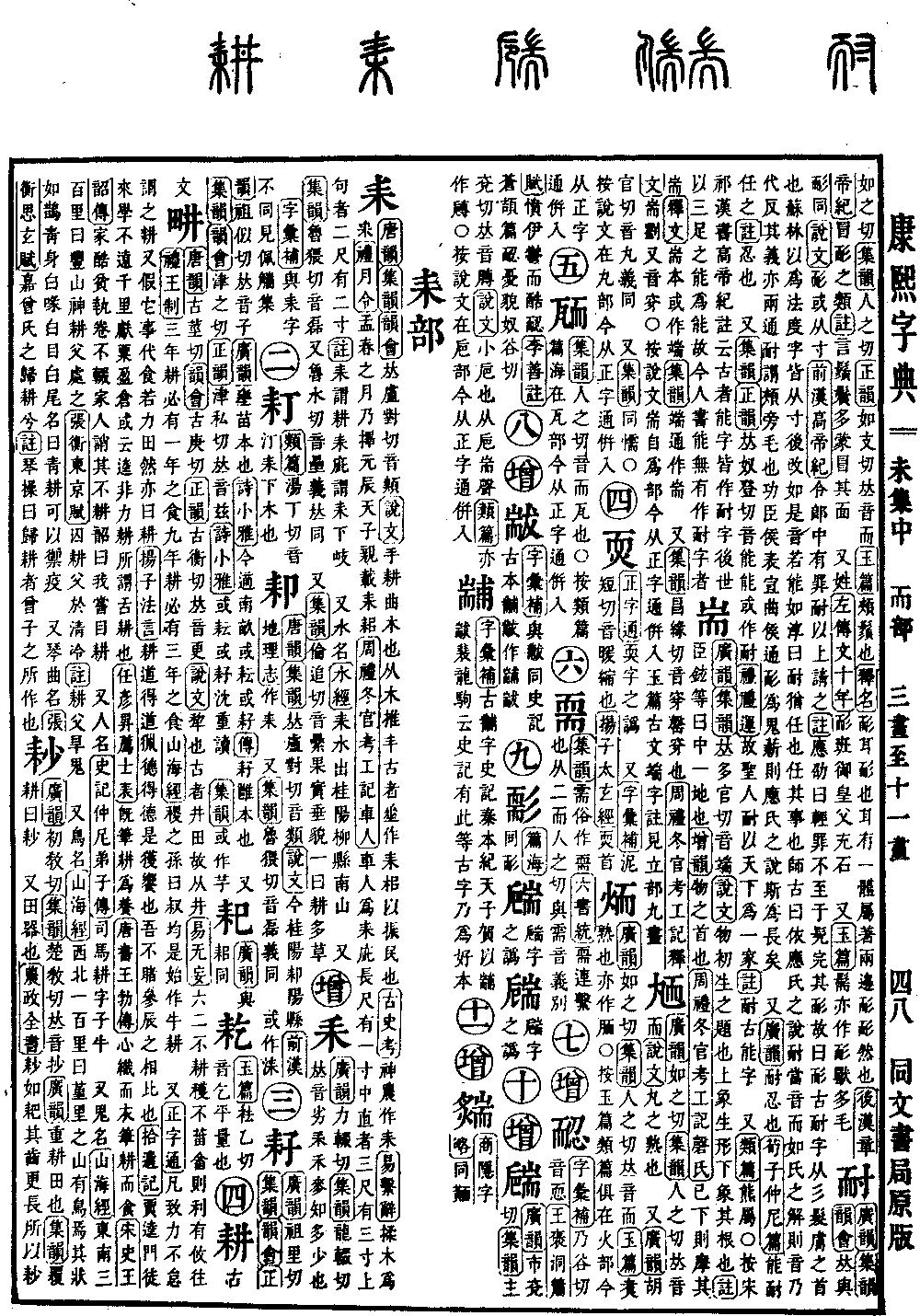
Wei Collection, Upper Volume
Radical: Plow (lěi)
Kangxi stroke count: 6
Page 962, Entry 16
Pronounced lei (falling tone).
In the Explanation of Characters (Shuowen Jiezi), it is defined as a curved wooden tool for tilling soil by hand. It is composed of the character for wood and the character for pushing, combined with the character for vegetation. In ancient times, the plow was created to sustain the people. In the Examination of Ancient History (Gushi Kao), it is stated that Shennong created the plow. In the Book of Changes (Yijing), section on Appended Judgments (Xici), it is recorded that wood was bent to make the plow. In the Book of Rites (Liji), section on Monthly Ordinances (Yueling), it is written: In the first month of spring, the auspicious day is chosen, and the Son of Heaven personally carries the plow and the spade. In the Rites of Zhou (Zhouli), section on Winter Offices, Records of Artificers, it is stated: The wheelwright makes the plow head, which is one foot and one inch long; the central straight part is three feet and three inches; and the upper curved part is two feet and two inches. The commentary explains: The plow refers to the tilling tool, and the head refers to the bifurcated lower part of the plow.
Also the name of a river. In the Commentary on the Water Classic (Shuijing), it is noted that the Lei River originates in the southern mountains of Liu County in Guiyang.
Also pronounced lei (third tone). Also pronounced lei (rising tone). The meaning is the same.
Also pronounced lei (even tone). Describes the appearance of hanging fruit. One source suggests it refers to much grass during plowing.