Chen Collection, Lower Volume
Radical: Bad (dǎi)
Kangxi Strokes: 10
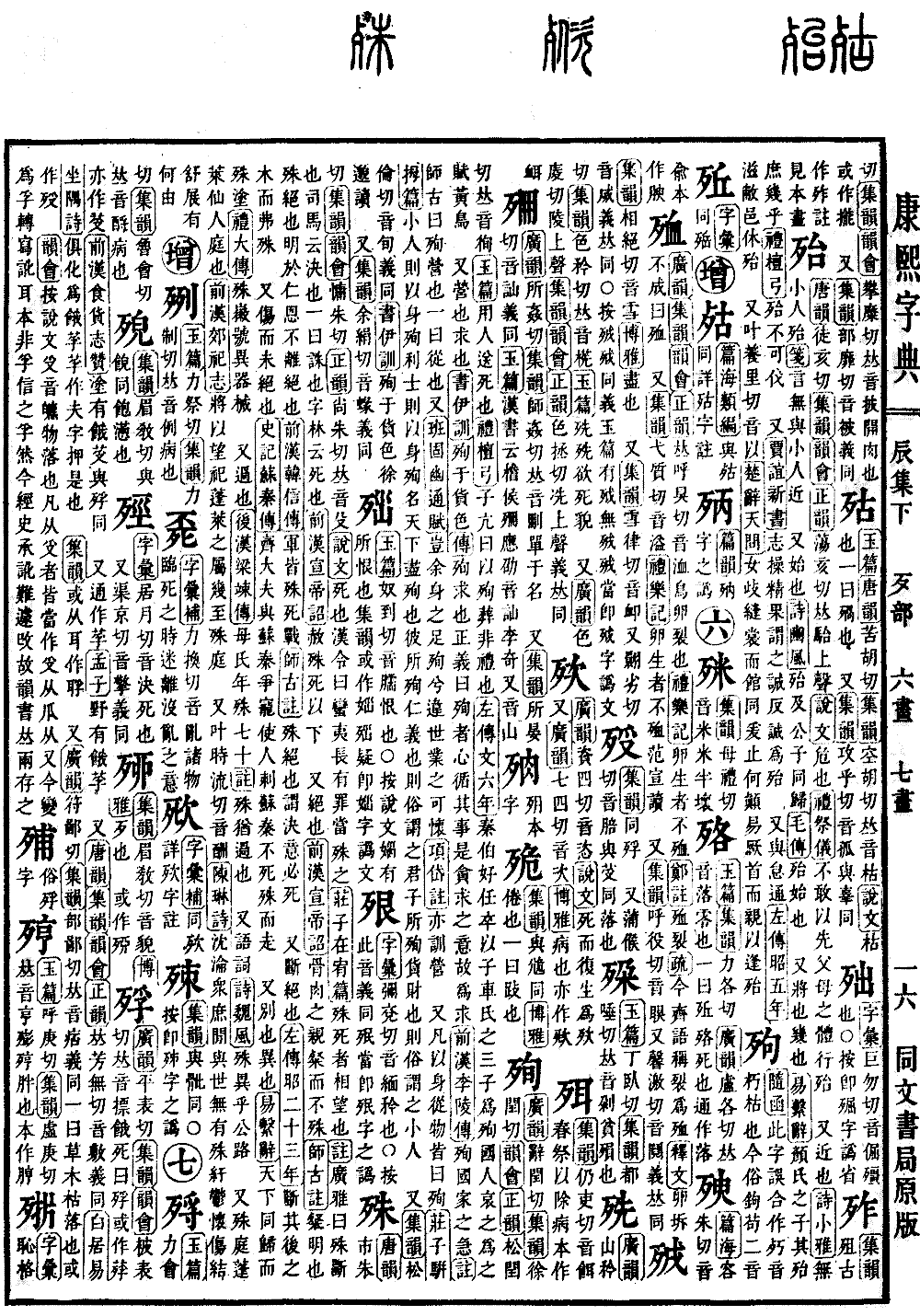
Page 580, Entry 25
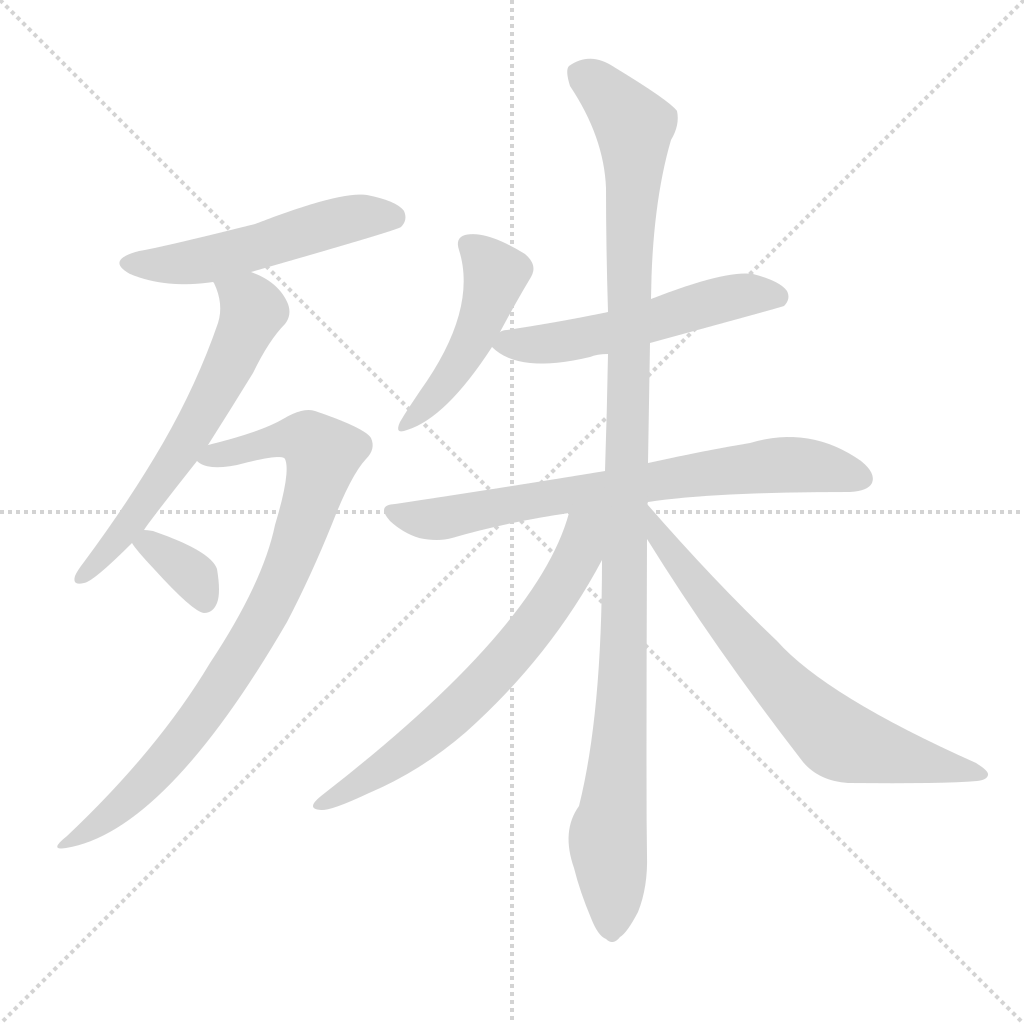
Pronounced shu.
According to the Shuowen Jiezi, it means death. A Han dynasty decree states: When a barbarian leader commits a crime, he shall be executed. In the Zhuangzi, Preserving and Letting Be (Zaiyou) chapter: Those facing the death penalty were everywhere. The commentary notes: The Guangya states: Shu means to cut off. Sima says it means to decide. Another source states it means to execute. The Zilin states it means death.
In the History of the Former Han (Qian Hanshu), Edict of Emperor Xuan: Pardon those facing the death penalty and below.
It also means to sever. In the History of the Former Han (Qian Hanshu), Edict of Emperor Xuan: For relatives by blood, their brightness does not cease. The commentary by Shigu notes: Can means bright; shu means to cease. It means to be bright in benevolence and grace, not to become distant or severed.
In the History of the Former Han (Qian Hanshu), Biography of Han Xin: The army all fought with a desperate will to die. The commentary by Shigu notes: Shu means to sever. It means to be determined to die.
It also means to cut off completely. In the Zuo Tradition (Zuo Zhuan), 23rd Year of Duke Zhao: They cut the trees behind them but did not completely sever them.
It also means to be wounded but not yet dead. In the Records of the Grand Historian (Shiji), Biography of Su Qin: A Qi official vied for favor with Su Qin, sent someone to stab him, failed to kill him, and he escaped while wounded.
It also means to separate or to be different. In the Book of Changes (Yijing), Appended Statements (Xici): The world returns to the same path though it separates into different routes. In the Book of Rites (Liji), Great Treatise (Dazhuan): Different titles and different tools.
It also means to exceed. In the History of the Later Han (Hou Hanshu), Biography of Liang Song: The mother was over seventy years of age. The commentary notes: Shu here means to exceed.
It also serves as a modal particle. In the Book of Odes (Shijing), Odes of Wei (Weifeng): Different from the duke's road.
It also refers to the Shu Court, the court of the Penglai immortals. In the History of the Former Han (Qian Hanshu), Treatise on the Suburban Sacrifices: Intending to look out and sacrifice to the likes of Penglai, nearly reaching the Shu Court.
Also rhymes with chou (rising tone). In the poem by Chen Lin: Sinking and drowning among the masses, not different from the world. With heavy heart and wounded knots, how can one find release?