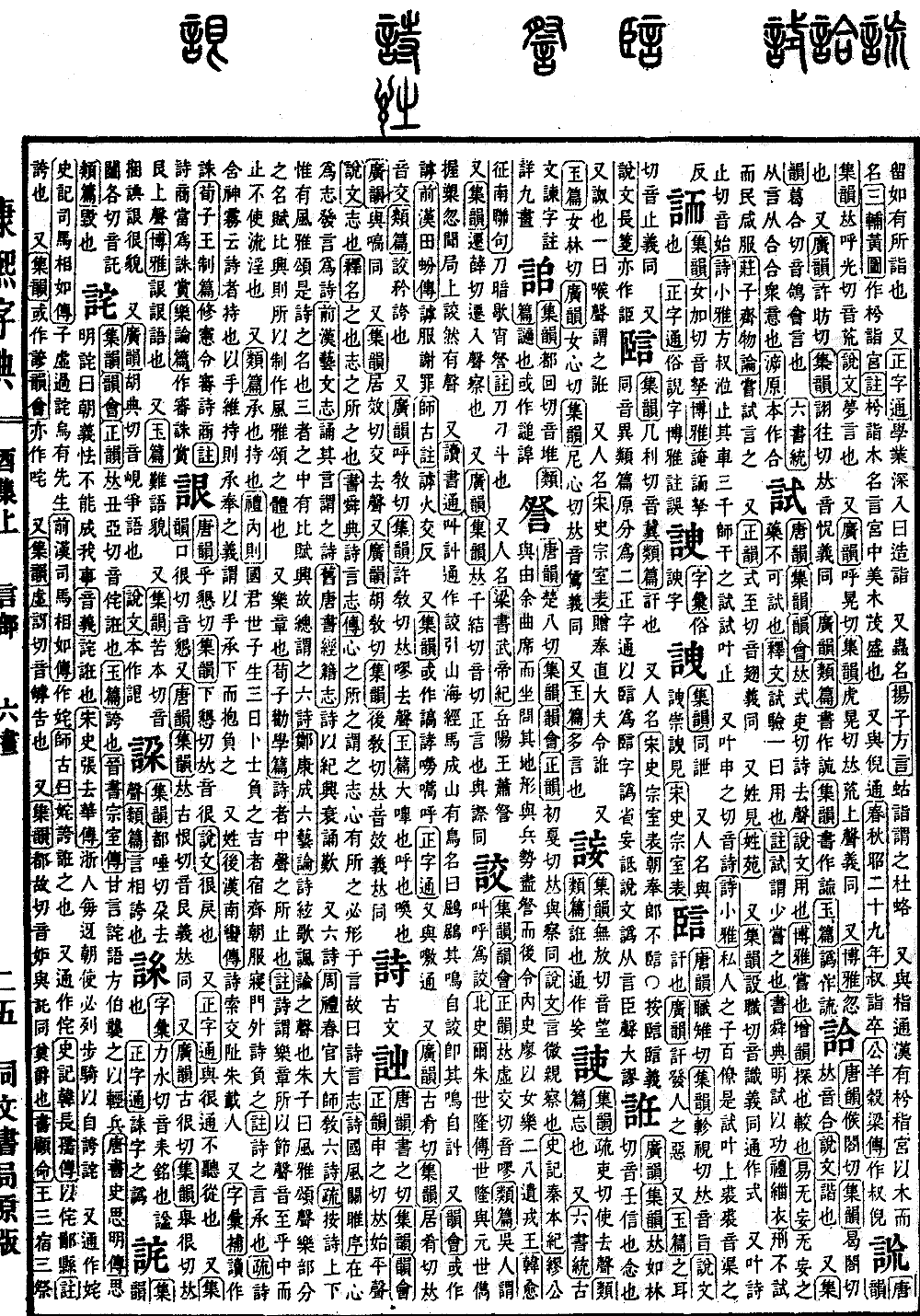
You Collection, Upper Volume
Radical: Speech (yán)
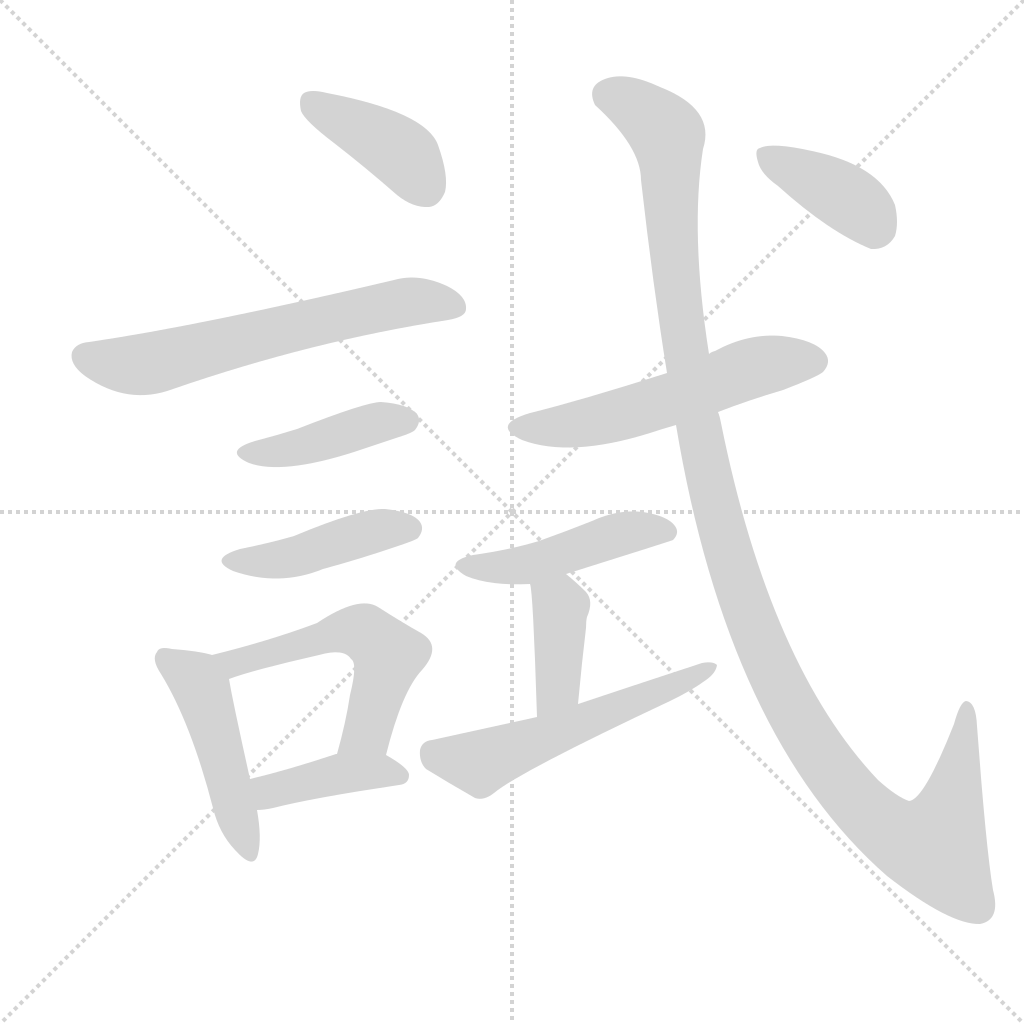
試
Kangxi strokes: 13
Page 1157, Entry 03
According to the Tang Rhyme (Tangyun), Collection Rhyme (Jiyun), and Rhyme Compilation (Yunhui), it is pronounced shi (falling tone).
According to the Explaining Graphs and Analyzing Characters (Shuowen), it means to use. According to the Guangya, it means to try or to test. According to the Expanded Rhymes (Zengyun), it means to investigate or to compare.
As seen in the Book of Changes (Yijing): "A medicine for non-recklessness cannot be tested." The Explanation of Text (Shiwen) notes it means to test; another theory suggests it means to use. The commentary notes it refers to tasting slightly.
As seen in the Book of Documents (Shangshu): "Clearly test by merit."
As seen in the Book of Rites (Liji): "Without being tested, the people were all convinced."
As seen in the Zhuangzi: "Try to speak of it."
According to the Correct Rhymes (Zhengyun), it is also pronounced chi (falling tone), with the same meaning. It is also used as a surname, as seen in the Surname Garden (Xingyuan).
According to the Collection Rhyme (Jiyun), it is also pronounced shi (dropping tone), with the same meaning. It is interchangeable with the character shi (to pattern after).
It is also found in a rhyming variant form pronounced shi (rising tone). As seen in the Book of Odes (Shijing): "Fangshu arrived, his carriages numbered three thousand, the martial officers were tested." Here, it rhymes with zhi.
It also rhymes with shi (flat tone). As seen in the Book of Odes (Shijing): "The sons of private retainers, all the officials are tested." It rhymes with qiu, which is pronounced qu.