Zi Collection, Page Position: Upper
Radical: One (yī)
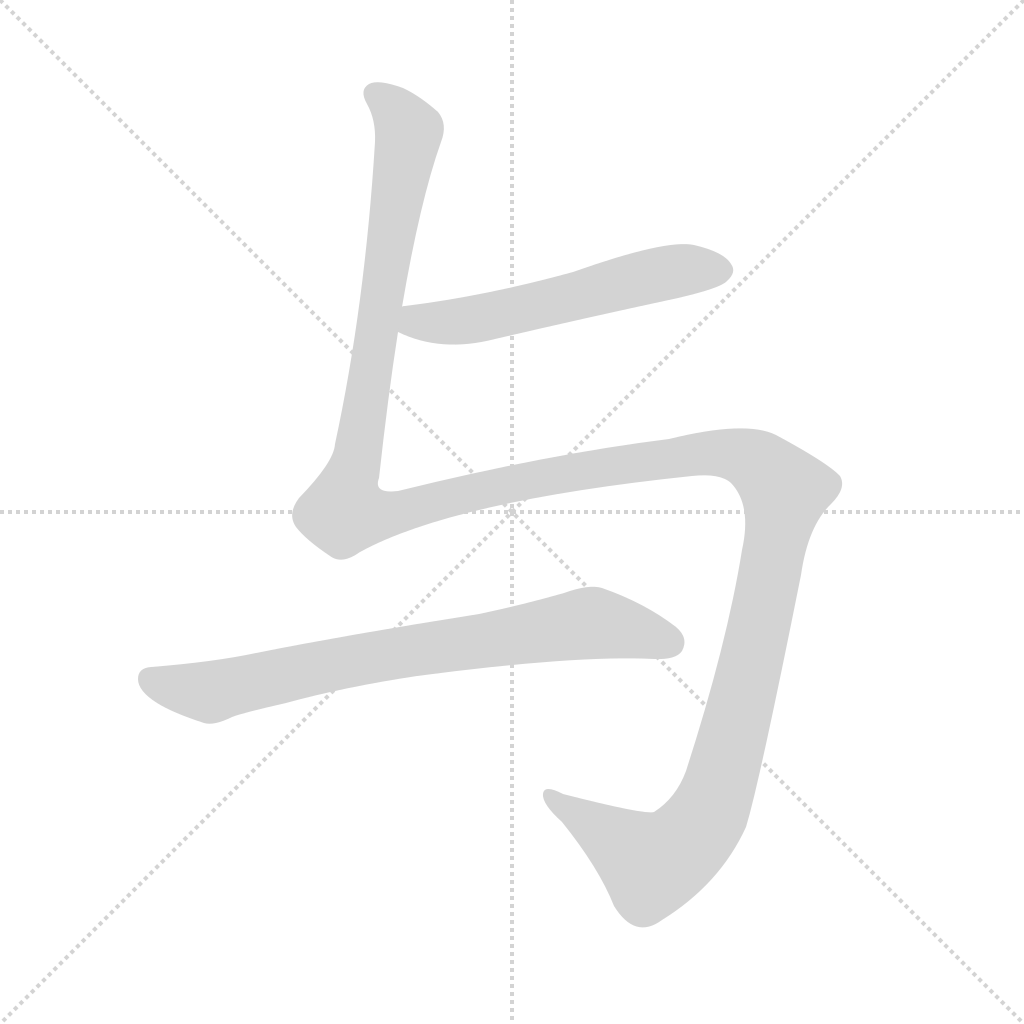
Yu
Kangxi Dictionary stroke count: 14
Page 77, Row 1
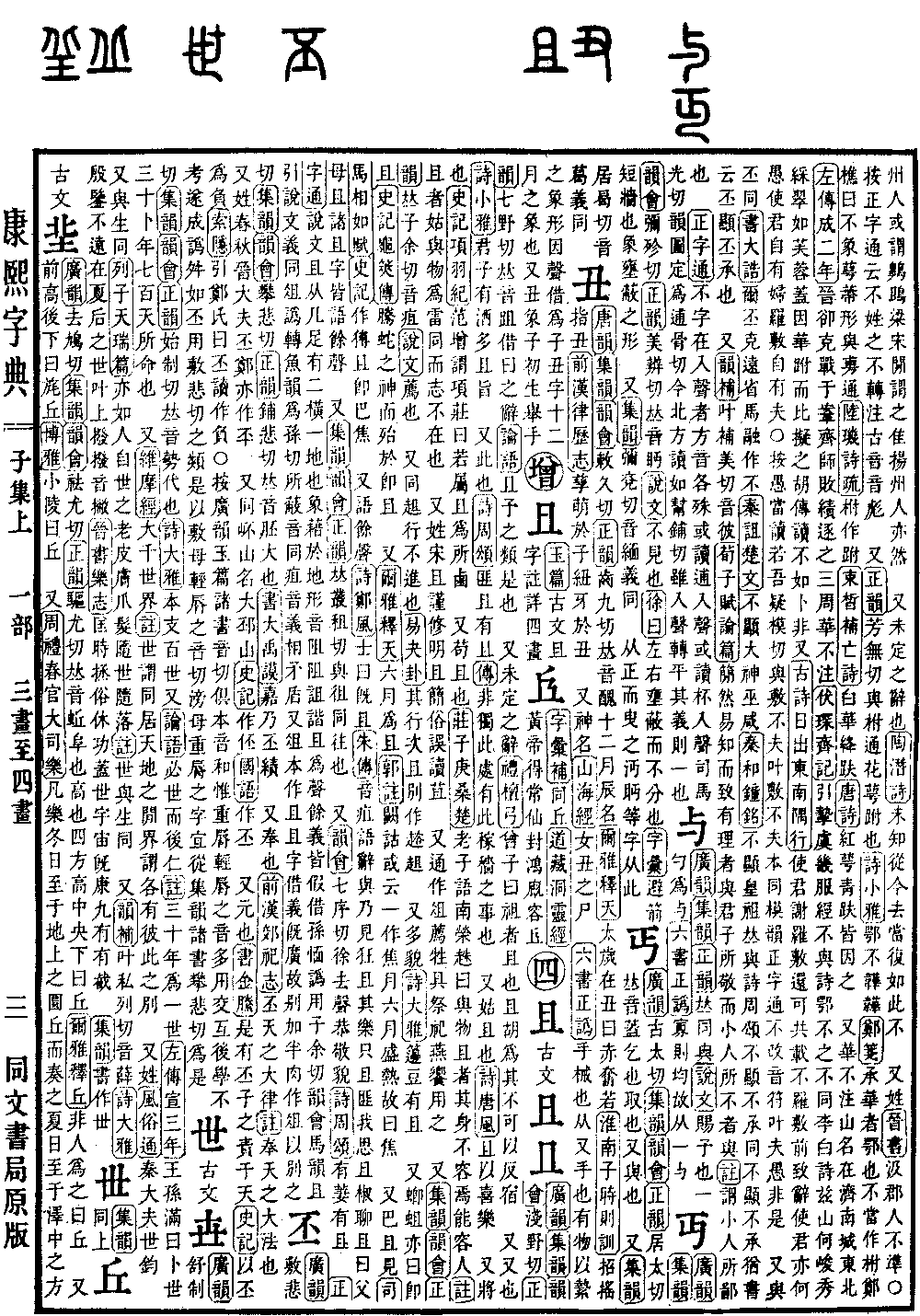
In the Rhyme Dictionary (Guangyun), Collected Rimes (Jiyun), and Correct Rimes (Zhengyun), this is the same as the character pronounced yu. In the Explaining Graphs and Analyzing Characters (Shuowen Jiezi), it means to bestow or give. One ladleful constitutes a yu. In the Correction of Errors in the Six Classes of Characters (Liushu Zheng’e), it means to divide equally when there is little, hence it follows the component for one ladleful. This character is the ancient form of the character pronounced yu. According to the Guangyun, Zhengyun, Jiyun, and Rhyme Assembly (Yunhui), the pronunciation is the same as the character pronounced yu. In the Shuowen Jiezi, it means a clique or associates. In this way you can ally with the state of Qi and the powerful state of Chu — Strategies of the Warring States (Zhanguo Ce). The commentary notes that yu refers to a clique or alliance. When those in high positions accept favors, those in low positions will form cliques — Guanzi, Chapter on Eight Observations (Baguan pian). Also, in the Guangyun, it means to be friendly or on good terms. The feudal lords use ritual to interact with one another — Book of Rites (Liji). Also, in the Augmented Rimes (Zengyun), it means and or as well as. Therefore the Way of Heaven was established, called Yin and Yang. The Way of Earth was established, called the Soft and the Hard. The Way of Man was established, called Benevolence and Righteousness — Classic of Changes (Yijing). Also means to promise, to approve, or to follow. I side with Dian — Analects (Lunyu). The ghosts and spirits help him, and Heaven and Earth approve of him — Guanzi, Chapter on Explaining Situations (Xingshi jie). Also means to wait. The years and months do not wait for us — Analects. Also, in the Broad Lexicon (Boya), it means to be like or to compare. Your Majesty, estimate for yourself, in terms of bravery, fierceness, benevolence, and strength, compared to the King of Xiang, who is stronger? — Book of the Former Han (Qian Hanshu). Yan Shigu says that yu means to be like. How does the King of Chu's hunting scene compare to mine? — Rhapsody of Sir Vacuous (Zixu fu). Also means to give or bestow. When giving something to others, do not ask what they want — Book of Rites. The eight types of commands for turtle shell divination regarding state affairs, the first is military expeditions, the second is disasters, and the third is giving — Rites of Zhou (Zhouli). The commentary says yu refers to giving things to people. Also means to help. I will go deep into the Wu army, and if I can strike down one person or seize one person, I will use that to help Daxin — Strategies of the Warring States. The commentary says yu is like helping. Also means similar or to categorize. The establishment of rituals, those completed are called the rituals of satiation, which merely clarify the major principles, while the ceremonial details are fewer — Discourses of the States (Guoyu). The commentary says yu means category, meaning the fewer ceremonial details can be categorized as such. Also means to use or by means of. The lady is going to her future home, and she will not take me with her — Book of Odes (Shijing). Zhu Xi's commentary says yu is like the word for taking, meaning to take oneself along. Also means harmony or concord. If there is no harmony within, external enemies cannot be resisted — Strategies of the Warring States. The commentary says yu is like harmony. Also means to use or adopt. Do not listen to or adopt the gossip of others — Book of Odes. The commentary says wu yu means not adopting. Also means to calculate or count. The date for the funeral must be counted starting from the day after death — Book of Rites. Also a grammatical particle. Rather than being blamed for a failed promise, a gentleman would rather incur resentment by refusing from the start — Book of Rites. Also rongyu, meaning a leisurely and comfortable appearance. Relying on suppressing others to seek the indulgence and comfort of one's own mind — Zhuangzi. The commentary says this is to seek a relaxed state to satisfy one's indulgent heart. The King of Chu then stopped his carriage, wandering and soaring, leisurely and self-satisfied — Records of the Grand Historian (Shiji). The Suoyin commentary says this describes a self-satisfied appearance. Also, in the Correct Character Mastery (Zhengzitong), Dayu is an official title in charge of noble ranks and stipends. Also Buyu, the name of a country. There is the Land of Buyu, where the people have the surname Lie and eat millet — Classic of Mountains and Seas (Shanhaijing). Also a surname. Also, according to the Guangyun, Jiyun, Yunhui, and Zhengyun, it is pronounced like yu, meaning to participate. In the Zhengyun, it means to intervene or be concerned with. Even a common man and woman of simple intelligence can participate in knowing it — Doctrine of the Mean (Zhongyong). The state has six types of duties, and the various artisans are one type that participates therein — Rites of Zhou. Also the name of a county. Cao Shen followed the Emperor as a palace attendant and was about to attack the counties of Huling and Fangyu — Records of the Grand Historian. The Suoyin commentary says the Treatise on Geography records both counties belong to Sanyang Commandery. The Zhengyi commentary says yu is pronounced like yu. Also, in the Zhengzitong, it means hesitant, interchangeable with the character pronounced yu. Yang Chang was hesitant — Book of the Former Han. The soldiers were hesitant — Book of the Former Han. Also, according to the Jiyun and Yunhui, it is pronounced like yu, acting as a grammatical particle. Is this not the root of benevolence? — Analects. Zengzi said: It should not be so! Although he could leave when he sighed over the food, he could eat once the apology was made — Book of Rites. The sub-commentary says yu is a grammatical particle. Also, my millet is lush, and my seedlings are dense — Book of Odes. The commentary says yuyu and yiyi both describe a lush appearance. Also, the appearance of walking in a composed manner — Analects. The commentary says it is the appearance of appropriate and leisurely dignity. Also means to unfold or expand. In midsummer when the Yang energy is flourishing, all things unfold and grow — Book of the Former Han. Yan Shigu says fuyu means to open and unfold, and yu is pronounced as yu. Also a personal name. Chui bowed his head and yielded to Shuqiang and Boyu — Book of Documents (Shangshu). Shuqiang and Boyu are the names of two ministers. Also the name of a mountain, same as the character pronounced yu. Mount Dunyu — Classic of Mountains and Seas. The Records of Famous Sites writes it as Mount Dunyu. Also, the beginning of the Kushan mountain range is called Mount Xiuyu. Some editions write yu as yu. Also, according to the Jiyun, it is pronounced like ai, meaning to give. Note: In the Shuowen Jiezi, yu is explained as bestowing, where one ladleful constitutes a yu. The character yu is explained as a clique. Currently, the vulgar form yu and the standard form are used interchangeably.