Wu Collection, Middle Volume
Radical: Sickness (nì)
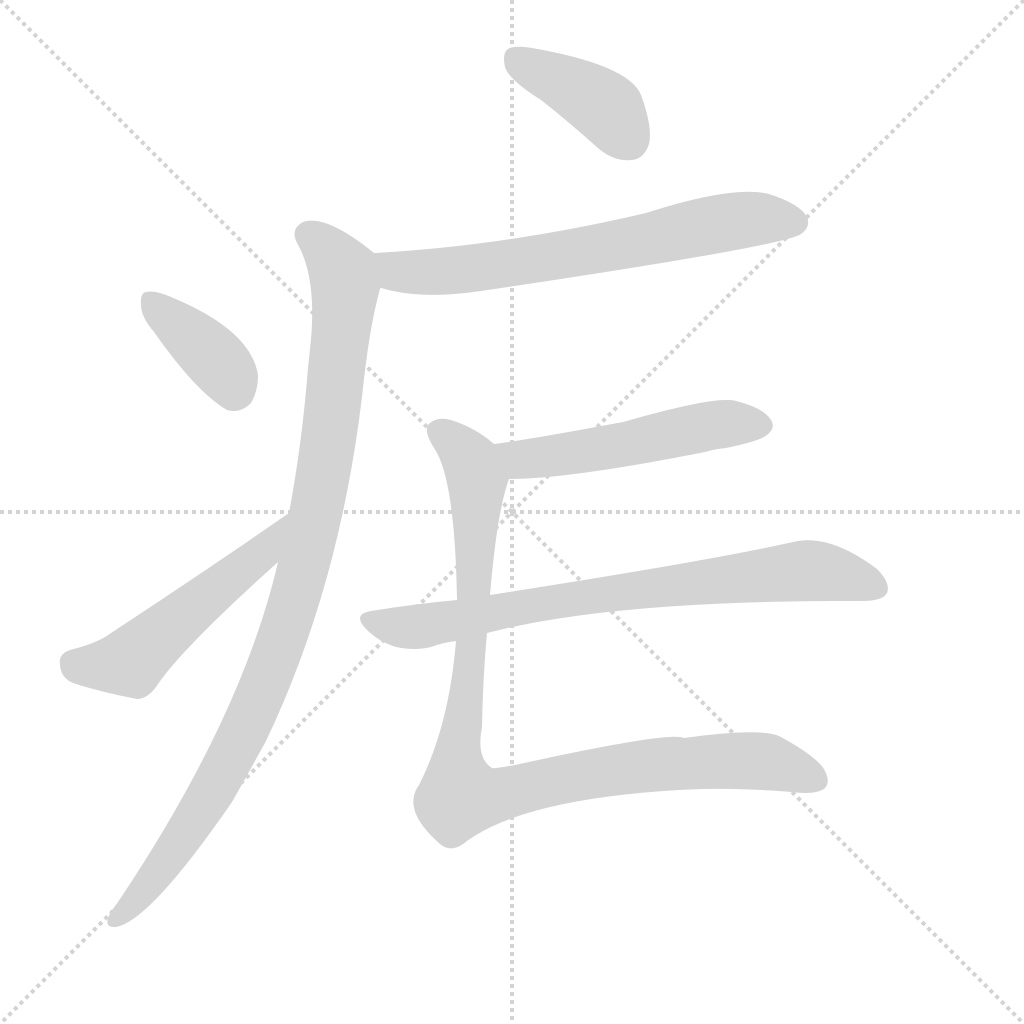
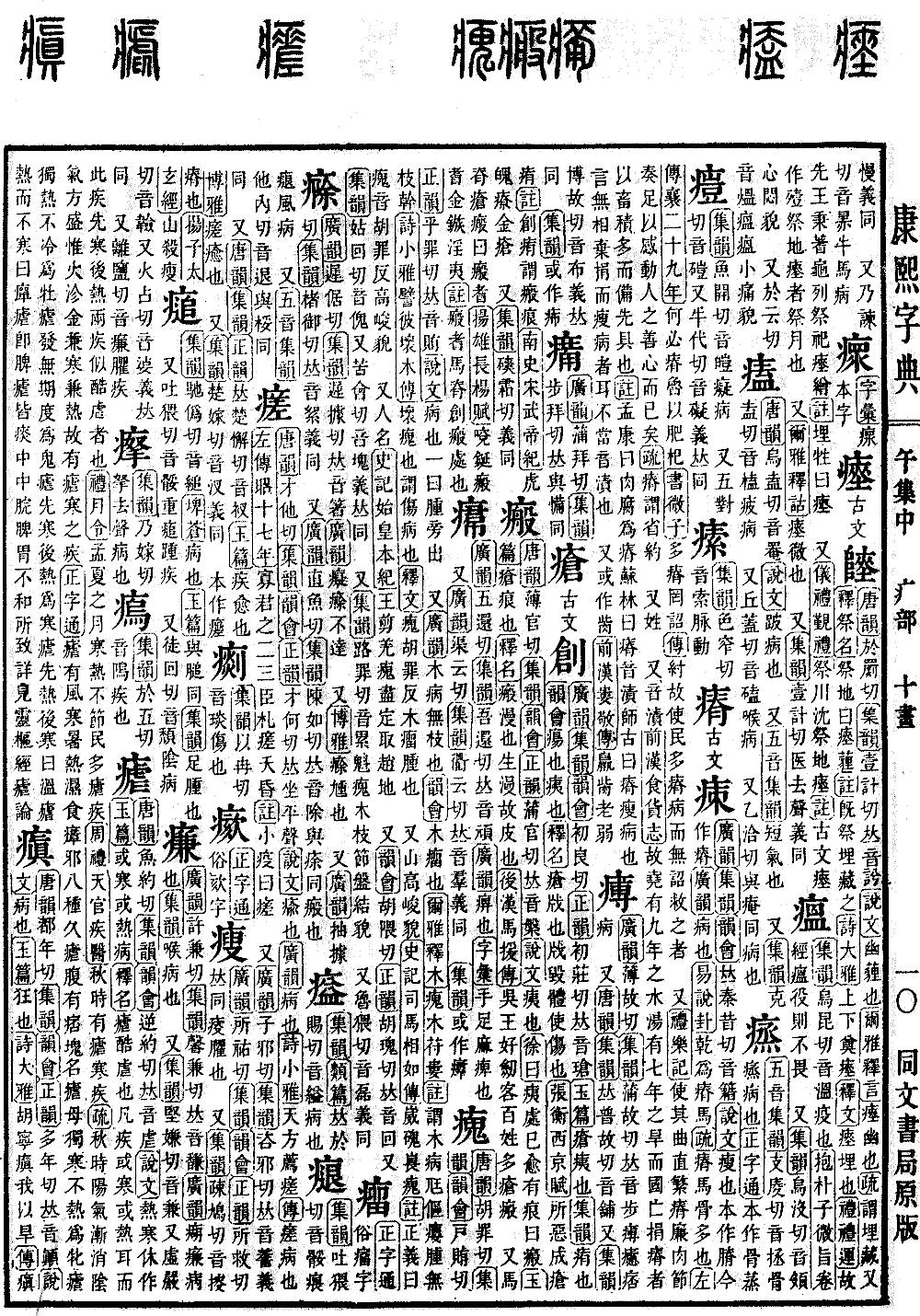
瘧
Kangxi strokes: 15
Page 778, Entry 01
Pronounced nüè
According to the Explanation of Graphs and Analysis of Characters (Shuowen Jiezi), it is a disease characterized by the alternating onset of cold and fever.
According to the Jade Chapters (Yupian), it is an illness causing either cold or heat.
According to the Explanation of Names (Shiming), the term refers to cruelty. Ordinary illnesses result in either cold or heat, but this illness manifests as cold followed by heat, with both symptoms present, which is as if being cruelly maltreated.
In the Book of Rites (Liji), in the monthly ordinances for the first month of autumn, it is noted that when cold and heat alternate irregularly, the people frequently suffer from malaria.
In the Rites of Zhou (Zhouli), under the Offices of Heaven and the physician of diseases, it mentions that there are cold-type diseases such as malaria during the autumn.
The commentary states that in autumn, the yang energy gradually wanes while the yin energy is in the ascendant; when fire energy injures metal energy, it results in both cold and heat, thus causing this cold-heat disease.
According to the Proper Character Mastery (Zhengzitong), there are eight types of malaria: wind, cold, summer-heat, heat, dampness, food-related, miasmic, and demonic. If one suffers from long-term malaria, a mass forms in the abdomen, known as a malaria matrix. Malaria with only cold and no heat is called female malaria, while only heat and no cold is called male malaria. When the onset has no fixed pattern, it is called ghost malaria. When cold precedes heat, it is called cold malaria; when heat precedes cold, it is called warm malaria; when there is only heat without cold, it is called jaundice malaria, which is the same as spleen malaria. All of these are caused by phlegm-dampness remaining in the middle cavity, leading to disharmony of the spleen and stomach. For detailed information, see the Pivot of the Spirit (Lingshu Jing), Treatise on Malaria.
Correction: In the Book of Rites (Liji), monthly ordinances, it is recorded that in the first month of summer, cold and heat alternate irregularly. It has been carefully corrected from the original text to read first month of autumn.