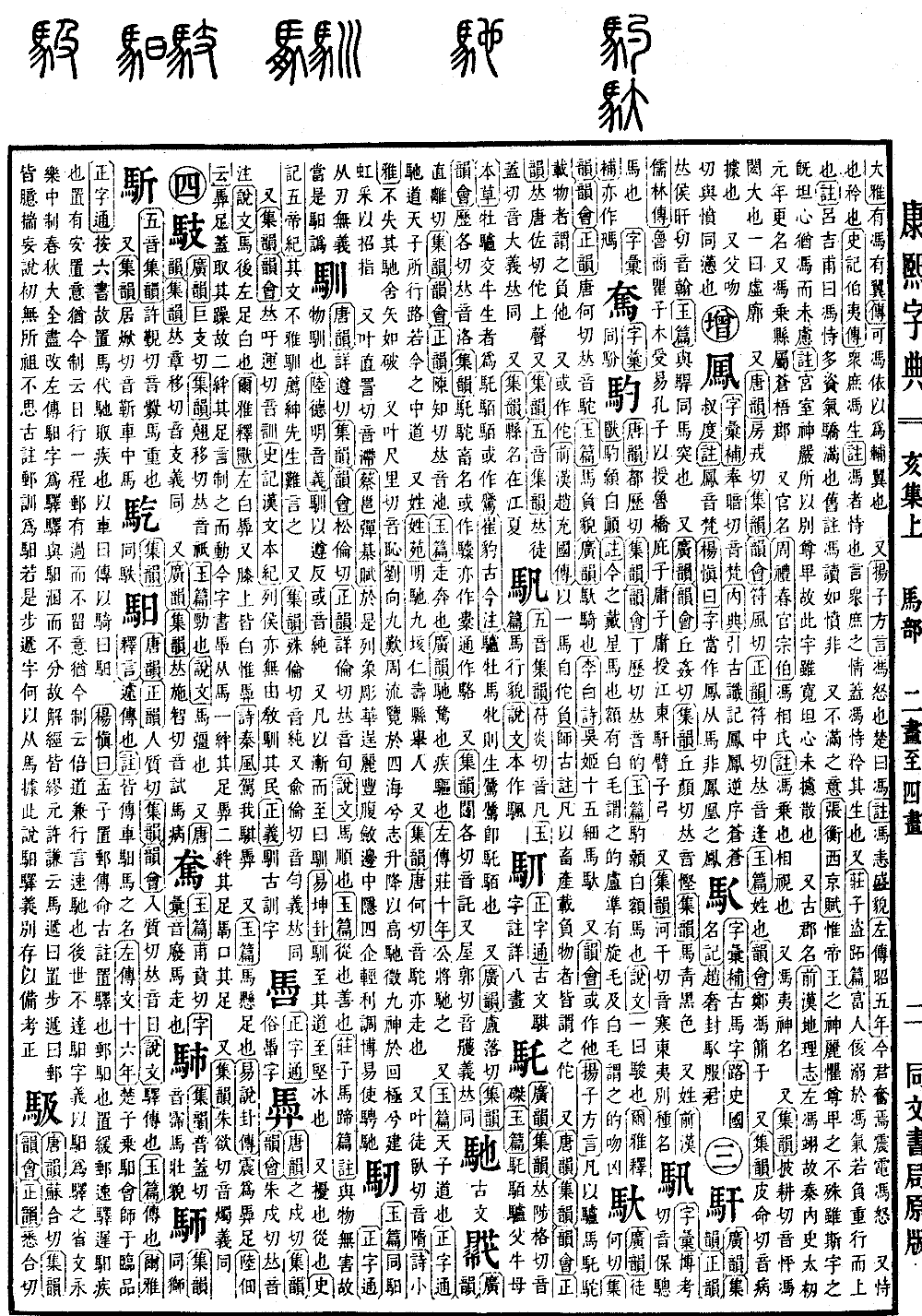
Hai Collection, Upper Volume
Radical: Horse (mǎ)
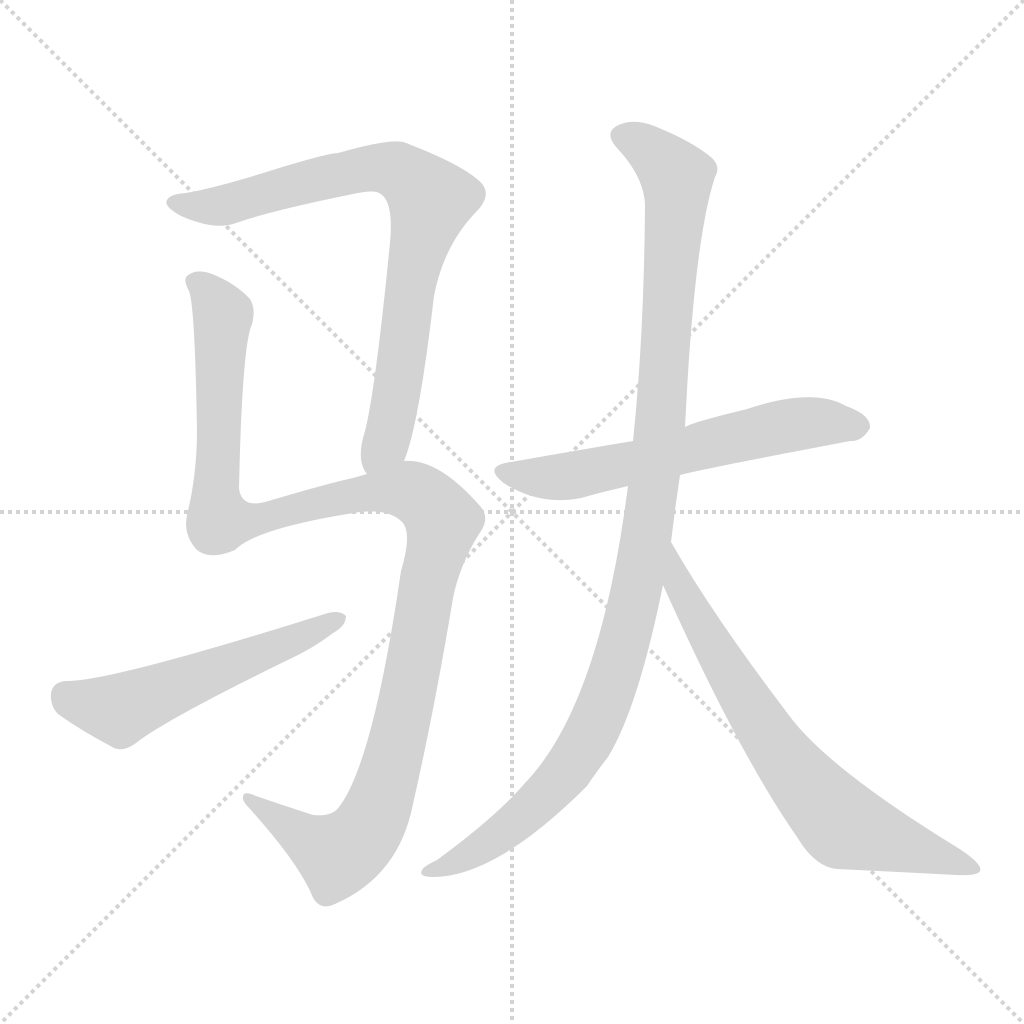
Entry: Tuo; Kangxi strokes: 13; Page 1434
According to the Expanded Rhymes (Guangyun), pronounced tuo. According to the Collected Rhymes (Jiyun), the Rhyme Assembly (Yunhui), and the Correct Rhymes (Zhengyun), pronounced tuo.
According to the Jade Chapters (Yupian), the appearance of a horse carrying a load. According to the Expanded Rhymes (Guangyun), tuo means to ride.
Li Bai poem: The fifteen-year-old Wu girl rides a small horse.
Also, according to the Rhyme Assembly (Yunhui), sometimes written as tuo.
According to Yang Xiong’s Dialects (Fangyan), whenever donkeys or horses are used to carry goods, it is called fu-tuo.
Also sometimes written as tuo.
In the History of the Former Han (Qianhan Shu), biography of Zhao Chongguo: Using one horse to carry a load itself.
Commentary by Yan Shigu: All instances where livestock are used to carry loads are referred to as tuo.
Also, according to the Tang Rhymes (Tangyun), the Collected Rhymes (Jiyun), the Rhyme Assembly (Yunhui), and the Correct Rhymes (Zhengyun), pronounced tuo (rising tone).
Also, according to the Collected Rhymes (Jiyun) and the Five Sounds Collected Rhymes (Wuyin Jiyun), pronounced da. The meaning is the same.
Also, according to the Collected Rhymes (Jiyun), the name of a county, located in Jiangxia.